#philosophy
Order Without a Plan: A Field Guide to Emergence
How simple local rules, repeated without a conductor, produce wholes their parts can't build alone: Conway's Game of Life, Wolfram's Rule 30, and starling murmurations.
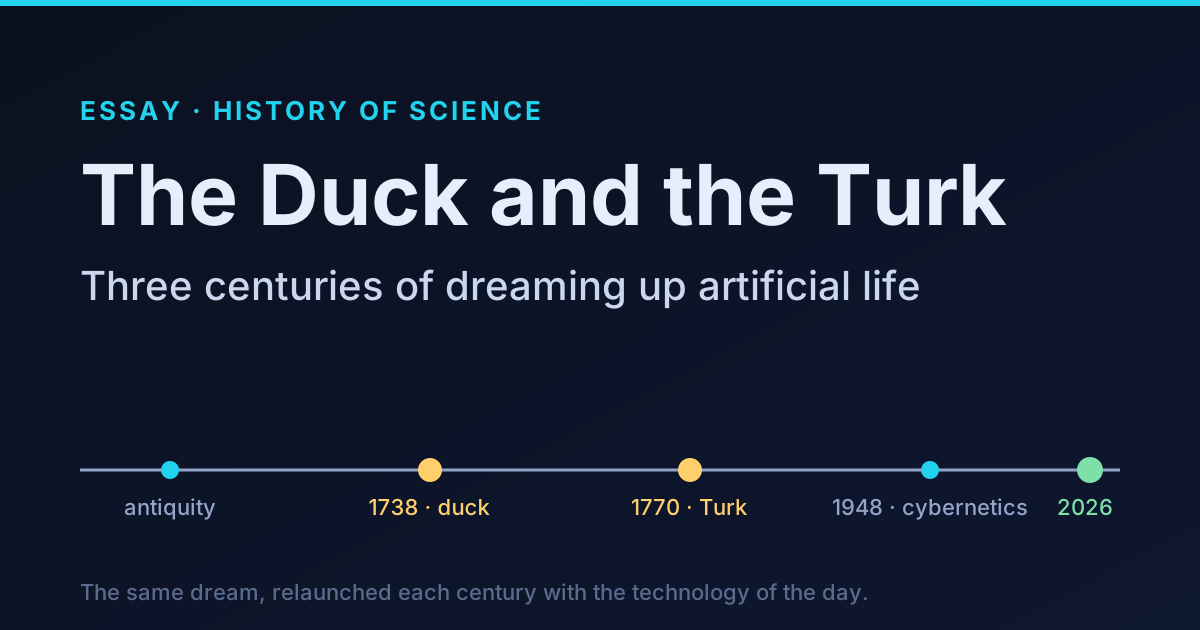
The Duck and the Turk: three centuries of dreaming up artificial life
Chips in the brain, digital doubles, the question of whether a machine really thinks: almost nothing about today's AI is new. The dream of building an artificial being runs as a single thread from antiquity to 2026, and three old objects still frame every debate we have.
Is anyone home? The science of consciousness
We are getting better at explaining what the brain does, yet still cannot say why any of it is accompanied by an inner experience. That gap (the hard problem) pits two rival theories of consciousness against each other, with very different verdicts on whether a machine could ever be awake inside.
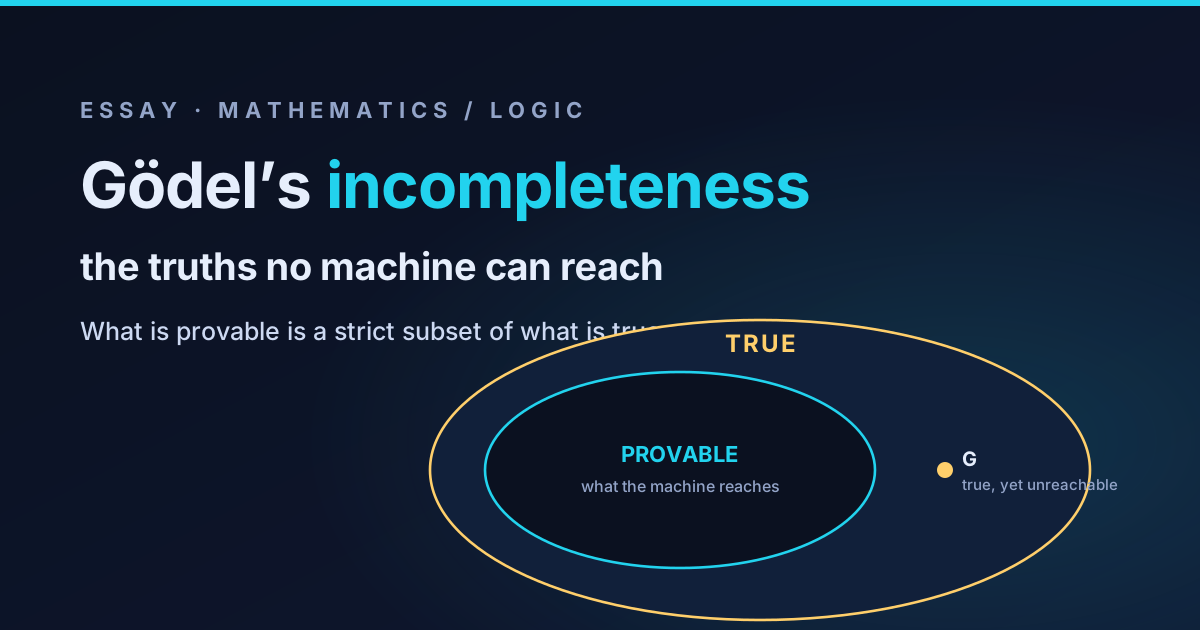
Gödel's incompleteness: the truths no machine can reach
In 1931 a 25-year-old logician proved that no machine for proving truths can ever reach all of them. How the trap closes, why a system can never certify itself, and what it does, and does not, say about the mind.
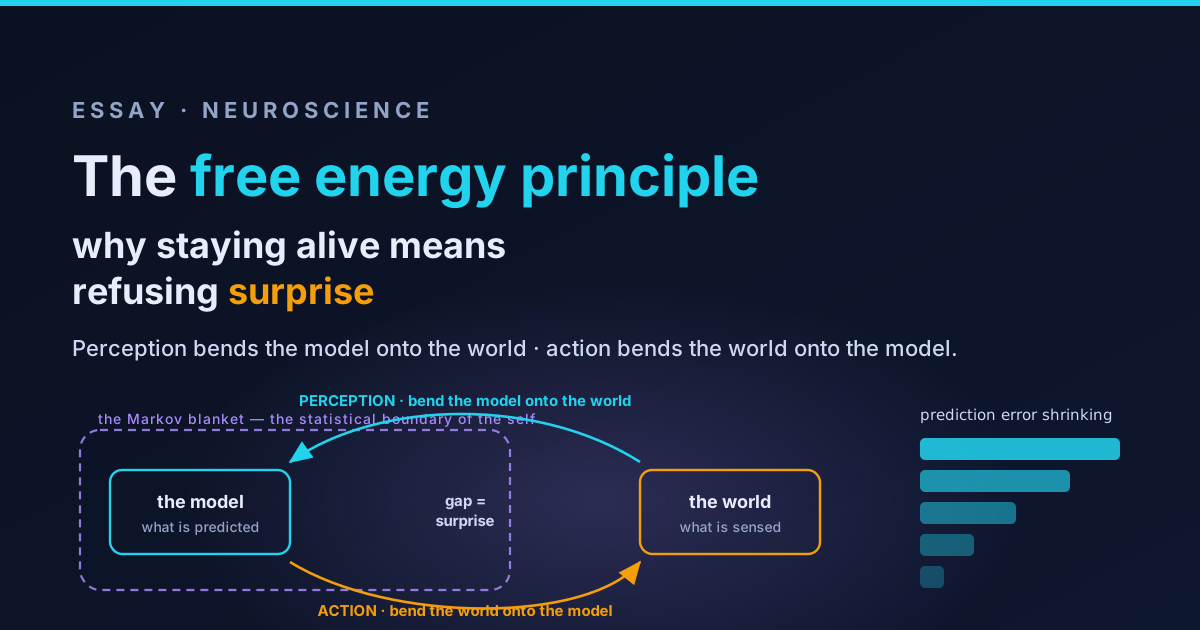
The free energy principle: why staying alive means refusing surprise
Karl Friston's free energy principle tries to derive perception, action, attention, and even the boundary of the self from a single imperative: keep surprise low. A walk up its steps, by images rather than equations.
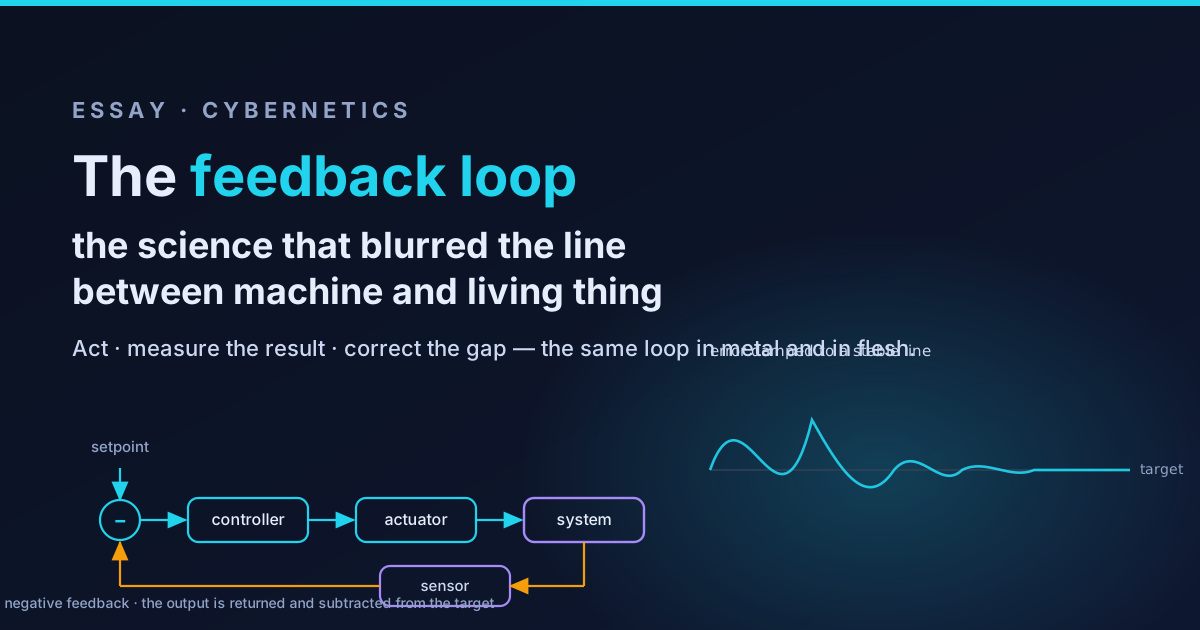
The feedback loop: the science that blurred the line between machine and living thing
How a single idea (act, measure, correct) let one mathematician describe a thermostat, a missile, a reaching hand, and a living body in the same breath, and quietly dissolved the boundary between the mechanical and the alive.
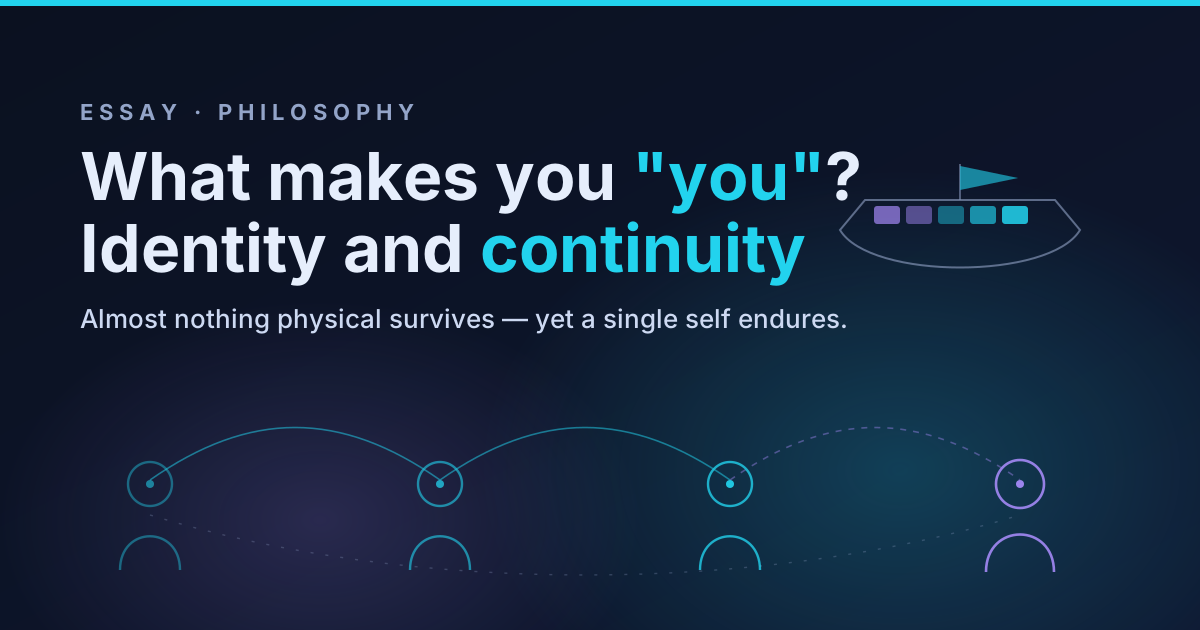
What makes you 'you'? Personal identity and the problem of continuity
Almost nothing physical survives in a person from one decade to the next, yet we speak without hesitation of a single self that endures. A look at the philosophy of personal identity, from the Ship of Theseus to Parfit's claim that identity may not be what matters.
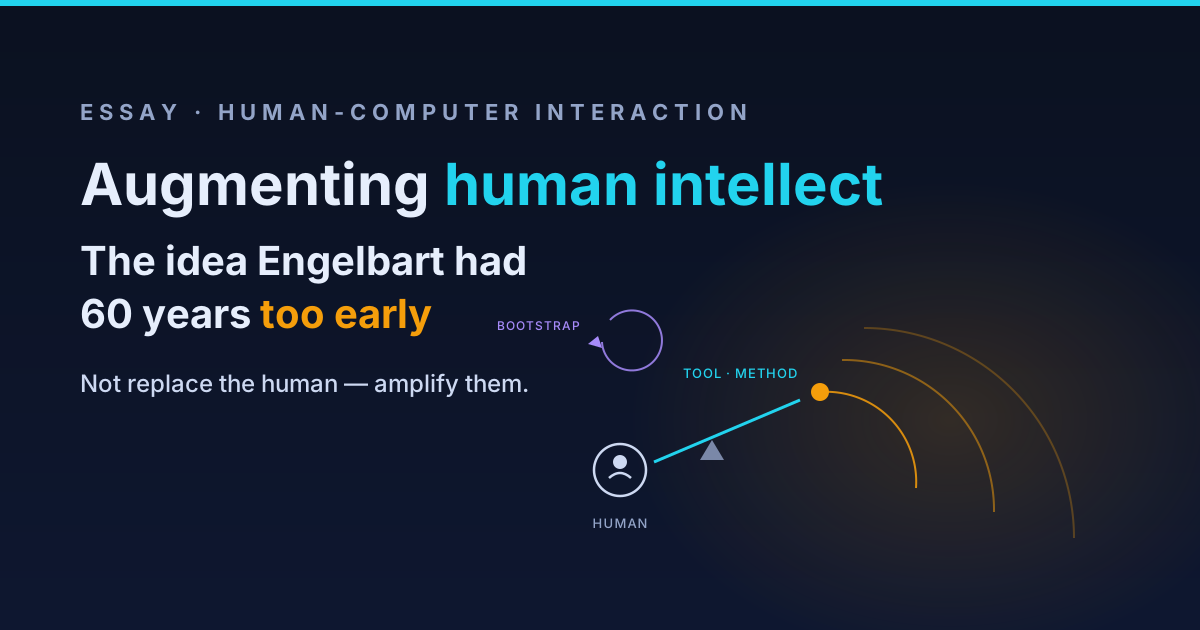
Augmenting human intellect: the idea Engelbart had 60 years too early
In 1968 Douglas Engelbart demoed the mouse, hypertext and live collaboration, but those were only the shavings. The real idea was to raise human intelligence, and the industry kept the tools while throwing away the philosophy.
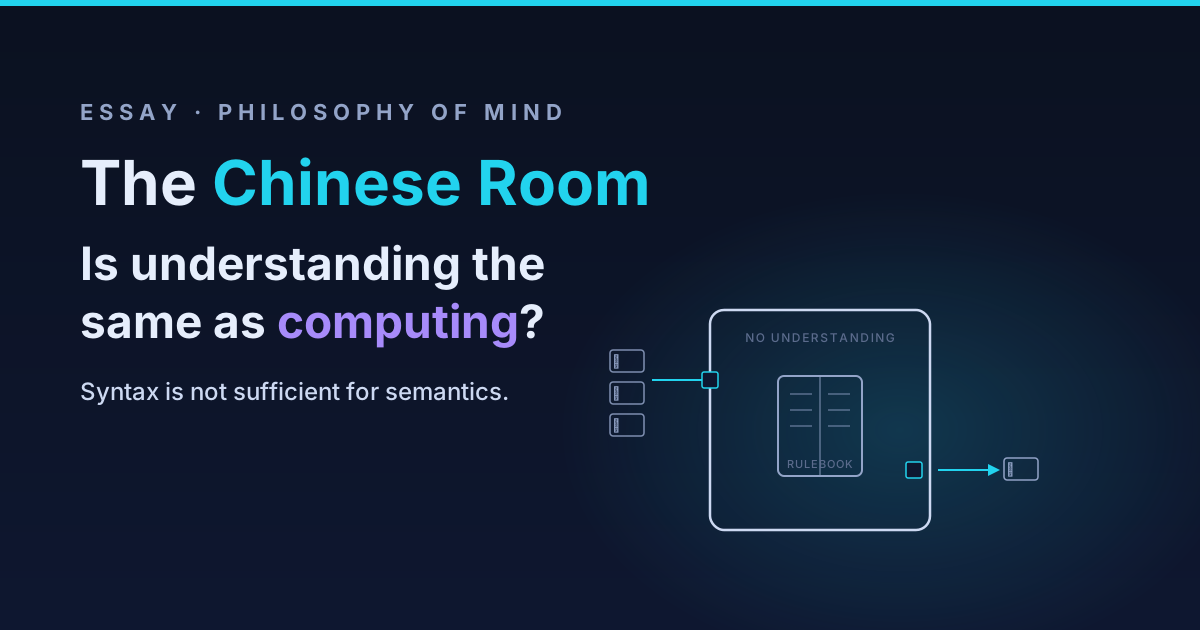
The Chinese Room: is understanding the same as computing?
Searle's Chinese Room argued that running the right program is never enough for understanding. Forty-five years on, interpretability research is turning that armchair intuition into a measurable question.
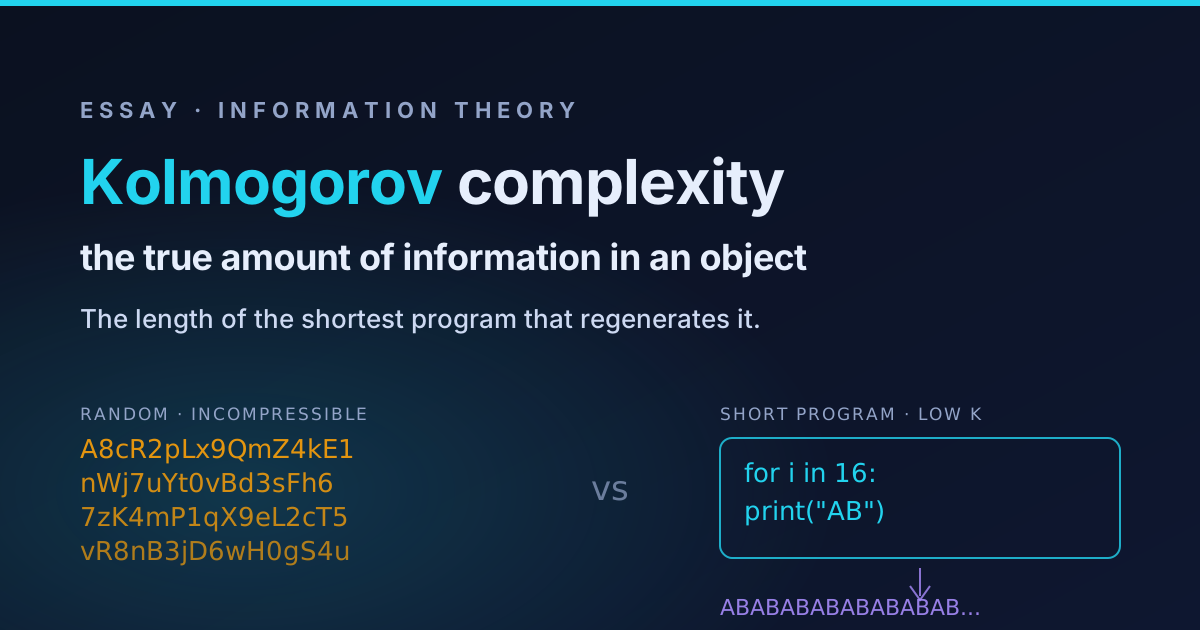
Kolmogorov complexity: the true amount of information in an object
The information in a single object is the length of its shortest description: the smallest program that regenerates it. A definition that makes compression equal to understanding, declares randomness the rule rather than the exception, and turns out to be uncomputable.
Entropy: the measure of our ignorance
Entropy is usually mistaken for disorder. It is better understood as a measure of what we do not know about a system: the bridge that ties together thermodynamics, information, and the physical cost of forgetting.