#hci
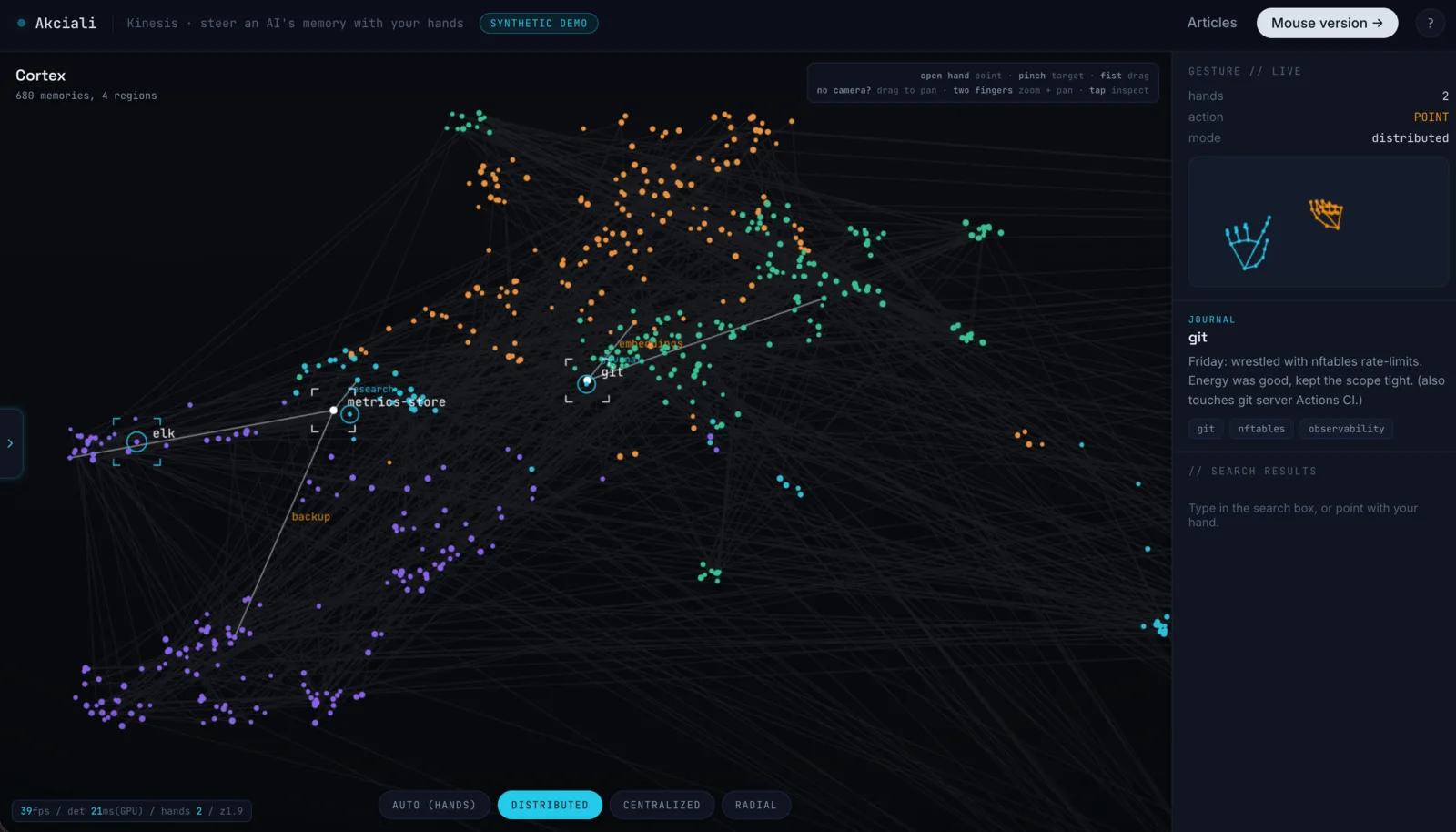
Kinesis: the hand-steered memory map moves out
The webcam-and-hands experiment from June grew up and got its own address. Kinesis is now a standalone demo: four hand postures, a memory map that answers, a camera that never leaves your device, and a surprising answer to the question of what a gesture actually weighs. With interactive diagrams.
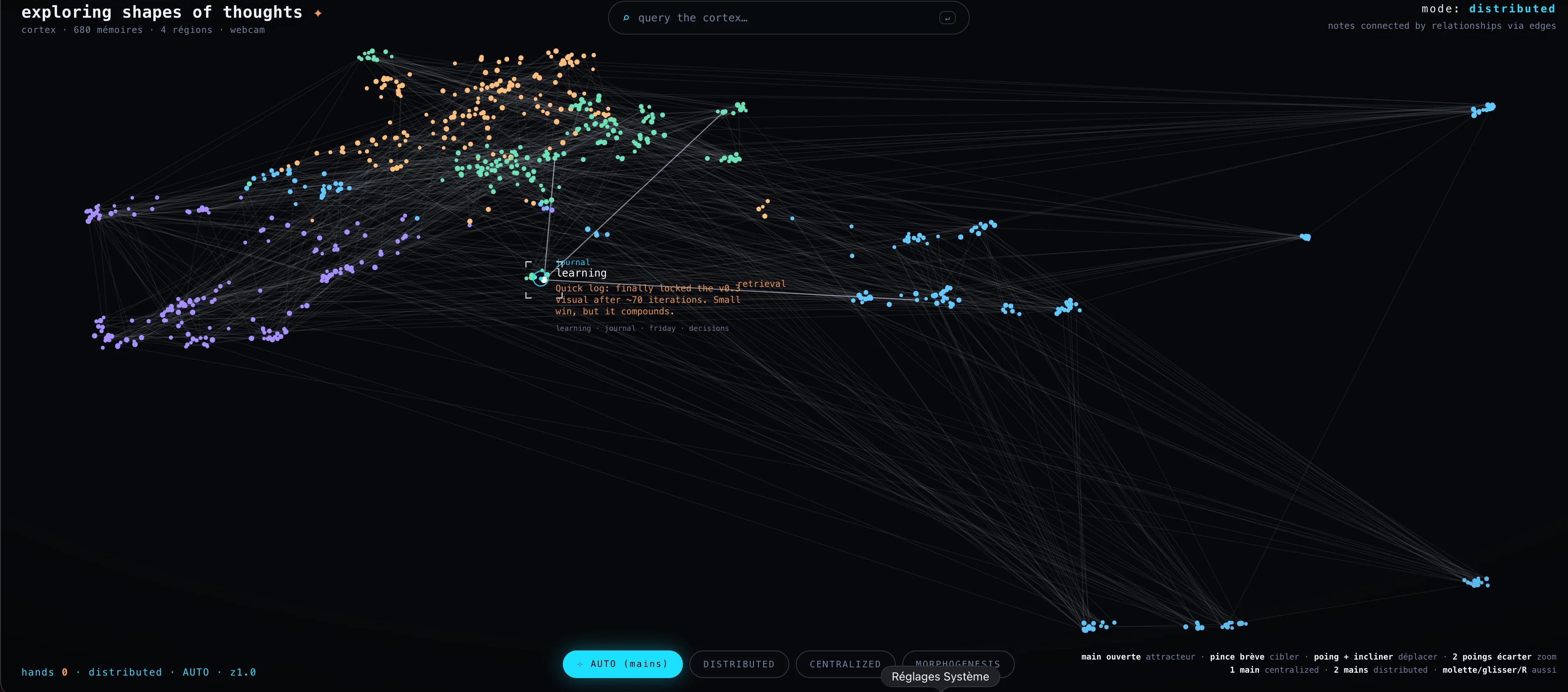
From hands to intention: how an interface creeps closer to the thought
A sequel to steering a memory map by hand. Every fix I made was secretly the same move: shortening the distance between what I meant and what happened. Follow that line far enough and you arrive at reading the command before the muscle. With interactive diagrams.
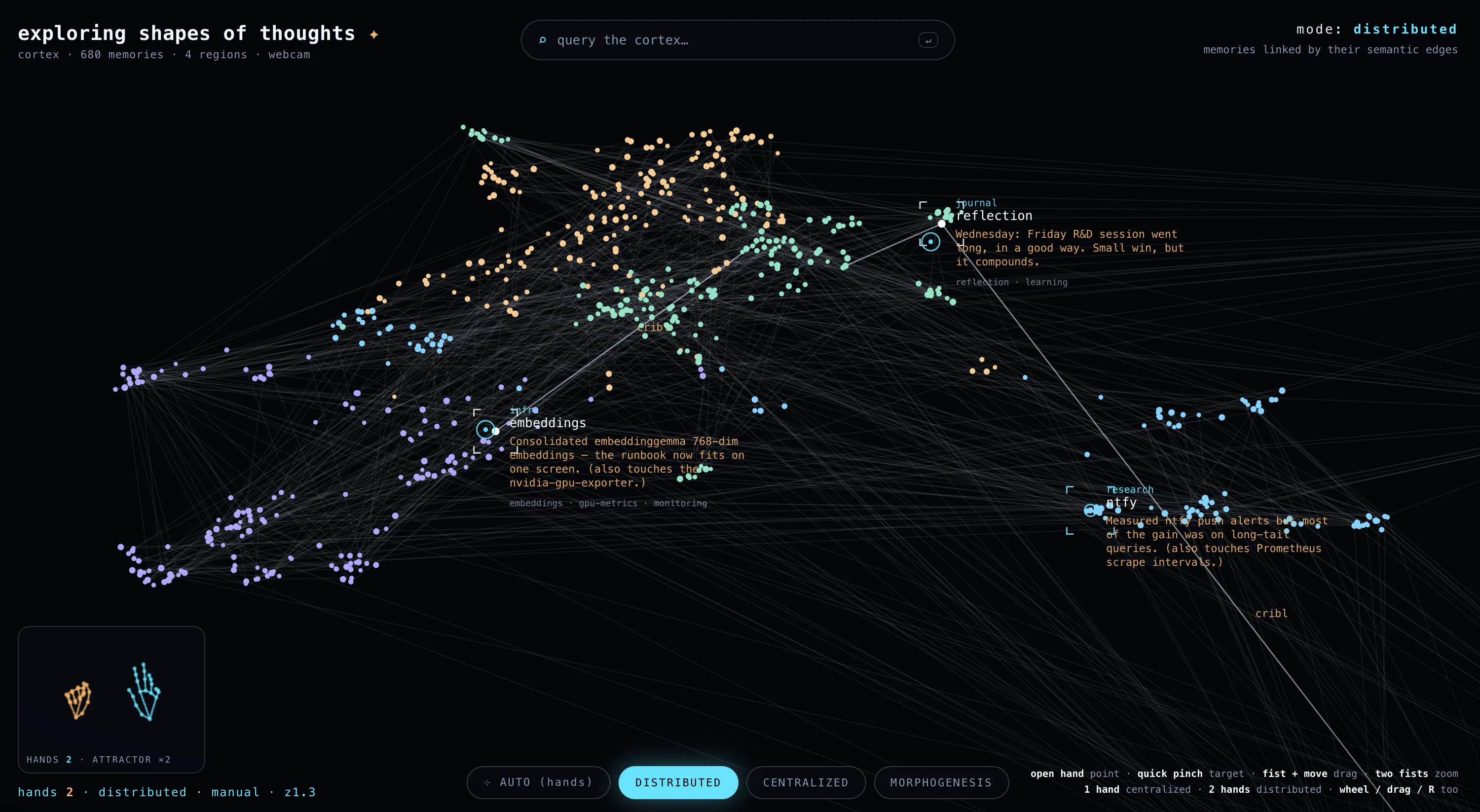
Reaching into the cortex: steering a memory map with your bare hands
I gave the 3D memory map a webcam and a pair of hands. No mouse, no controller: you point, you grab, you pinch, and the galaxy of thoughts answers. Here's the build, and the small detour into decades-old HCI research that made it usable.
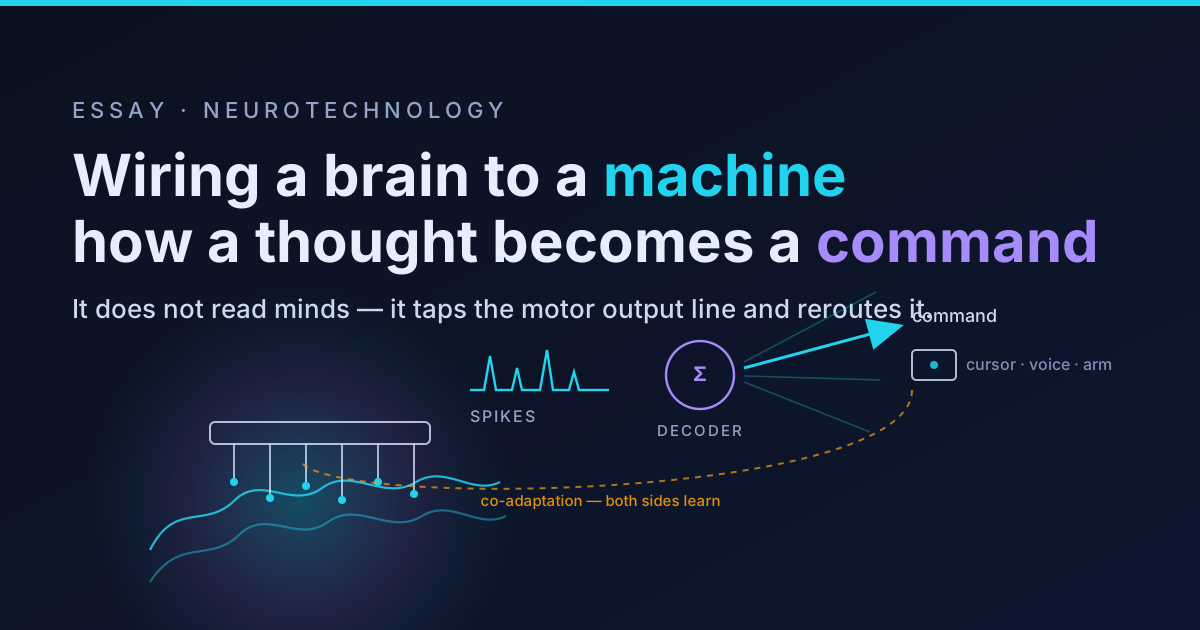
Wiring a brain to a machine: how a thought becomes a command
A brain-machine interface does not read minds. It taps the motor output line and reroutes it. A walk through the four stages, the decoder, and the mutual learning that makes the coupling work.
Augmenting human intellect: the idea Engelbart had 60 years too early
In 1968 Douglas Engelbart demoed the mouse, hypertext and live collaboration, but those were only the shavings. The real idea was to raise human intelligence, and the industry kept the tools while throwing away the philosophy.