#energy
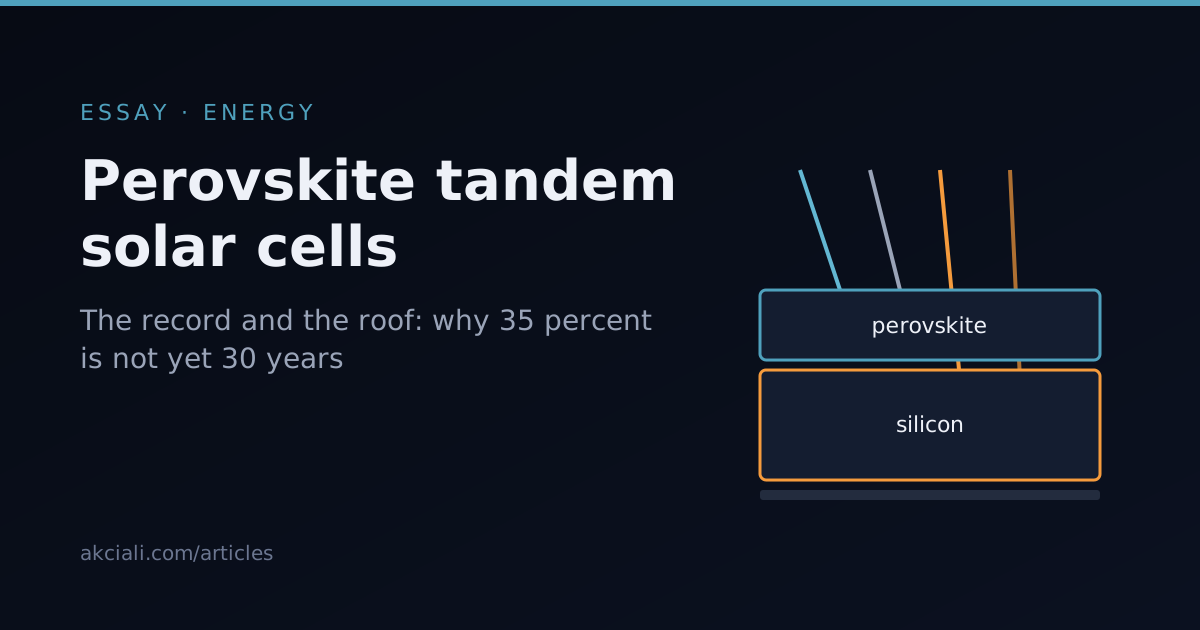
Perovskite tandem solar cells: the record and the roof
Stacking a perovskite layer on silicon has pushed certified cell efficiency to 35.5 percent, well past what silicon alone can ever reach. The harder number is the one no laboratory can certify yet: how many of those percent are still there after twenty-five summers on a roof.
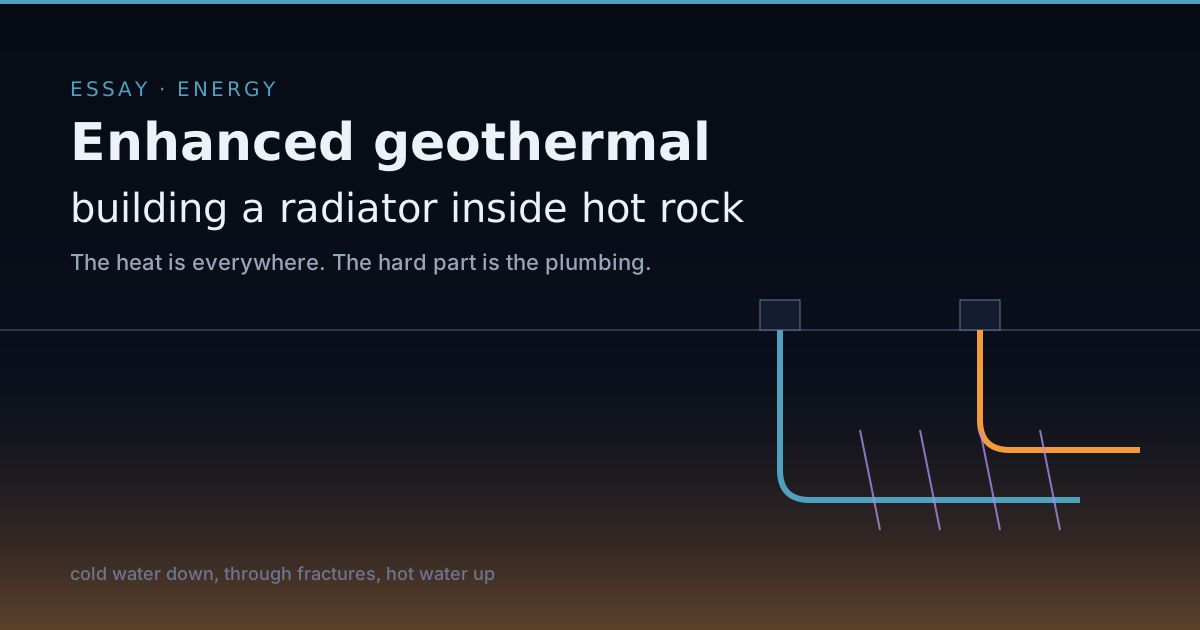
Enhanced geothermal: building a radiator inside hot rock
A few kilometres down, almost every continent is hot enough to boil water. Enhanced geothermal is the attempt to reach that heat anywhere, and its real constraint is not temperature but how slowly stone gives heat up, and how much rock you dare to crack to get it.
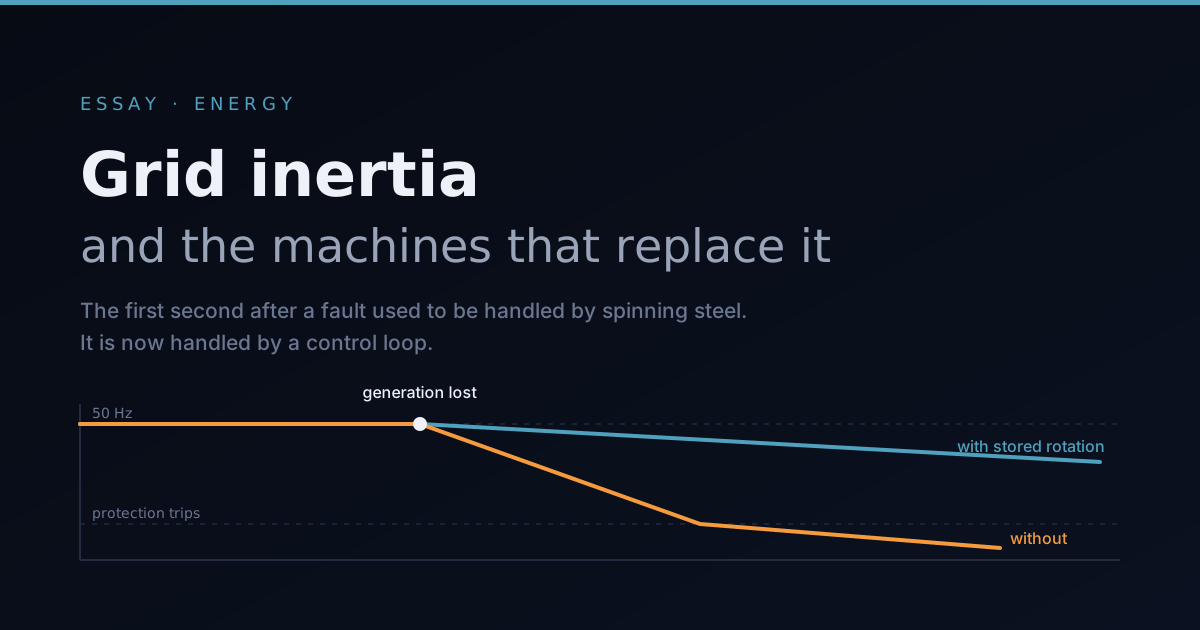
Grid inertia: what happens when a power grid loses its spinning mass
For a century, the first second after a power system fault was handled by the kinetic energy of spinning turbines, at no cost and with no decision to make. That mass is being replaced by control software, and the Iberian blackout showed how easily the substitution is misread.
Powering the machines inside the human body
Every machine sealed in the human body lives on a starvation energy budget. This essay follows the watt: why batteries force repeat surgery, how power crosses living tissue, why plutonium once solved the problem, and which technologies are trying to retire the battery in 2026.
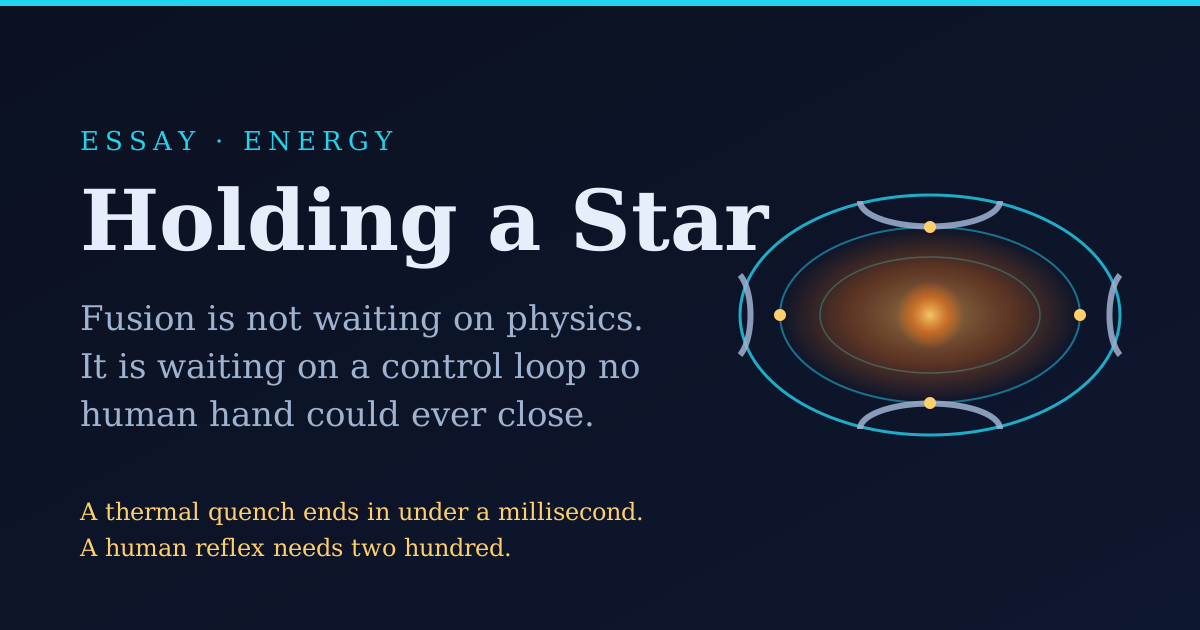
Holding a Star: Fusion as a Control Problem
Tokamak plasmas are engineered to be unstable, and their instabilities unfold a thousand times faster than a human reflex. This essay argues that the real bottleneck of fusion energy is not plasma physics but the control loop, and looks at what happens when that loop is handed to a neural network.
Computing Like a Brain
Our computers separate memory from compute and pay a fortune moving data between them. Brain-inspired chips fuse the two and only fire when something happens. Here is why that matters, and where it actually stands.