#embeddings
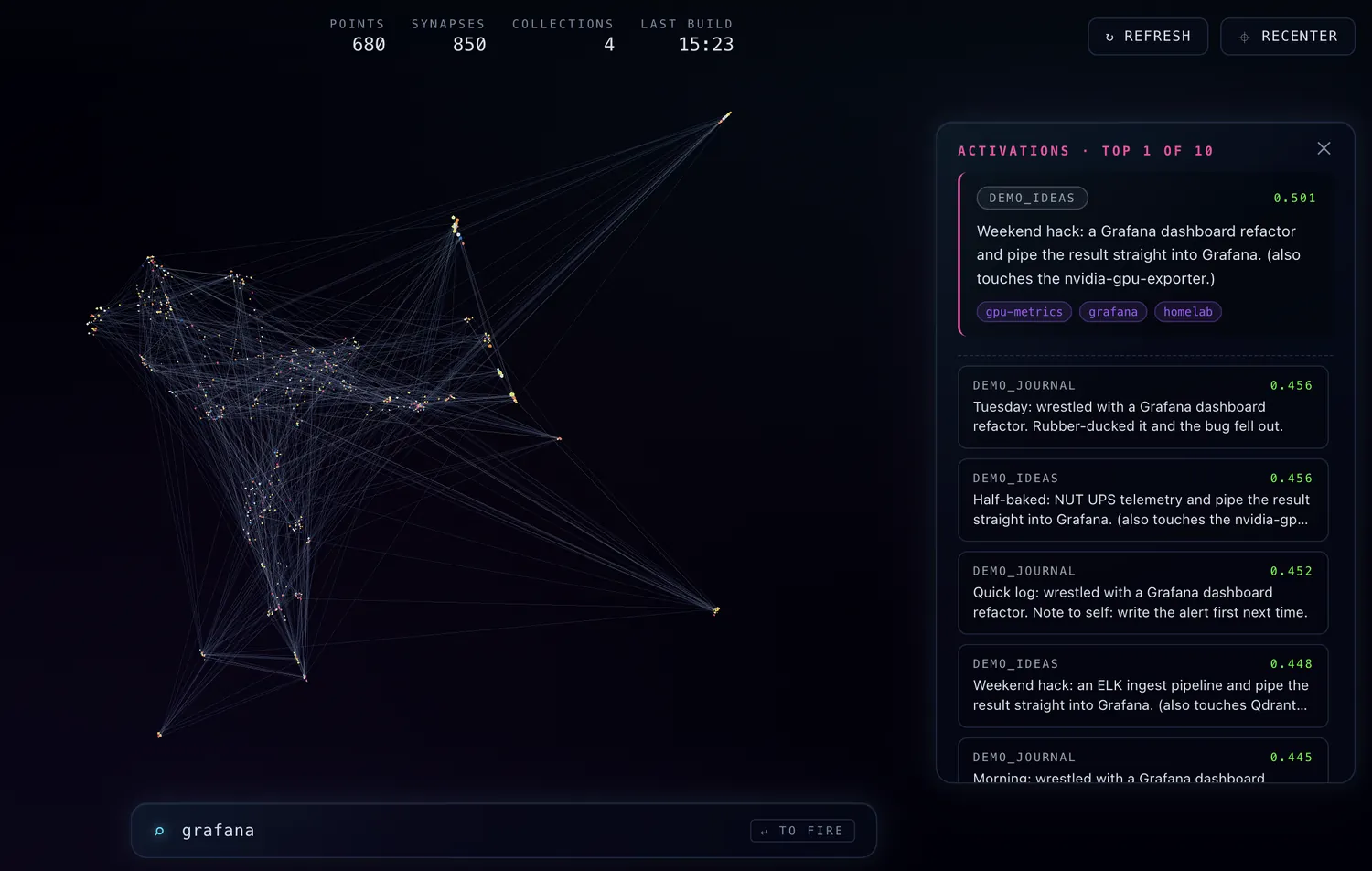
What an AI's memory actually looks like
The knowledge-graph screenshots that go round on social media are suspiciously beautiful: symmetric, evenly spaced, colour-coded by folder. A real vector memory looks nothing like that. Here is what the shape actually is, and what it took to draw it honestly: a metric for messiness, a palette borrowed from stellar astronomy, and a renderer whose best trick is drawing nothing at all.

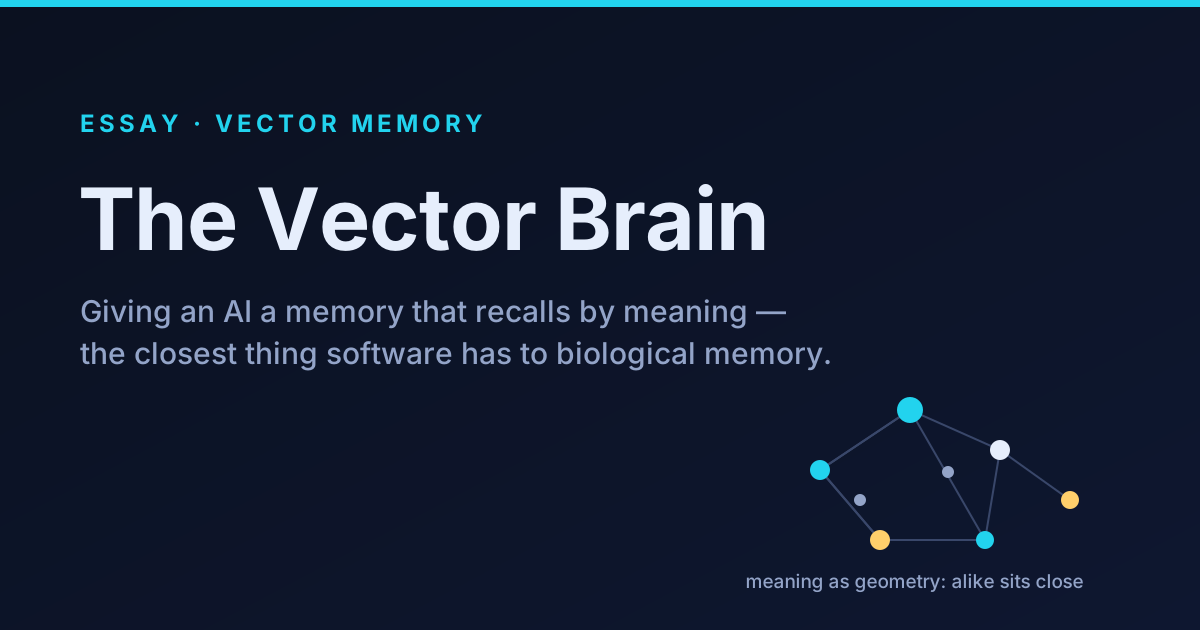
The vector brain: giving an AI a memory that thinks in meaning
Why a vector database is the closest thing software has to biological memory, and how one shared vector store becomes the brain behind very different applications.
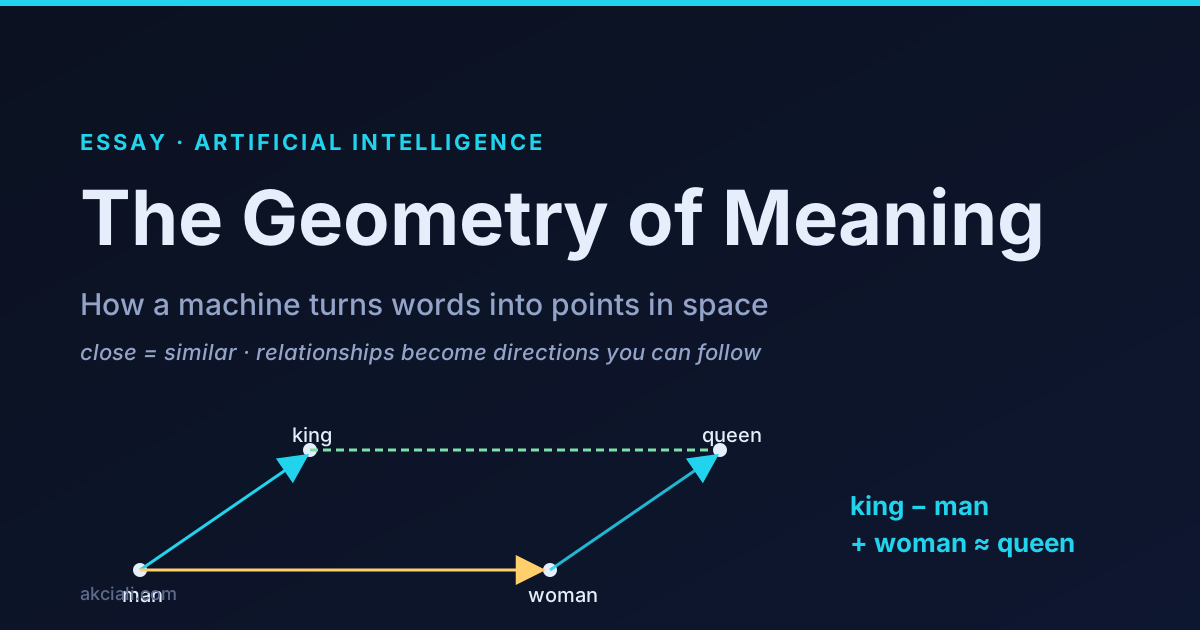
The Geometry of Meaning: how a machine files words in space
Machines don't store meaning as definitions: they store it as geometry. Every word, sentence or image becomes a point in a vast space, where 'close' means 'similar' and whole relationships turn into directions you can follow. The strange 2025–26 twist: that geometry looks universal, which is both a superpower and a security problem.
Inside the Cortex: turning an AI's memory into a 3D star map
How a pile of numbers an AI uses to 'remember' becomes a galaxy you can fly through, starting from scratch and going all the way down to embeddings, UMAP and the rendering loop.