#control
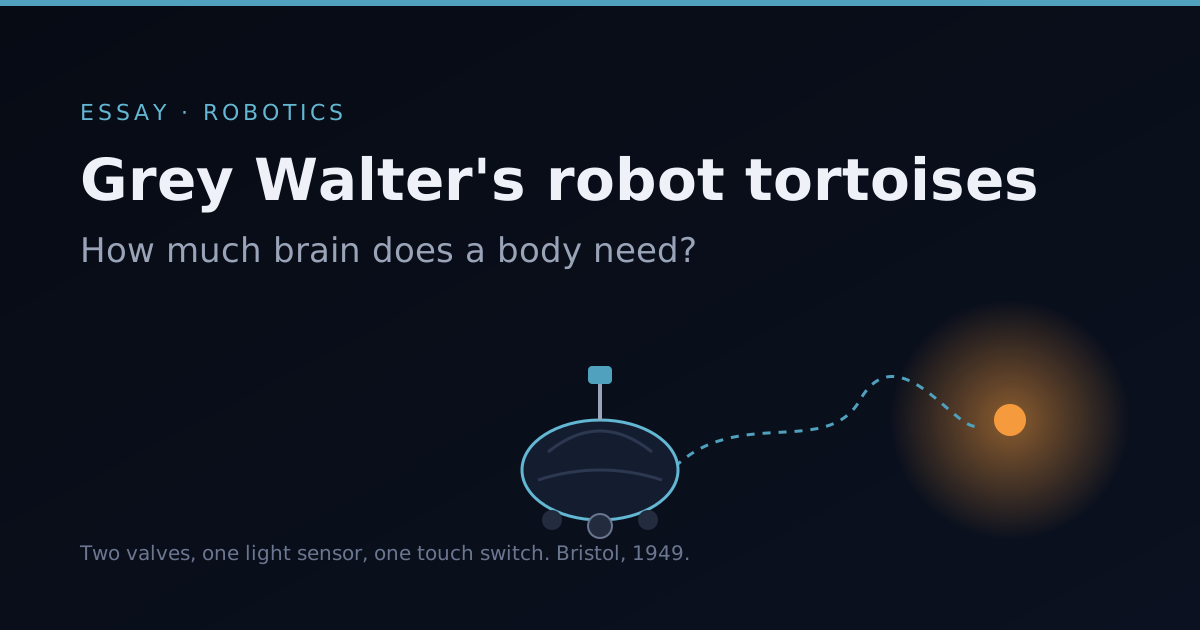
Grey Walter's robot tortoises: how much brain does a body need?
In 1949 a neurophysiologist built two small robots whose entire brain was a pair of vacuum tubes, and they wandered, avoided obstacles, went home to recharge and danced in front of a mirror. Seventy-seven years later, robotics is again asking how much of intelligent behaviour lives in the controller and how much in the loop between body and world.
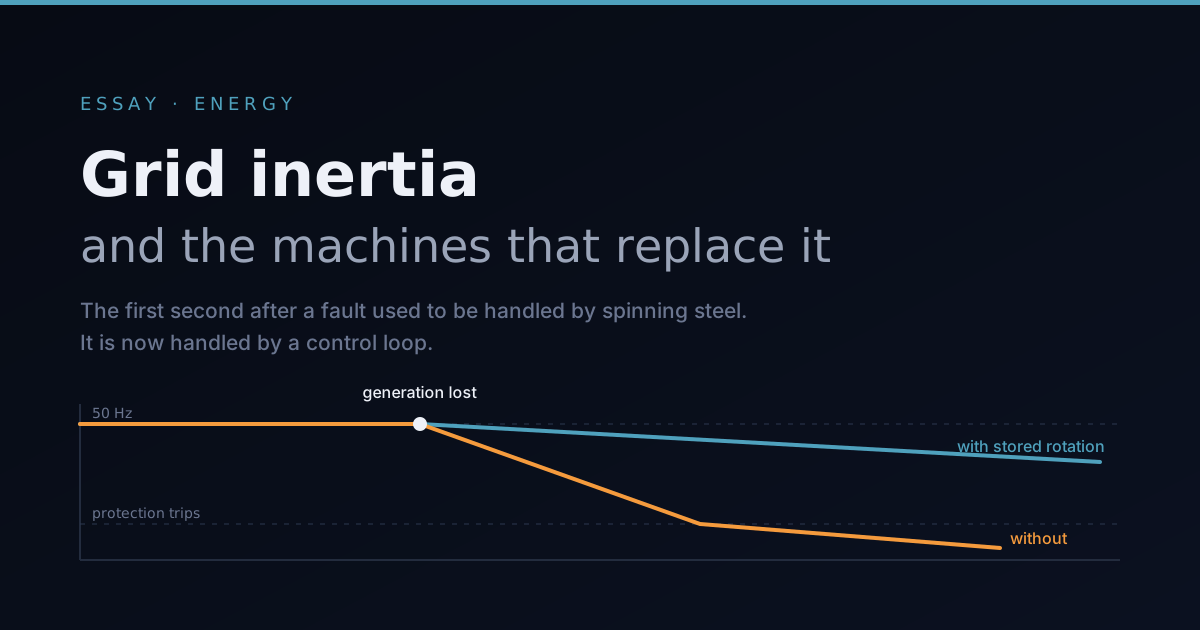
Grid inertia: what happens when a power grid loses its spinning mass
For a century, the first second after a power system fault was handled by the kinetic energy of spinning turbines, at no cost and with no decision to make. That mass is being replaced by control software, and the Iberian blackout showed how easily the substitution is misread.
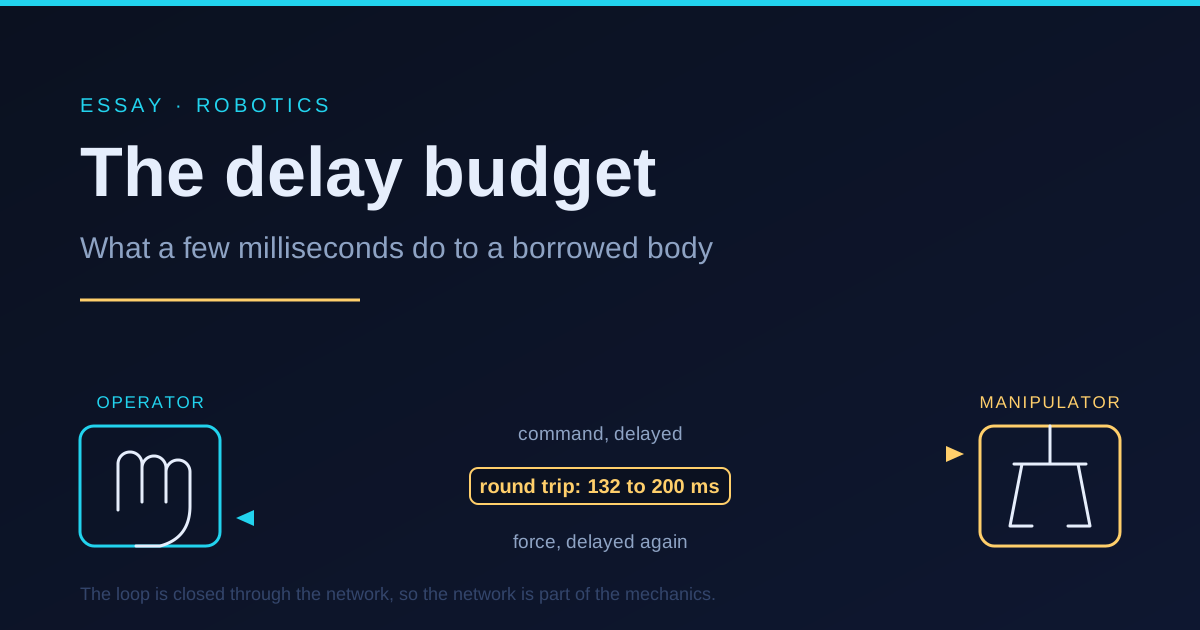
The delay budget: what a few milliseconds do to a borrowed body
A teleoperated robot is a body you rent through a network, and the rental terms are written in milliseconds. Where the delay comes from, why force feedback turns it into an energy problem, and why the same latency that tires an operator also poisons the demonstration data used to train autonomous robots.
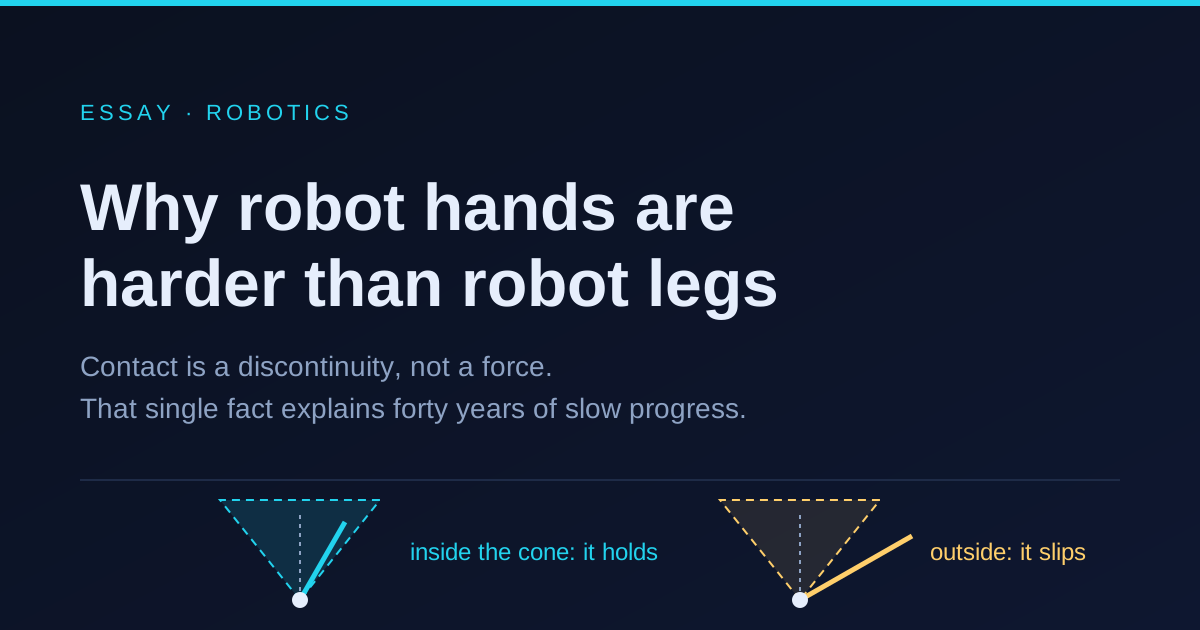
Why robot hands are harder than robot legs
A humanoid that walks is a solved-enough control problem. A humanoid that takes a key out of a pocket is not. The gap is not precision or motor count: it is that contact is a discontinuity, and everything downstream, from simulation to grasp planning to touch sensing, inherits that fact.
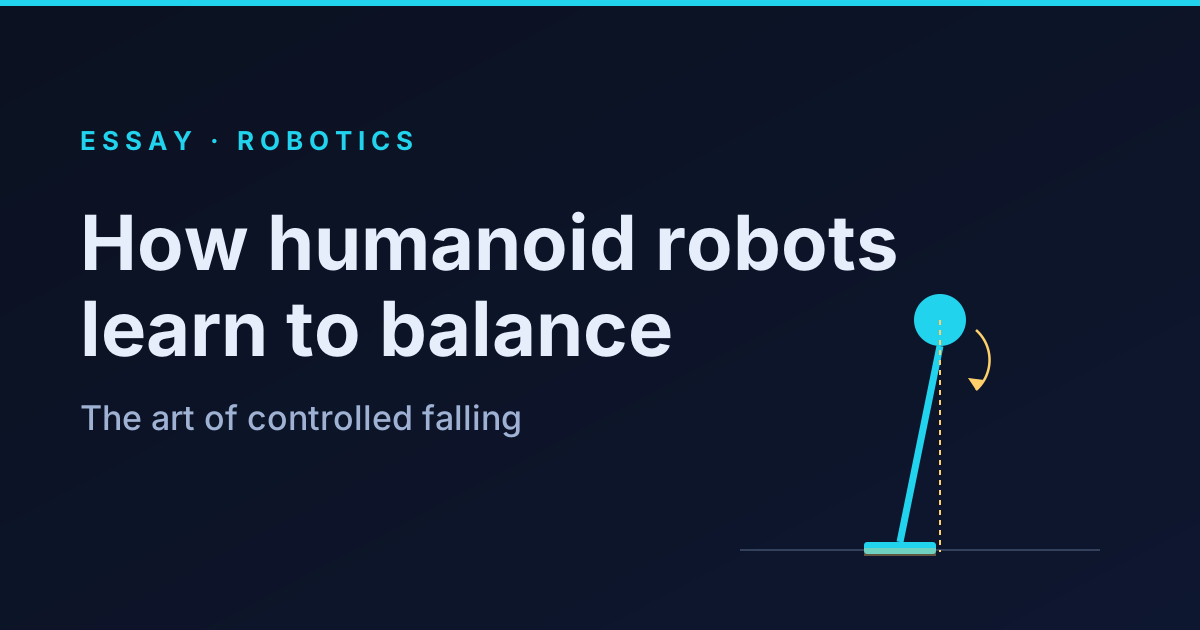
How humanoid robots learn to balance: the art of controlled falling
A biped is an inverted pendulum, so standing still is active work and walking is controlled falling. Inside the control stack that keeps humanoid robots upright, and the shift from programming balance to learning it in simulation.