#brain-computer interface
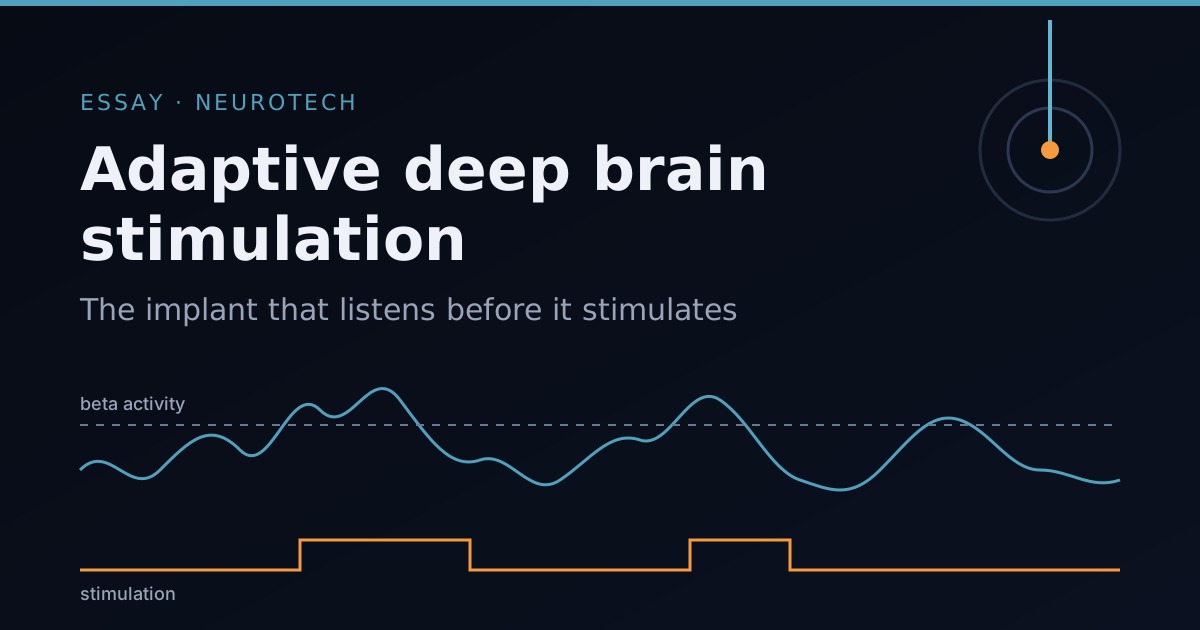
Adaptive deep brain stimulation: the implant that listens before it stimulates
For thirty years, brain implants for Parkinson's disease pulsed at the same setting day and night. The new generation reads a signal from the brain and adjusts itself, which turns a stimulator into a small control system, and shows how hard it is to find a signal that actually means what the patient feels.
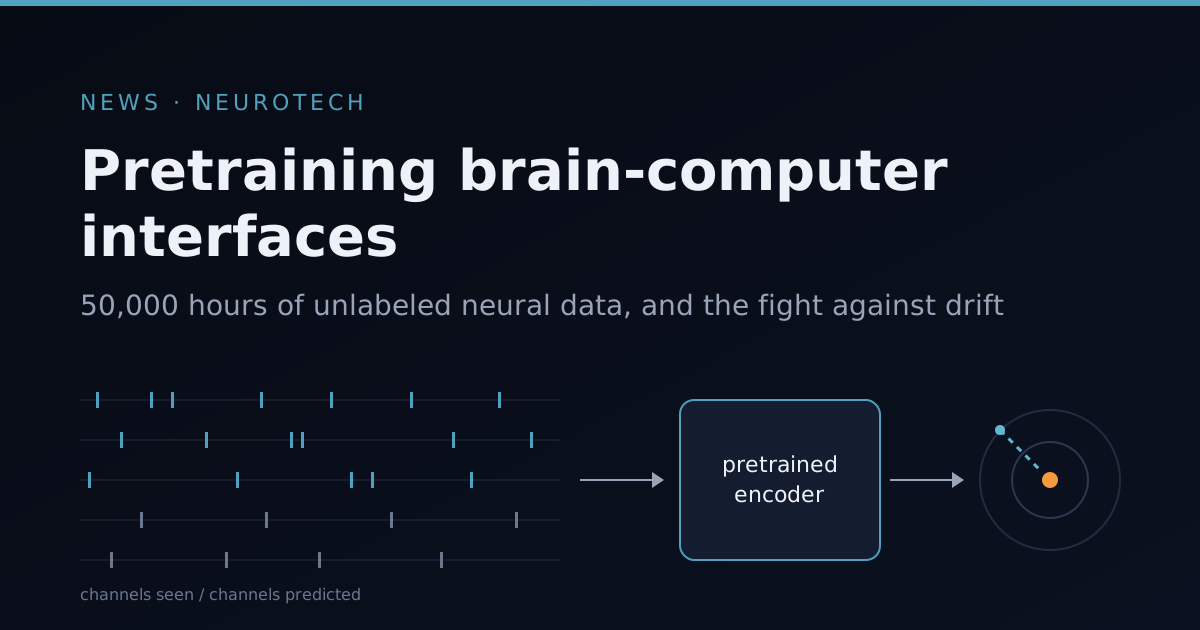
Pretraining brain-computer interfaces: Neuralink's 50,000 hours of neural data
An implanted brain decoder slowly stops understanding the brain it reads, and users pay for that with daily recalibration. Neuralink now says self-supervised pretraining on 50,000 hours of unlabeled recordings cuts that tax sharply. What the claim shows, and what it does not yet.
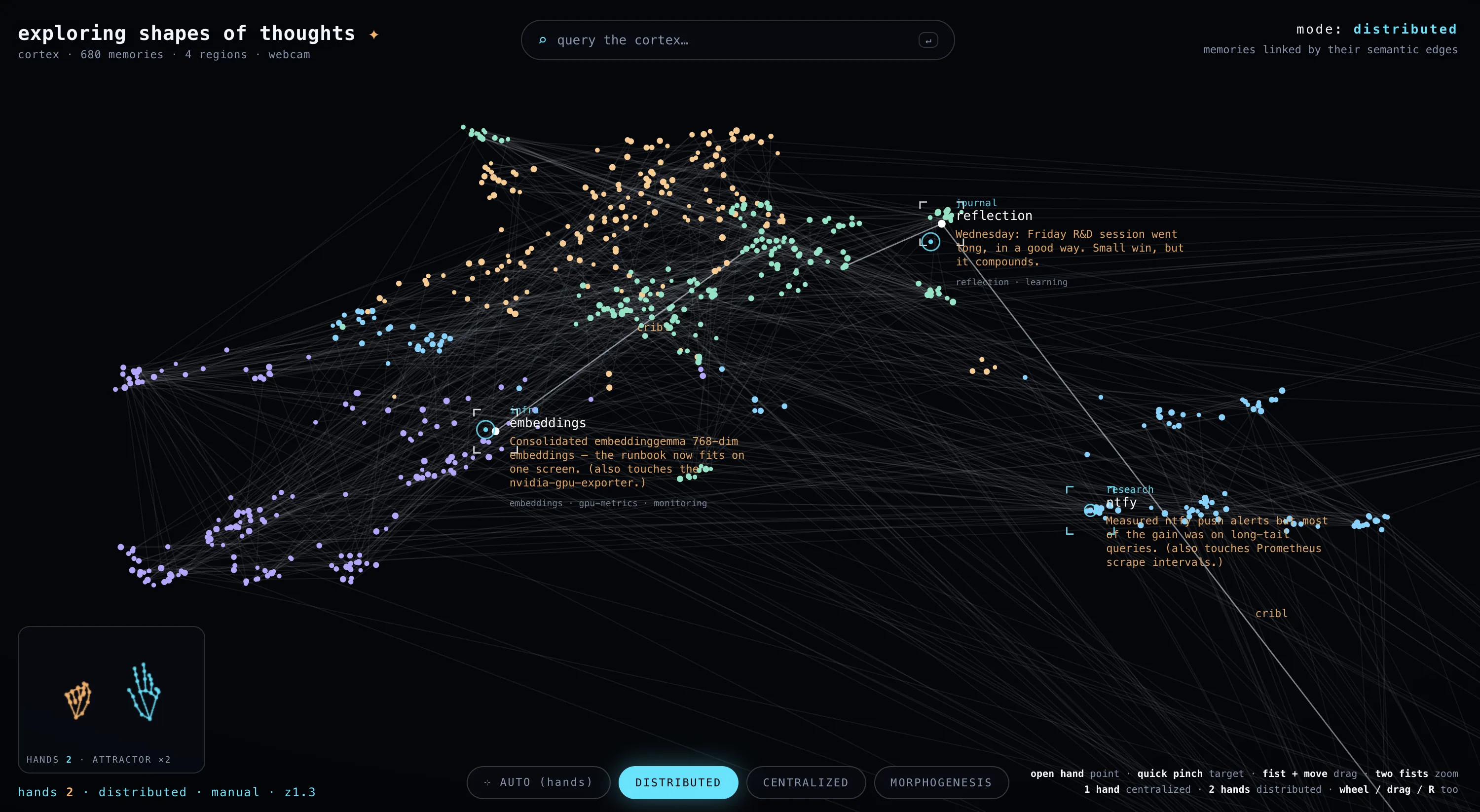
From hands to intention: how an interface creeps closer to the thought
A sequel to steering a memory map by hand. Every fix I made was secretly the same move: shortening the distance between what I meant and what happened. Follow that line far enough and you arrive at reading the command before the muscle. With interactive diagrams.
Wiring a brain to a machine: how a thought becomes a command
A brain-machine interface does not read minds. It taps the motor output line and reroutes it. A walk through the four stages, the decoder, and the mutual learning that makes the coupling work.
