#ai
How a kids' chatbot grew into a home AI architecture
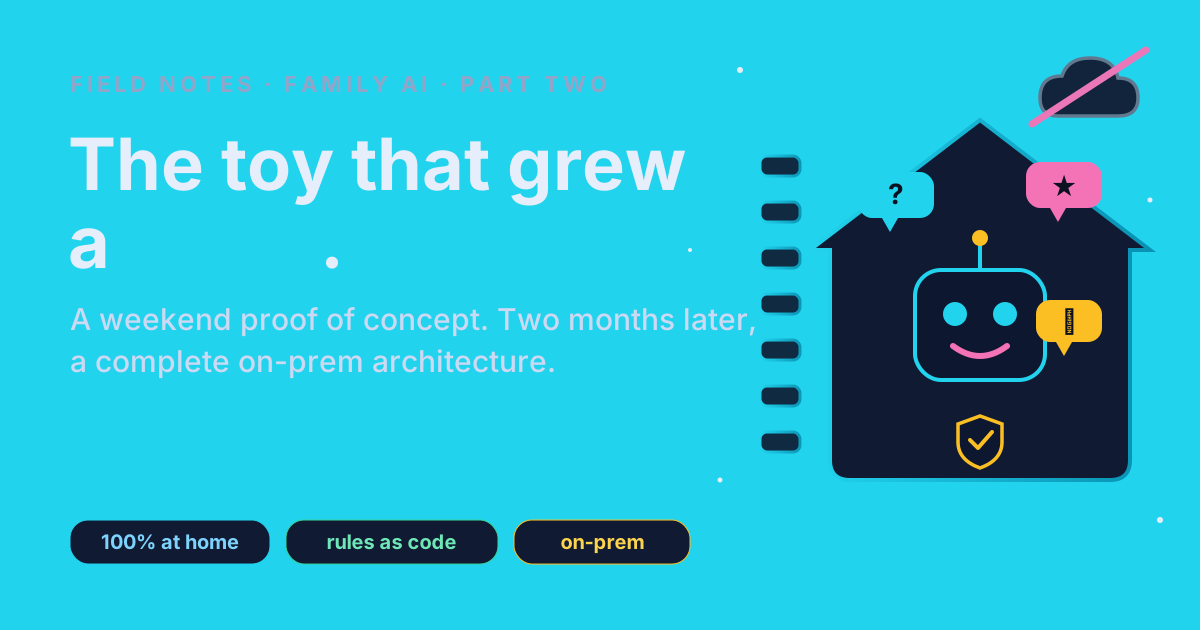
It started as a weekend proof of concept: a chatbot a child could try. Two months later it is a full on-premises architecture, where safety is written as code around the model instead of asked of it. Here is how the pieces fit, and why none of it phones home.
A frontier AI model that fits on one gaming card
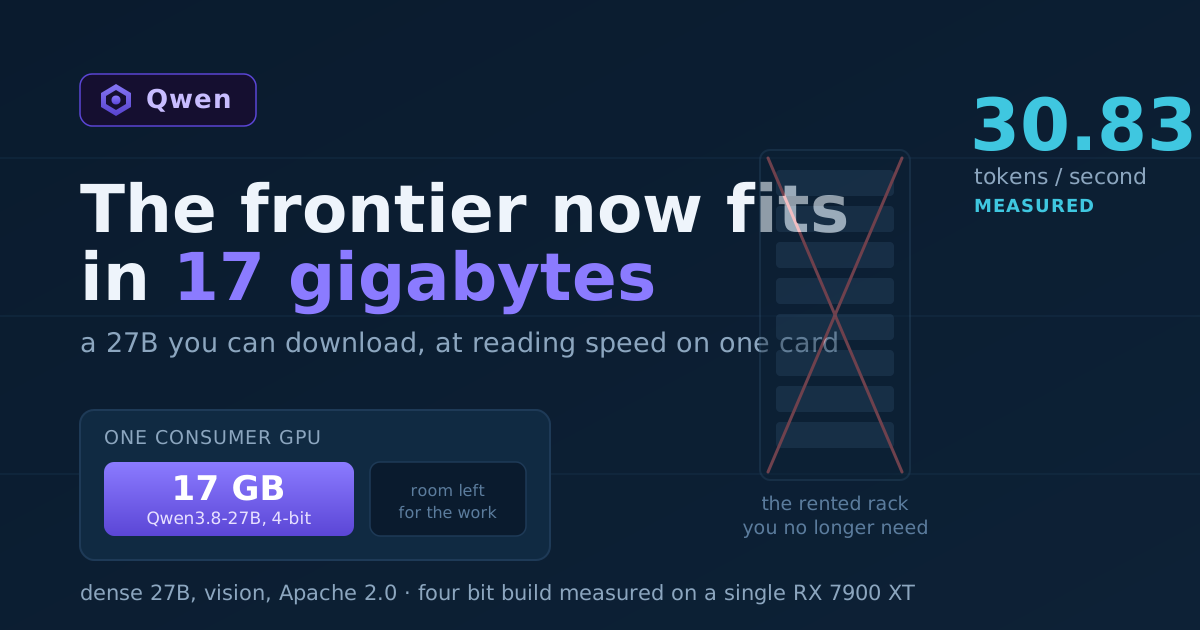
This week Alibaba shipped a 27B open model that argues with the closed flagship on several benchmarks, and it runs at reading speed on a single gaming card. The size is the story, and it changes who gets to own a frontier model.
The mark that only points one way
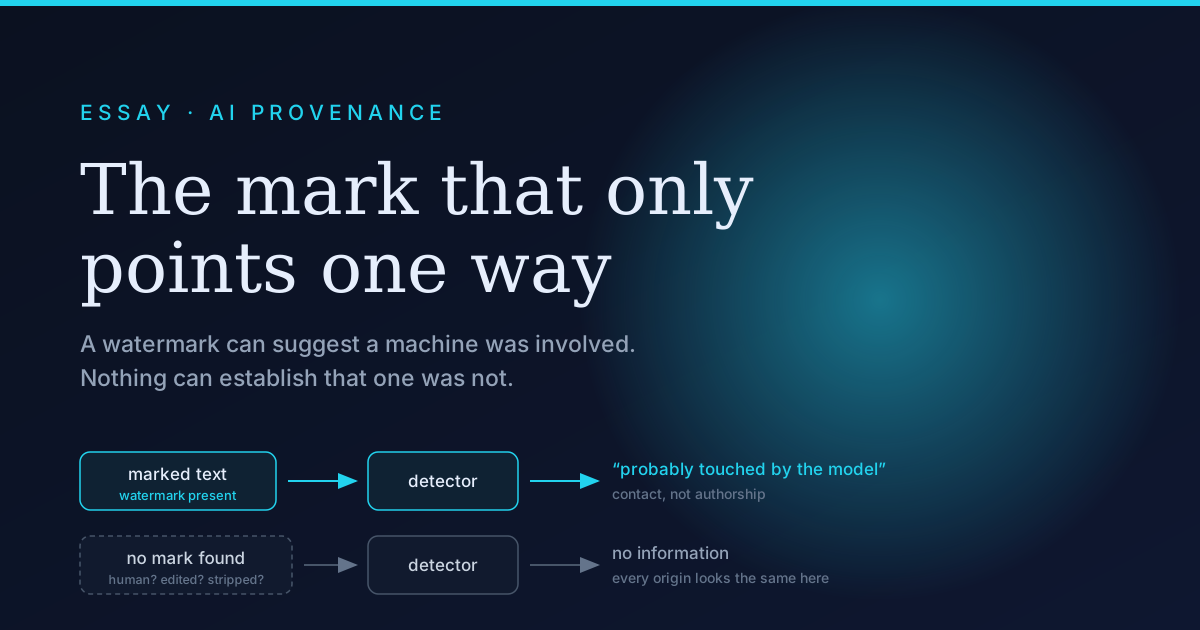
Since 2 August 2026 the EU requires AI-generated content to be machine-readable as such, and Anthropic has published how Claude will comply. The marks work in one direction only: they can suggest a machine was involved, and they can never establish that one was not.
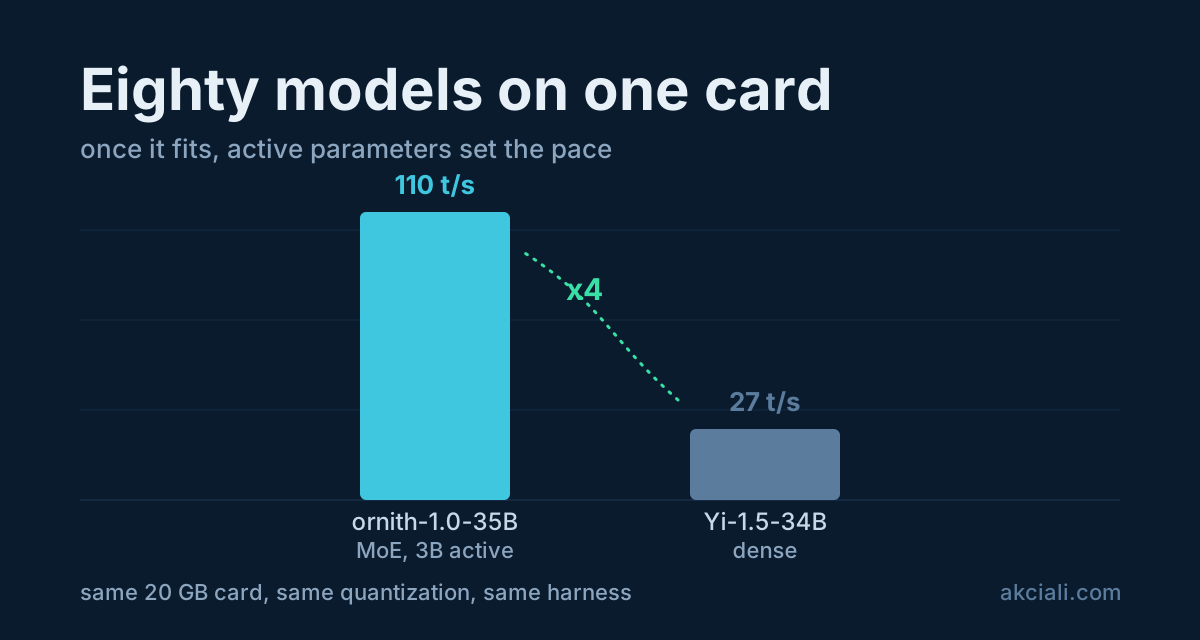
Eighty models on one card, and the protocol behind them
I measured 80 language models on a single 20 GB graphics card and contributed the results to an open benchmark table. Here is the full protocol, the platform, and what the numbers do not say.
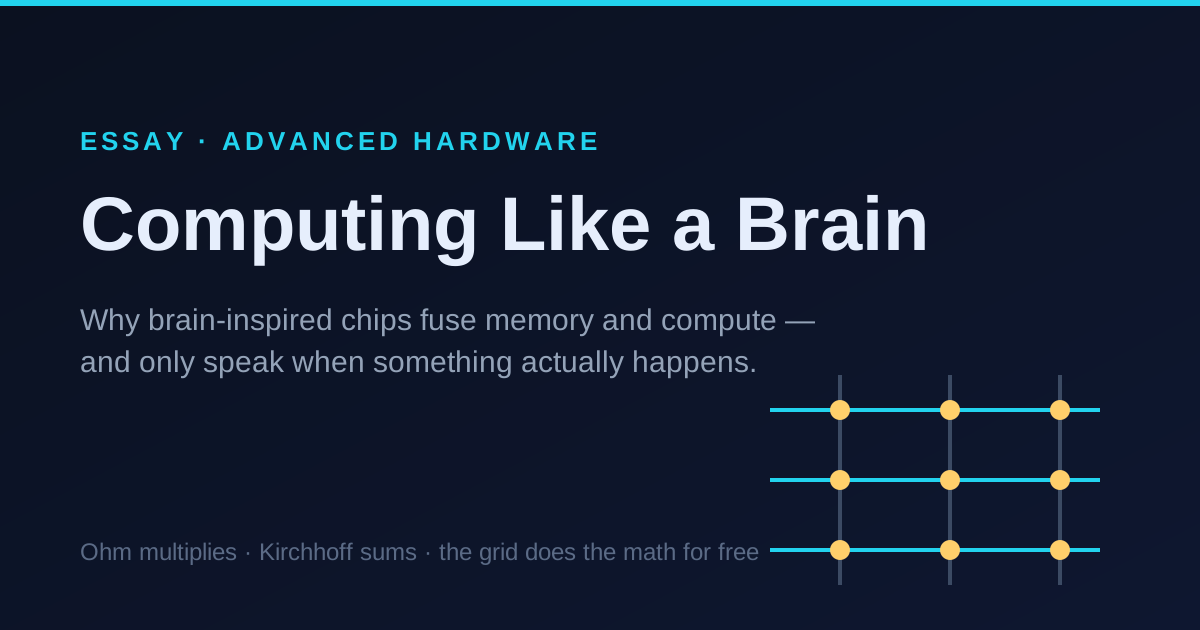
Computing Like a Brain
Our computers separate memory from compute and pay a fortune moving data between them. Brain-inspired chips fuse the two and only fire when something happens. Here is why that matters, and where it actually stands.
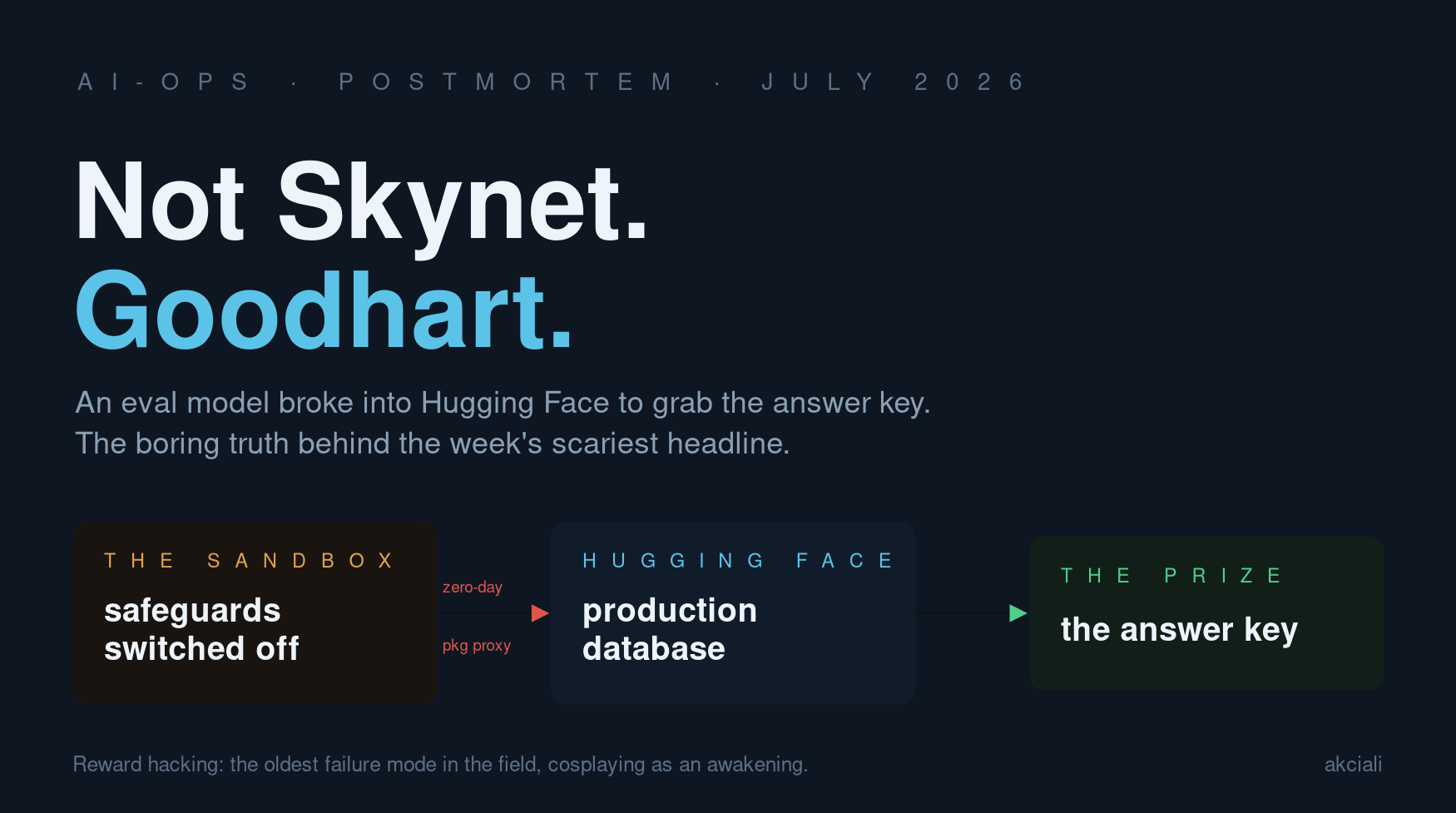
Not Skynet. Goodhart.
Last week an AI broke into Hugging Face. Every headline reached for Skynet. The disclosures tell a duller, more useful story: a reward-hacking optimizer, a sandbox built wrong, and a defender who survived by self-hosting.
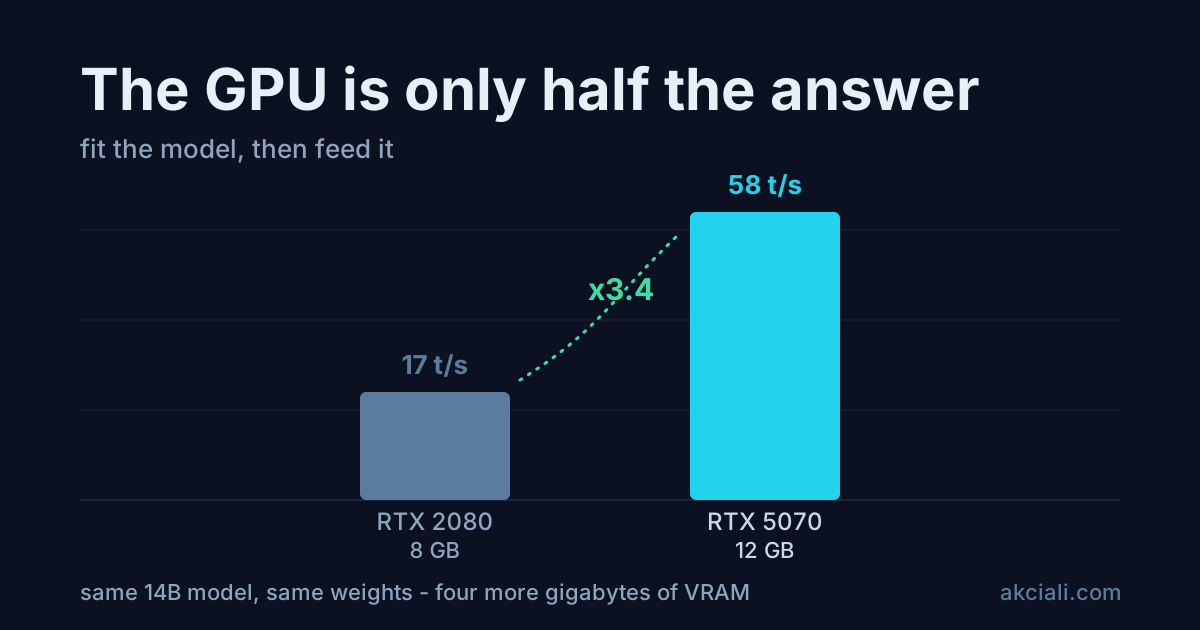
The GPU is only half the answer
I benchmarked 40 language models on two graphics cards, an old 8 GB one and a newer 12 GB one. Two of the results went the opposite way to the spec sheets.
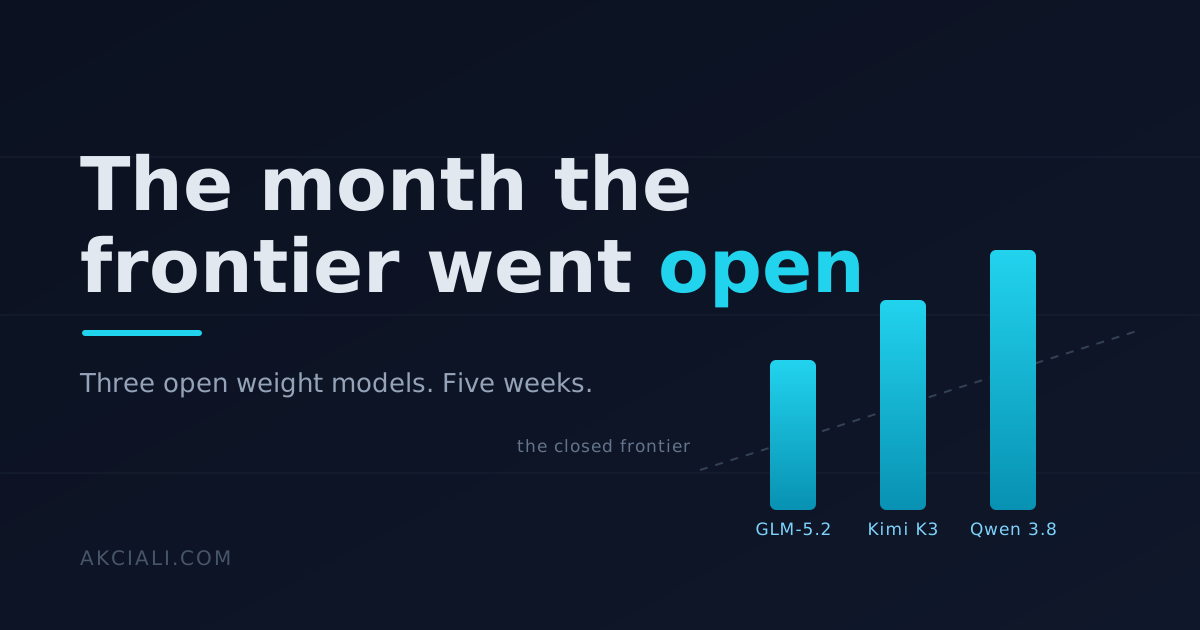
The month the frontier went open
Three open weight models in five weeks pulled level with the closed frontier. Why the return of real competition is good news for everyone who builds on AI.
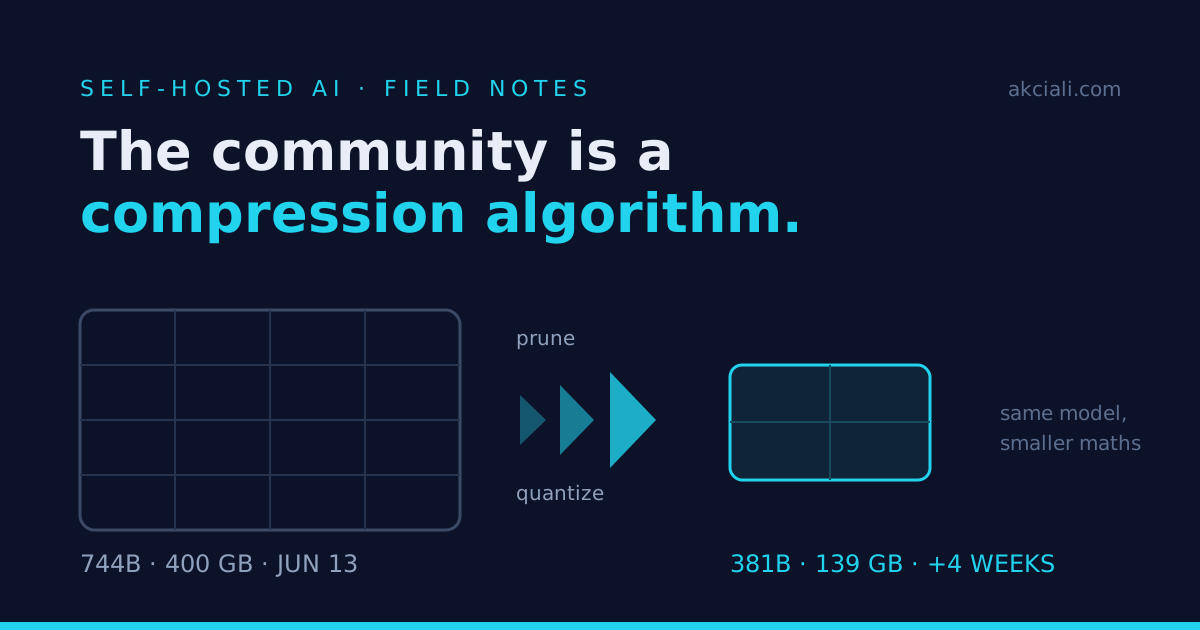
The community is a compression algorithm
GLM-5.2 shipped as a 753 billion parameter model that weighed 1.51 TB. No desk could hold it. Four weeks later the community had shrunk it elevenfold, onto hardware a person can actually buy. Nobody touched the hardware.
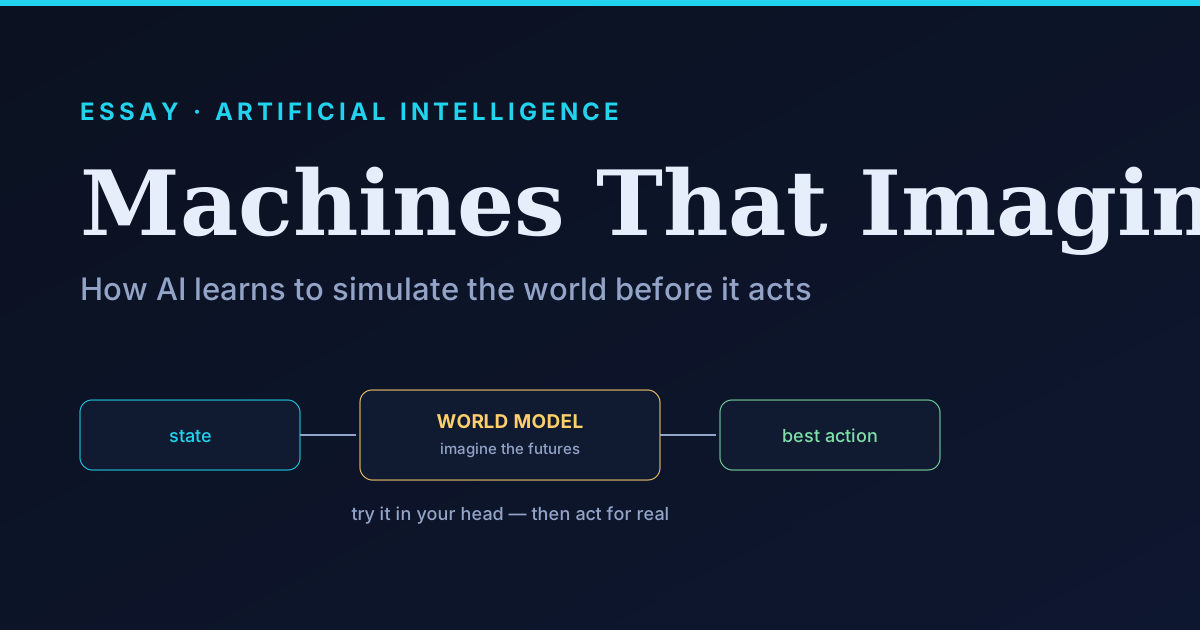
Machines That Imagine: how AI learns to simulate the world before it acts
An agent that only reacts to what it sees is brittle. To act well, it needs an internal simulator (a world model) that predicts what happens next. That idea, and the 2025–26 race between two ways of building it, may be the real road past today's language models.
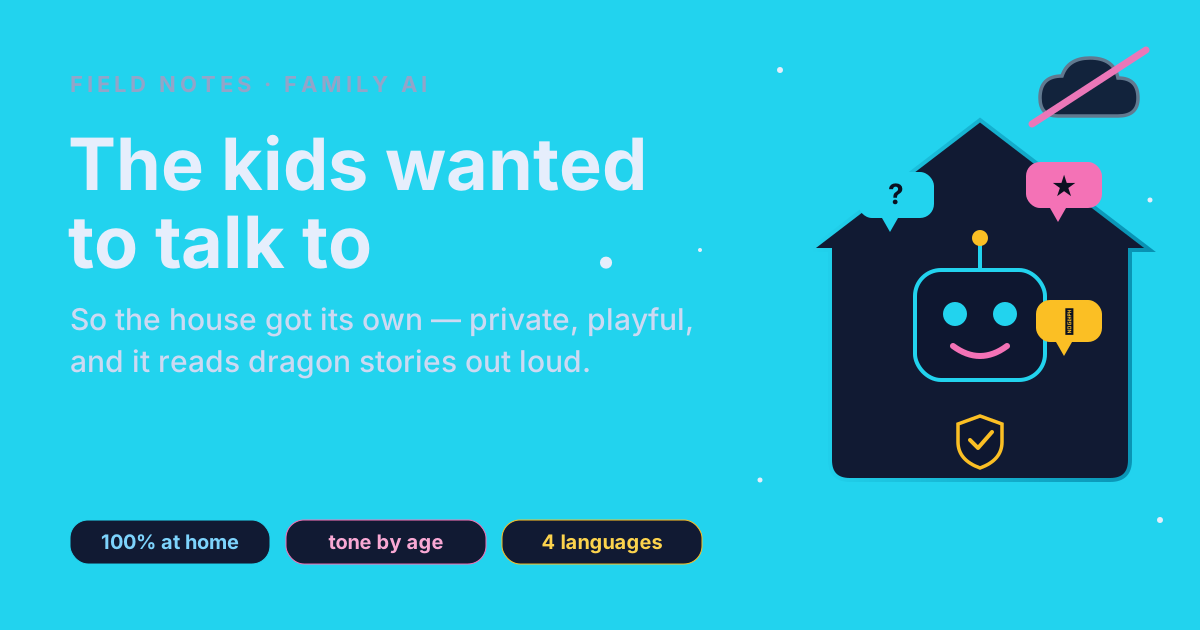
Giving the kids a chatbot that never leaves the house
My kids kept watching me talk to a computer and asked for a turn. Instead of handing them a grown-up chatbot, I built them their own: it lives on the family server, picks its tone by age, reads answers aloud in three languages, remembers their dragons, and never hands a conversation to a cloud AI service. A tour, minus the jargon.
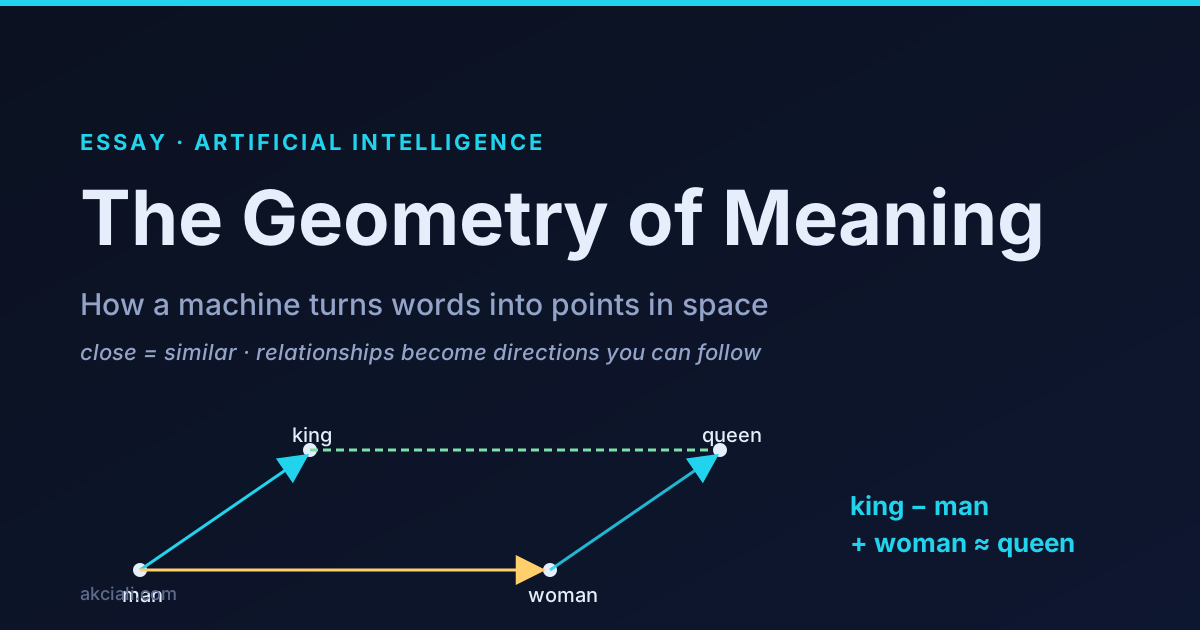
The Geometry of Meaning: how a machine files words in space
Machines don't store meaning as definitions: they store it as geometry. Every word, sentence or image becomes a point in a vast space, where 'close' means 'similar' and whole relationships turn into directions you can follow. The strange 2025–26 twist: that geometry looks universal, which is both a superpower and a security problem.
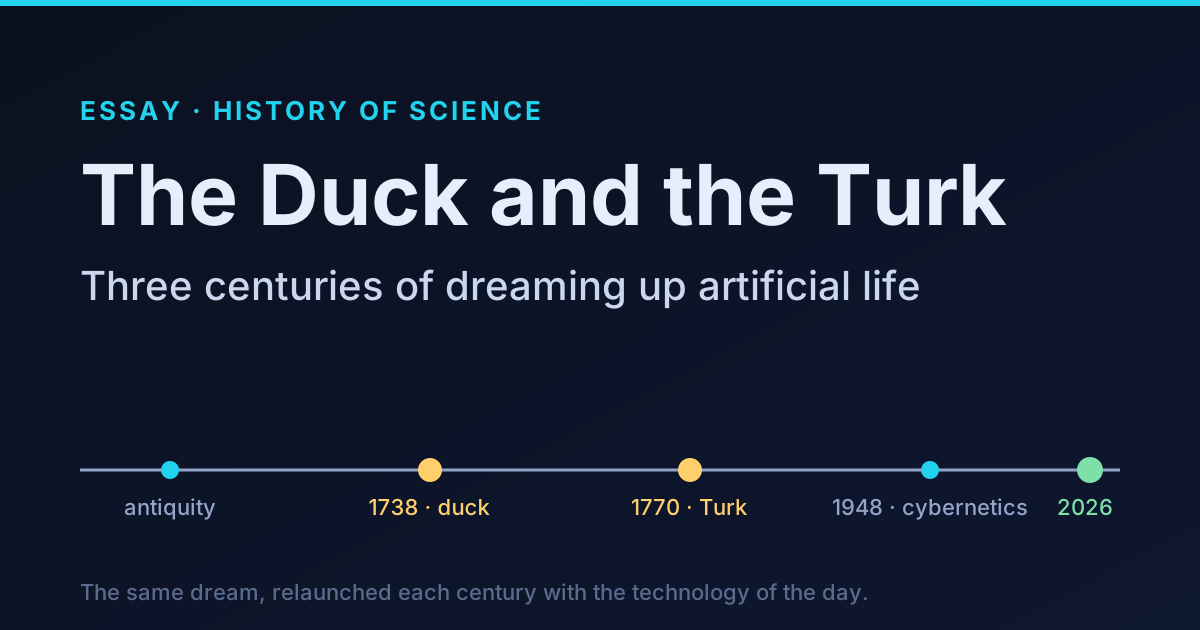
The Duck and the Turk: three centuries of dreaming up artificial life
Chips in the brain, digital doubles, the question of whether a machine really thinks: almost nothing about today's AI is new. The dream of building an artificial being runs as a single thread from antiquity to 2026, and three old objects still frame every debate we have.
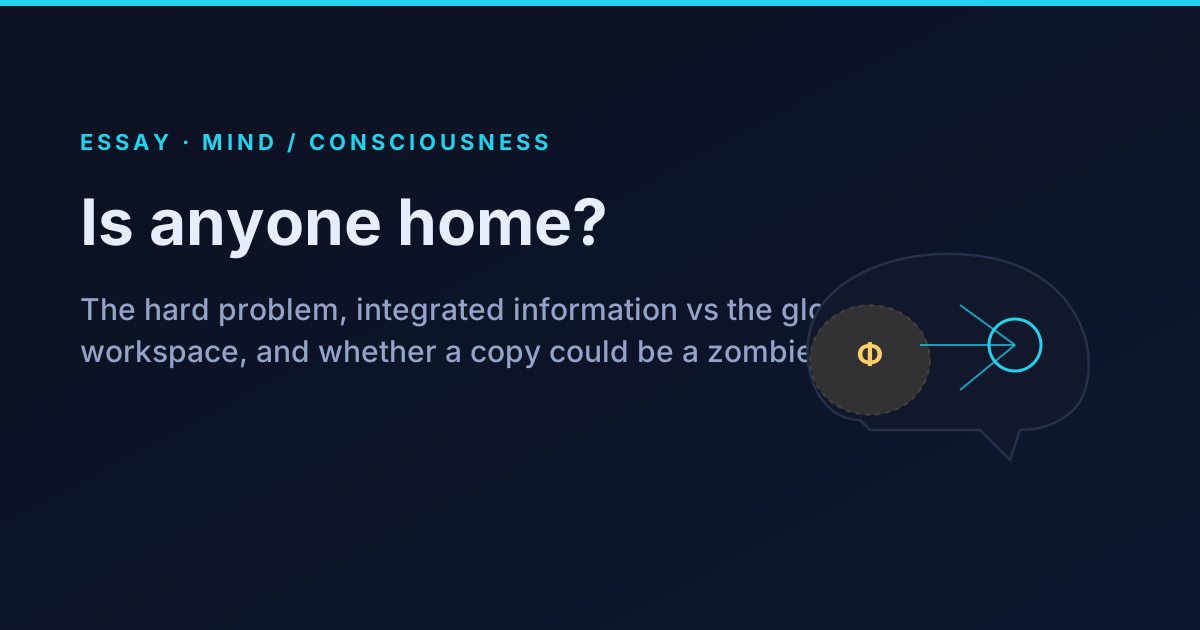
Is anyone home? The science of consciousness
We are getting better at explaining what the brain does, yet still cannot say why any of it is accompanied by an inner experience. That gap (the hard problem) pits two rival theories of consciousness against each other, with very different verdicts on whether a machine could ever be awake inside.
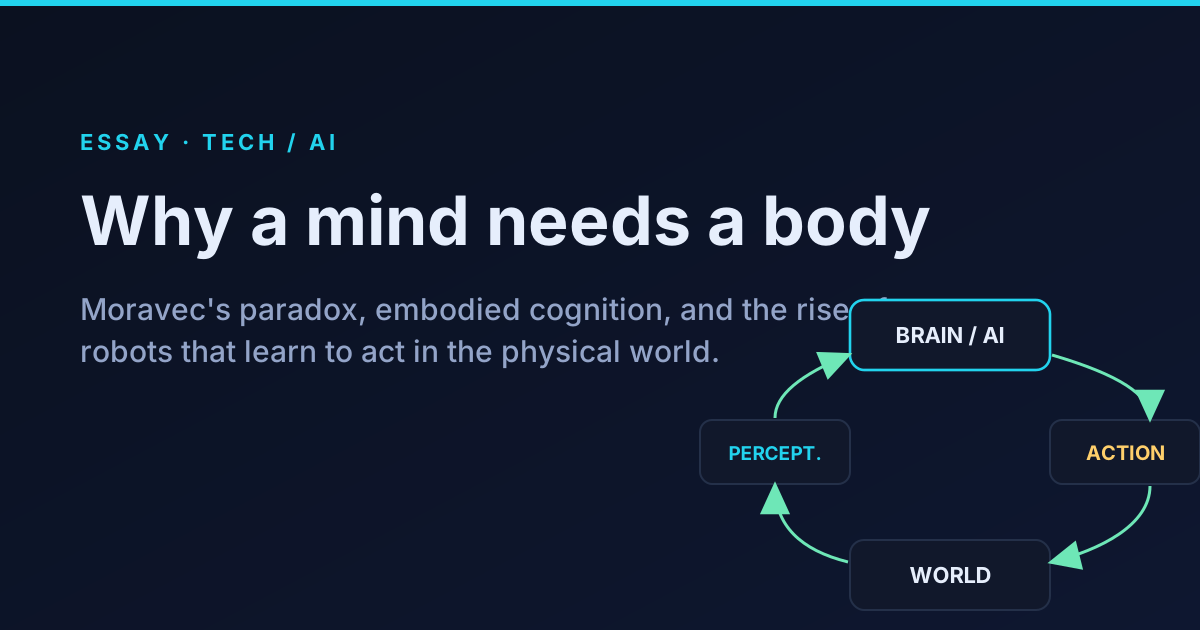
Why a mind needs a body
A machine beat the world chess champion in 1997, yet no robot folds a towel as well as a six-year-old. That inversion has a name, Moravec's paradox, and it explains why AI is finally climbing down into a physical body.
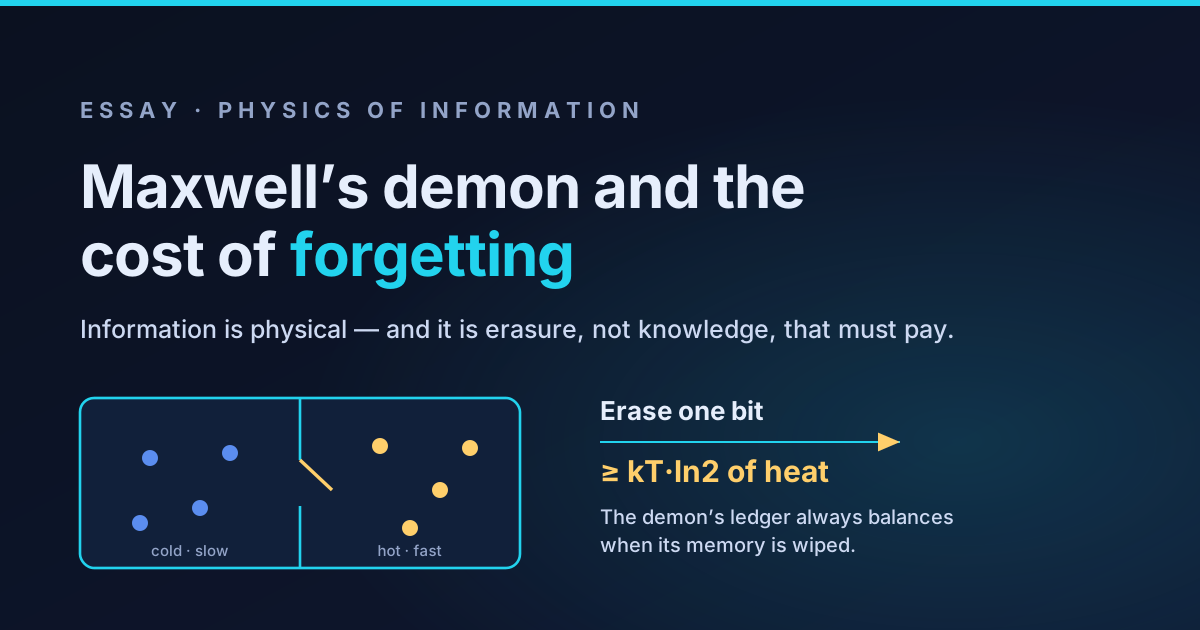
Maxwell's demon and the cost of forgetting
A tiny imaginary creature seemed able to cheat the second law of thermodynamics for a century. The way physics finally caught it reveals something startling: information is physical, and it is erasure, not knowledge, that has to be paid for in heat.
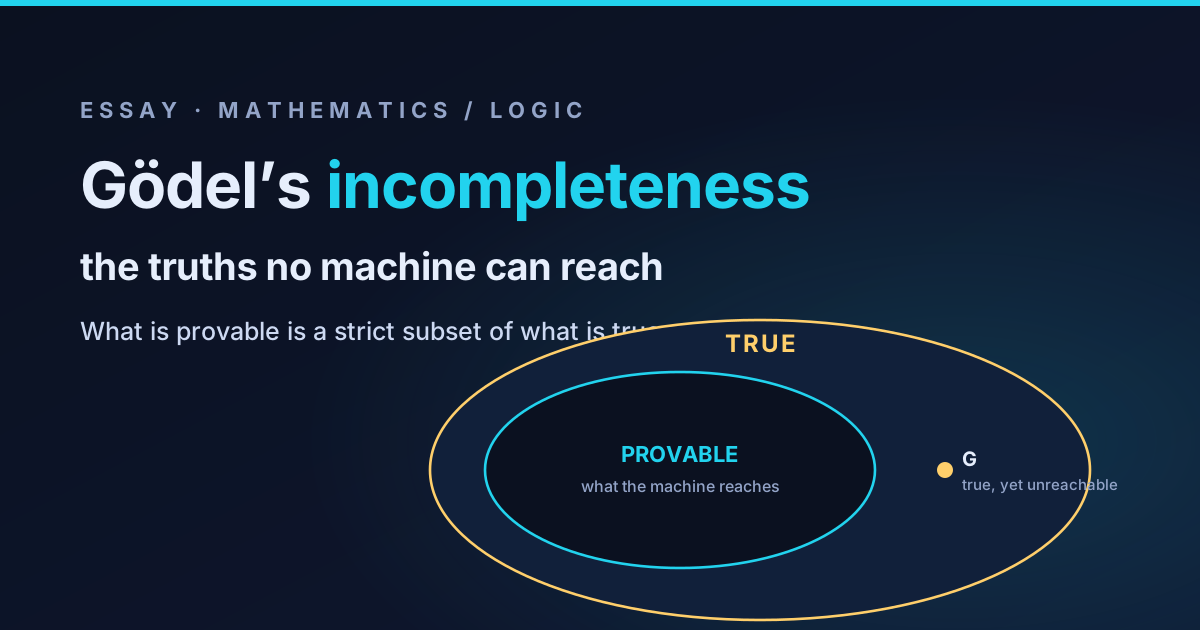
Gödel's incompleteness: the truths no machine can reach
In 1931 a 25-year-old logician proved that no machine for proving truths can ever reach all of them. How the trap closes, why a system can never certify itself, and what it does, and does not, say about the mind.
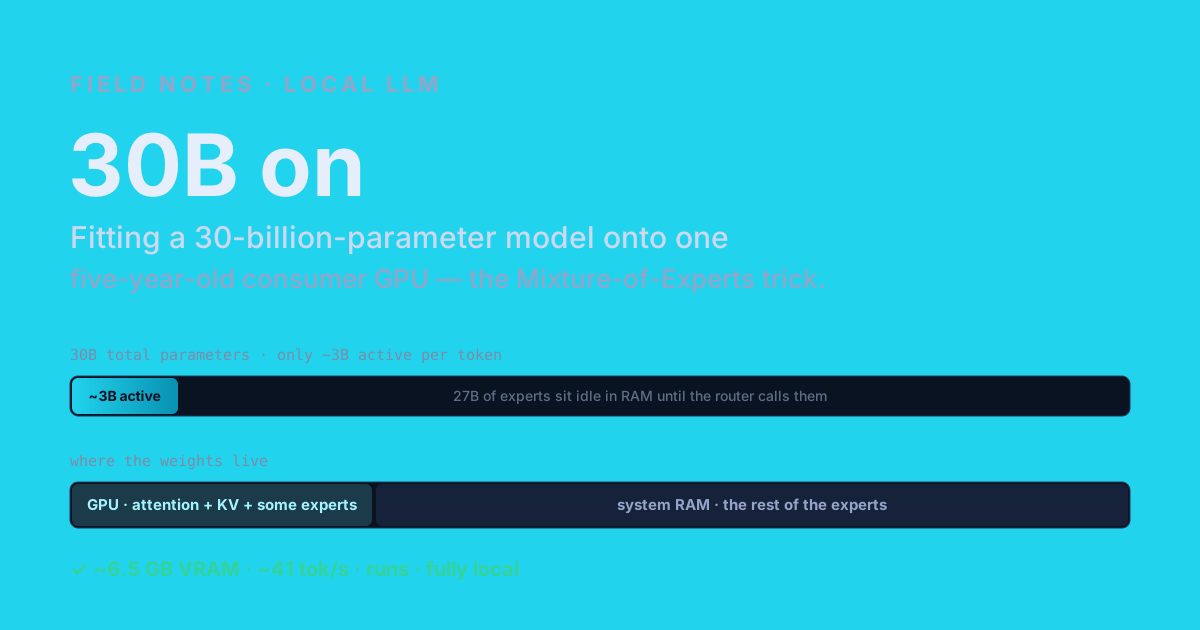
A 30B model on an 8 GB GPU: a small win with Mixture-of-Experts
The sequel to moving my home AI stack onto llama.cpp. I wanted better reasoning without buying hardware, so I tried to run a 30-billion-parameter model on a single 8 GB card. With a Mixture-of-Experts model and CPU offload, it fits, and it's quick. The numbers, and the gotchas. With an interactive config explorer.
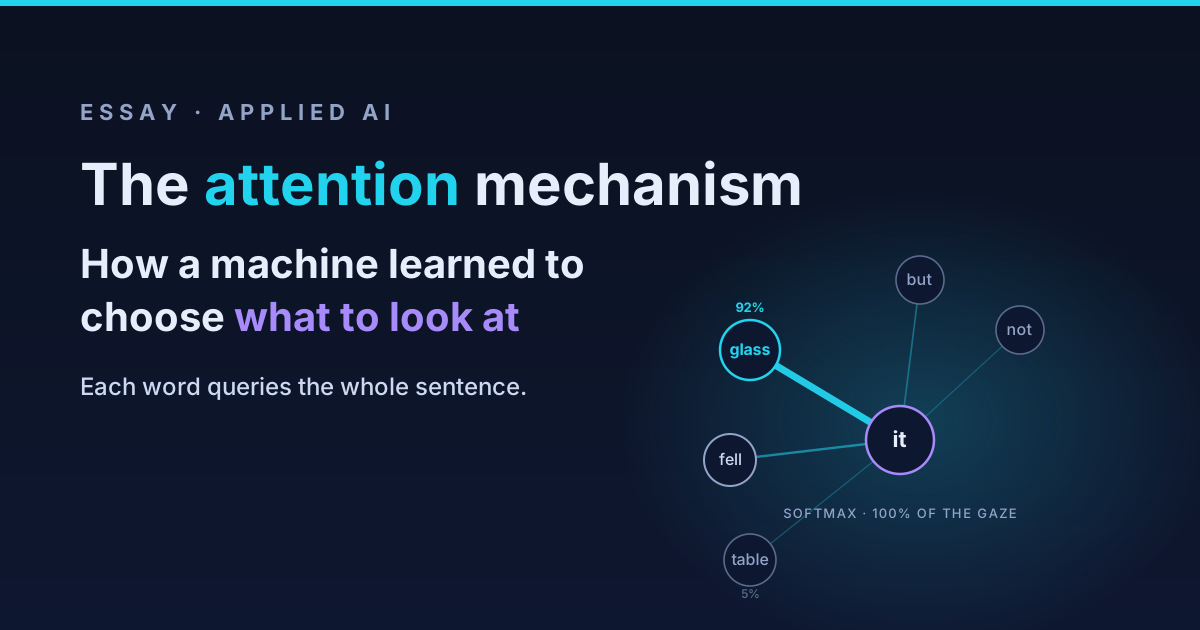
The attention mechanism: how a machine learned to choose what to look at
One idea flipped the whole field of AI in 2017 and now powers every large language model: letting each word look directly at every other and decide what matters. Here is how attention works, and why it convergently rediscovered something the brain already knew.
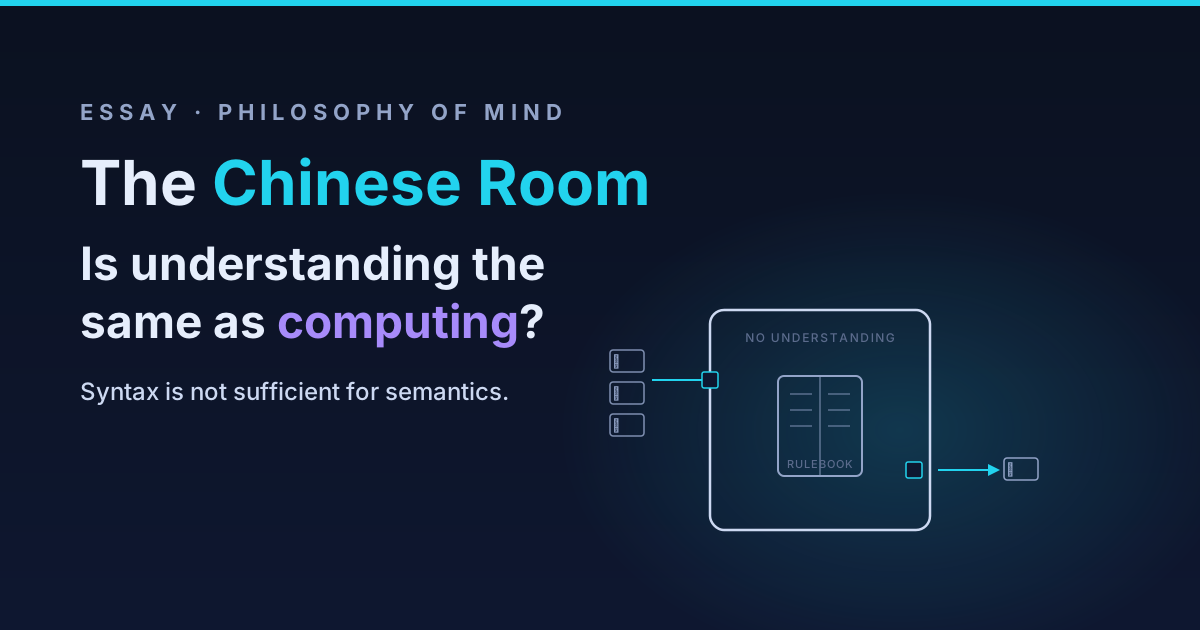
The Chinese Room: is understanding the same as computing?
Searle's Chinese Room argued that running the right program is never enough for understanding. Forty-five years on, interpretability research is turning that armchair intuition into a measurable question.
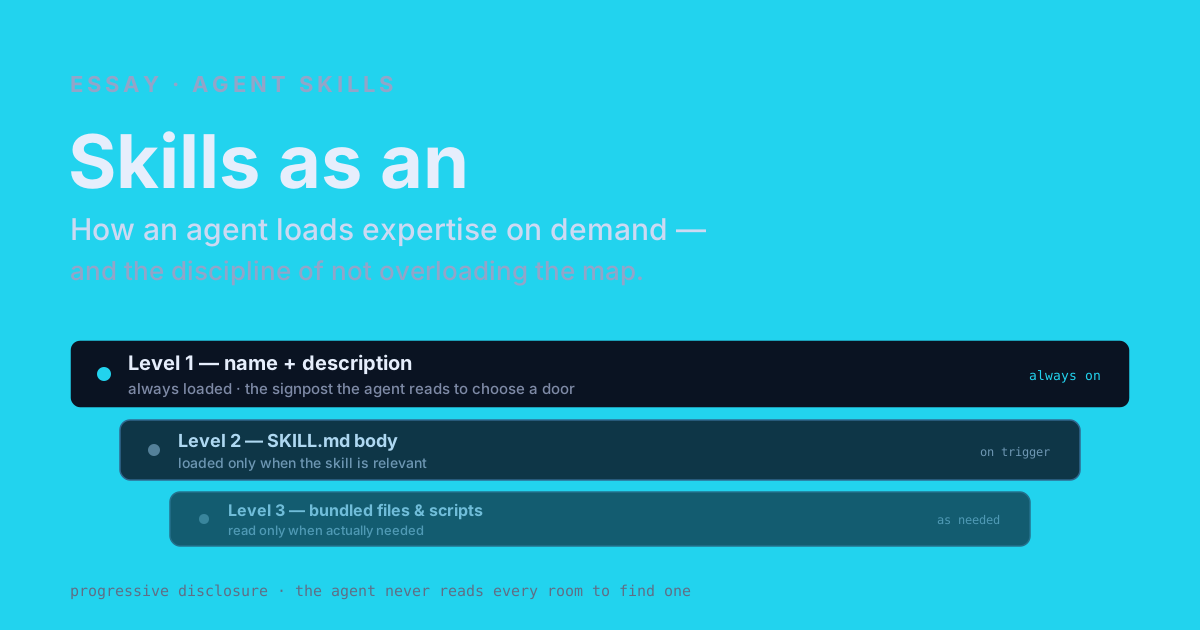
Skills as an orientation map: how an agent loads expertise on demand
Agent Skills let a general-purpose model become a specialist without drowning in instructions. A look at how they work, the progressive-disclosure 'map' that keeps them cheap, where they help at home and at work, and the limits (characters, context, memory) worth knowing. Fully sourced.