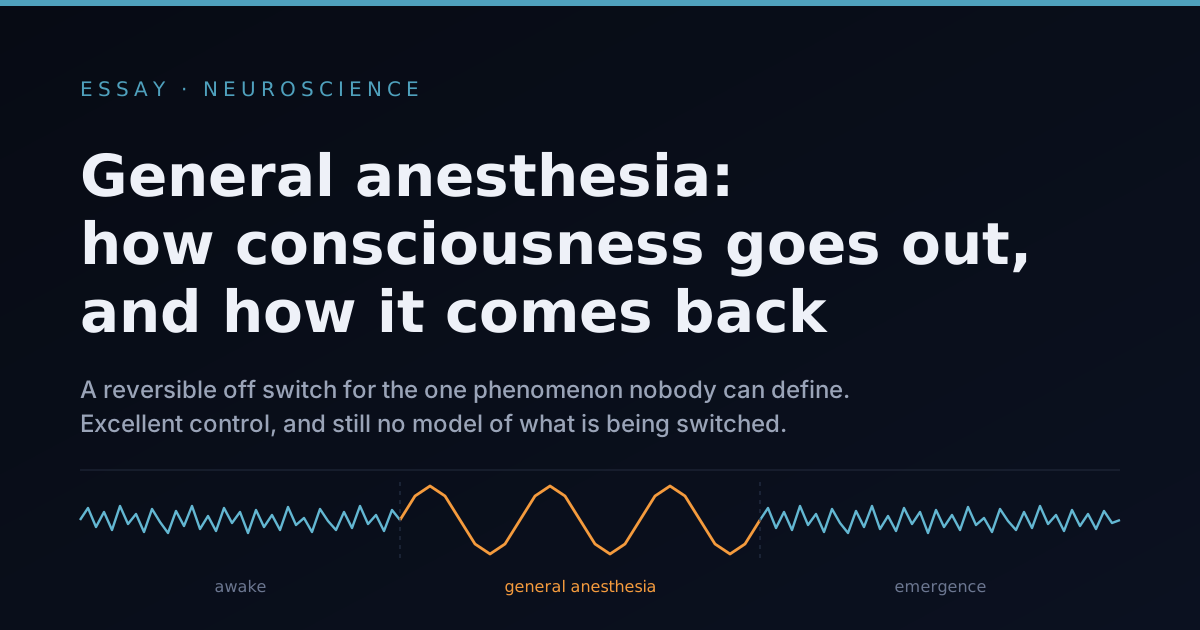
General anesthesia: how consciousness goes out, and how it comes back
Anesthesia is the only routine intervention that removes consciousness on schedule and reliably gives it back, which makes it the best experimental handle the science of consciousness has. It is also a standing demonstration of how far control can run ahead of understanding.
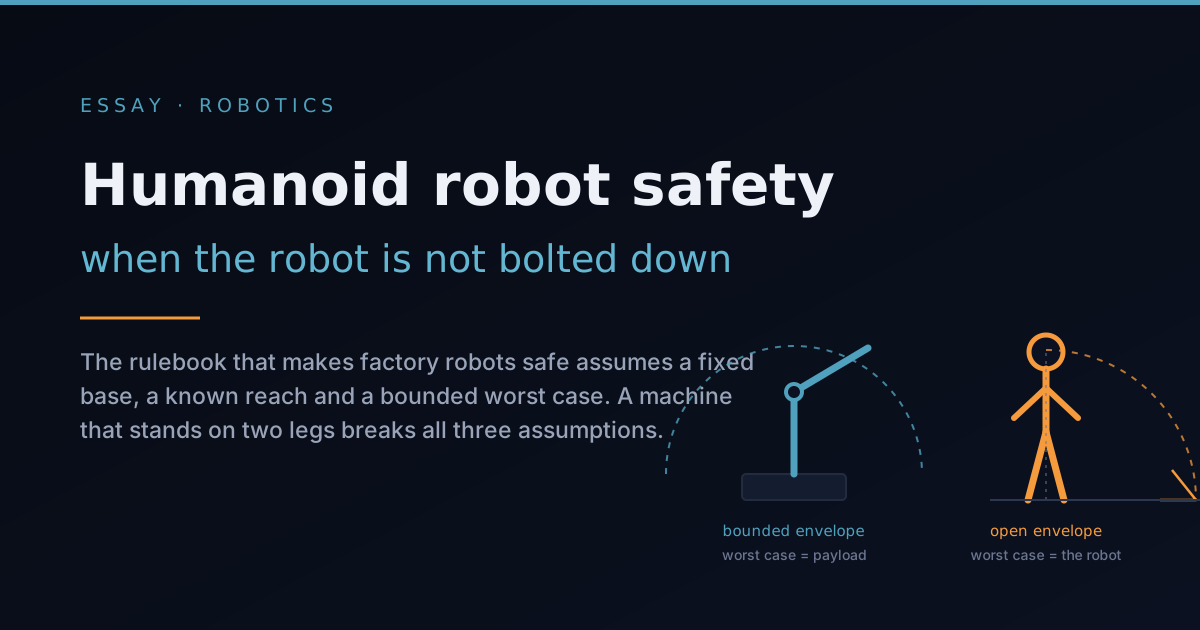
Humanoid robot safety: what happens when the robot is not bolted down
The framework that makes factory robots certifiable assumes a fixed base, a known reach and a worst case you can compute from the payload. A machine standing on two legs breaks all three assumptions, and the standard written for it is still a working draft while the robots are already shipping.
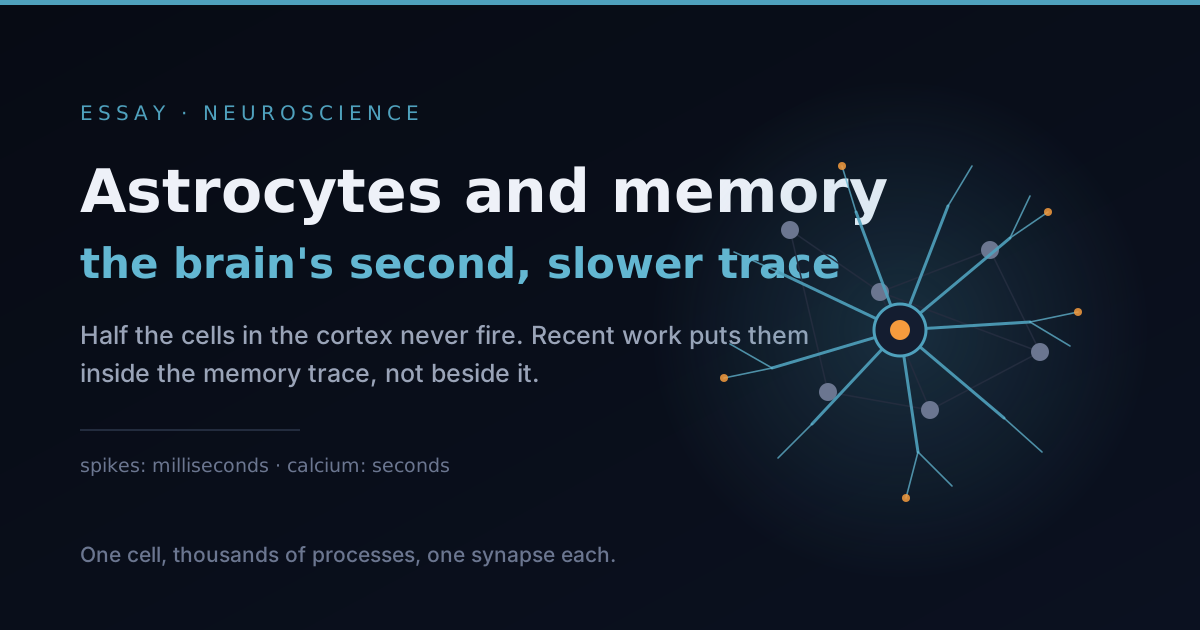
Astrocytes and memory: the brain's second, slower trace
Half the cells in the cortex never fire an action potential, and for a century they were filed as support tissue. Tagging experiments from 2025 and 2026 put a sparse set of astrocytes inside the memory trace itself, which forces an uncomfortable question: what does a cell that signals in seconds contribute to a memory?
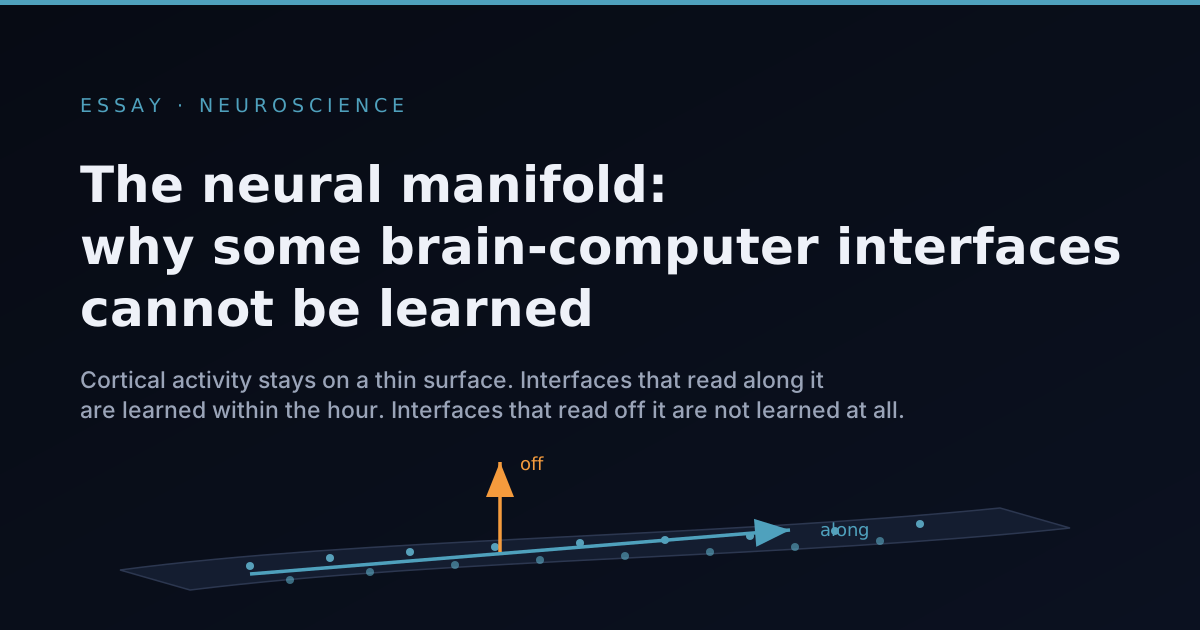
The neural manifold: why some brain-computer interfaces cannot be learned
Activity in a cortical network does not fill the space it could occupy. It stays on a thin surface, and a 2026 human study shows that an interface reading along that surface is mastered within the hour, while an interface reading off it is never learned at all.
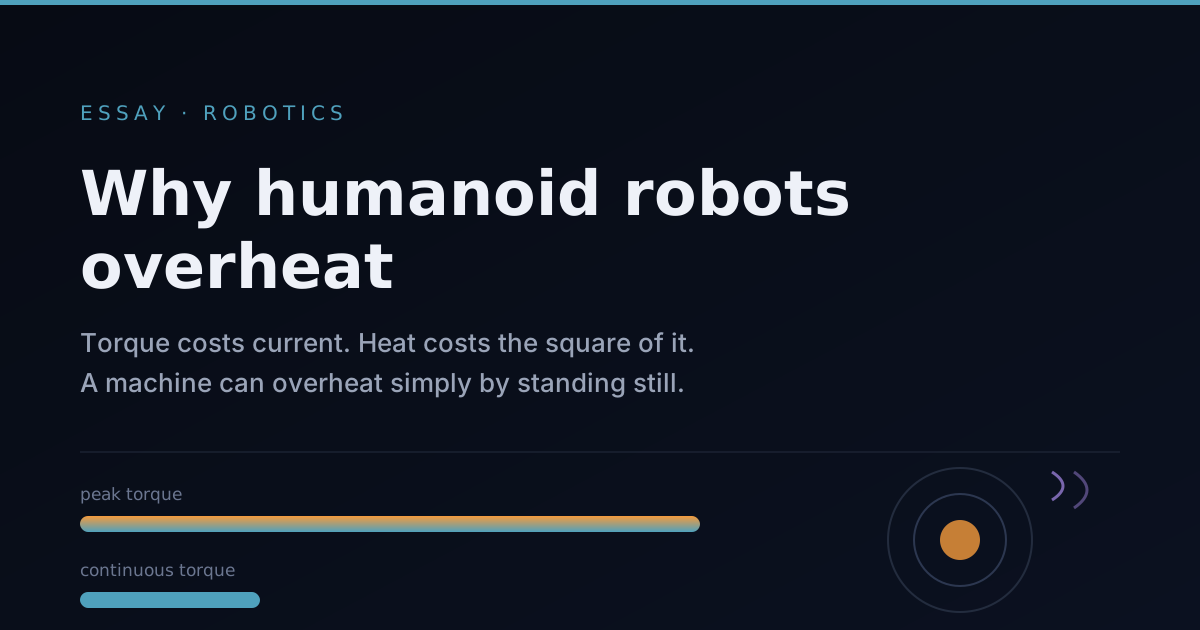
Why humanoid robots overheat: the thermal cliff
A legged robot can overheat without going anywhere. Torque costs current, heat costs the square of the current, and holding a pose against gravity is a continuous expense. The gap between what an actuator can do for a second and what it can do for an hour is the quietest constraint on the whole field.
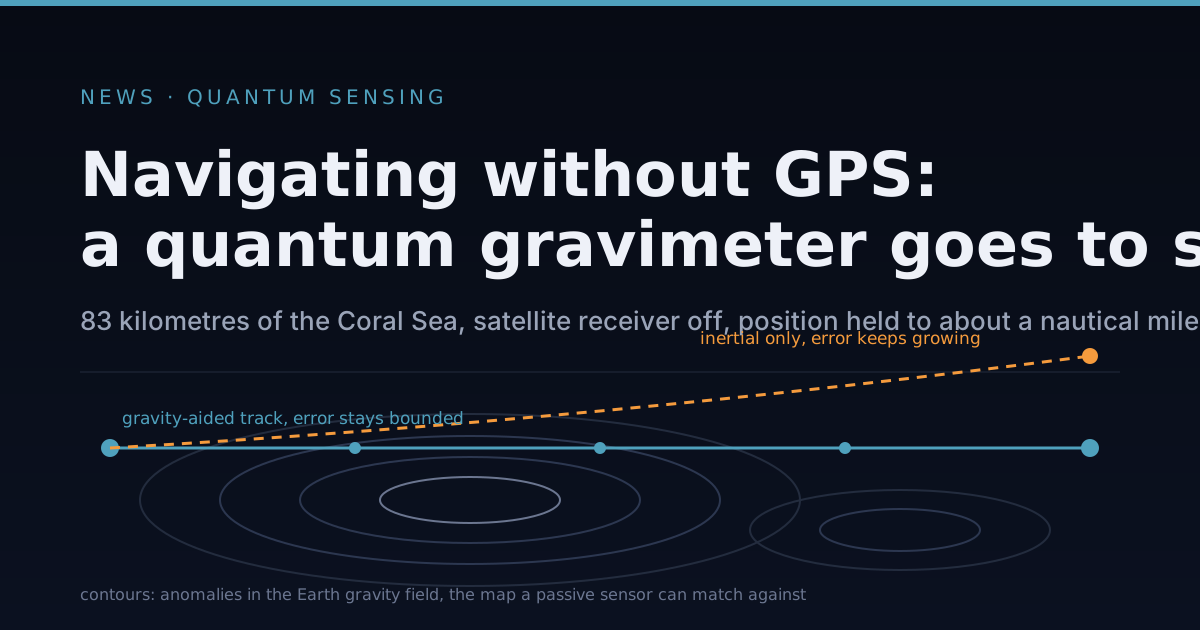
Navigating without GPS: a quantum gravimeter goes to sea
A vessel crossed 83 kilometres of the Coral Sea with its satellite receiver switched off, holding its position to about a nautical mile by reading the Earth's gravity field. The claim comes from the company that built the instrument, and the interesting part is what it does not solve.
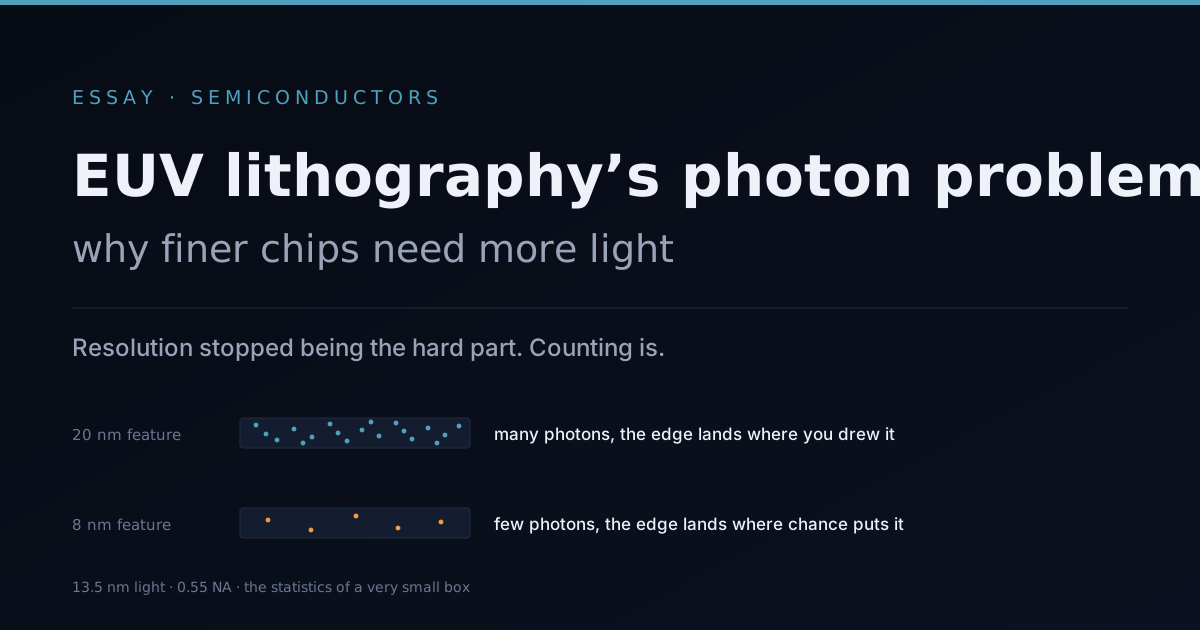
EUV lithography's photon problem: why finer chips need more light
The hard part of printing a chip is no longer drawing a small enough line. It is that a line small enough to matter is exposed by only a few hundred particles of light, and a few hundred of anything is a statistic rather than a certainty.
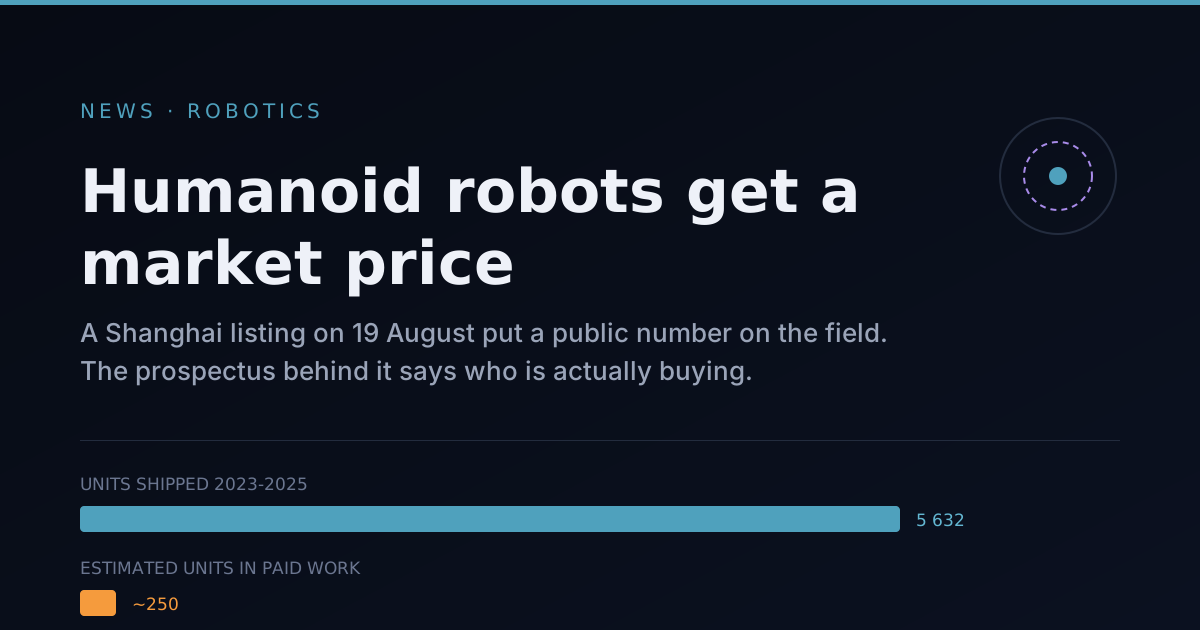
Humanoid robots get a market price: what the Unitree IPO reveals
On 19 August the first pure humanoid robot maker listed on a mainland Chinese exchange, and the price the market set was extraordinary. The audited filing that came with it says something more interesting: over seventy percent of those machines are sold to laboratories, not to employers.
How a kids' chatbot grew into a home AI architecture
It started as a weekend proof of concept: a chatbot a child could try. Two months later it is a full on-premises architecture, where safety is written as code around the model instead of asked of it. Here is how the pieces fit, and why none of it phones home.
Powering the machines inside the human body
Every machine sealed in the human body lives on a starvation energy budget. This essay follows the watt: why batteries force repeat surgery, how power crosses living tissue, why plutonium once solved the problem, and which technologies are trying to retire the battery in 2026.
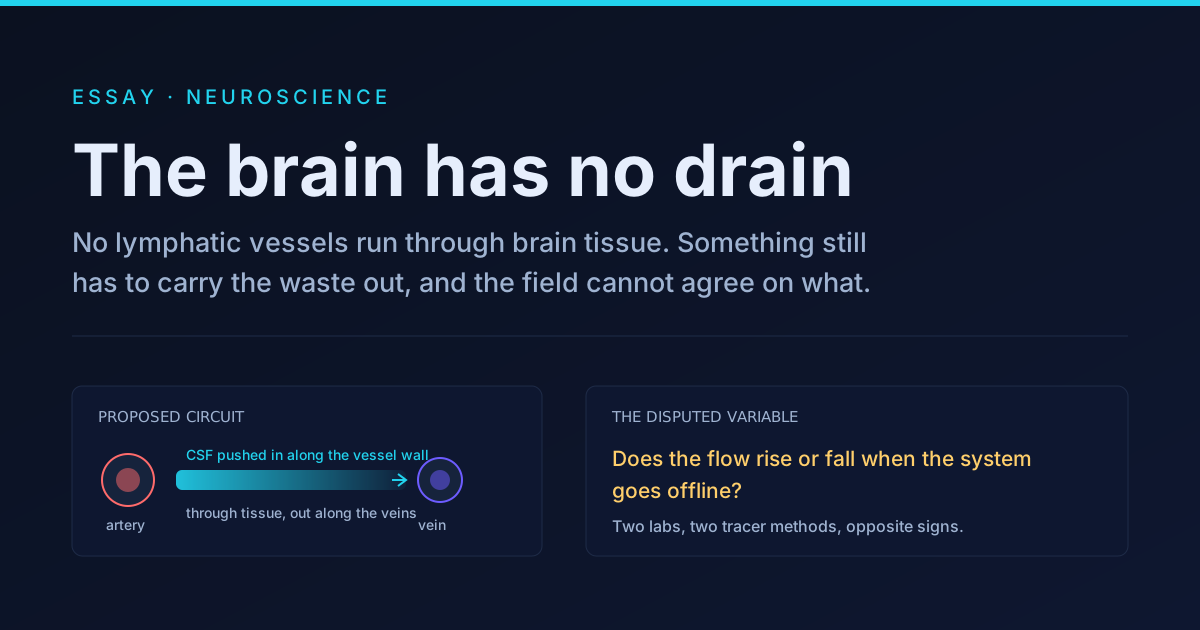
How the brain clears its waste while you sleep
Every other organ removes its waste through lymphatic vessels. Brain tissue has none, and diffusion alone is far too slow at organ scale. The proposed answer is a fluid circuit that runs hardest when the system goes offline, and after thirteen years the field still cannot agree on the sign of the effect.
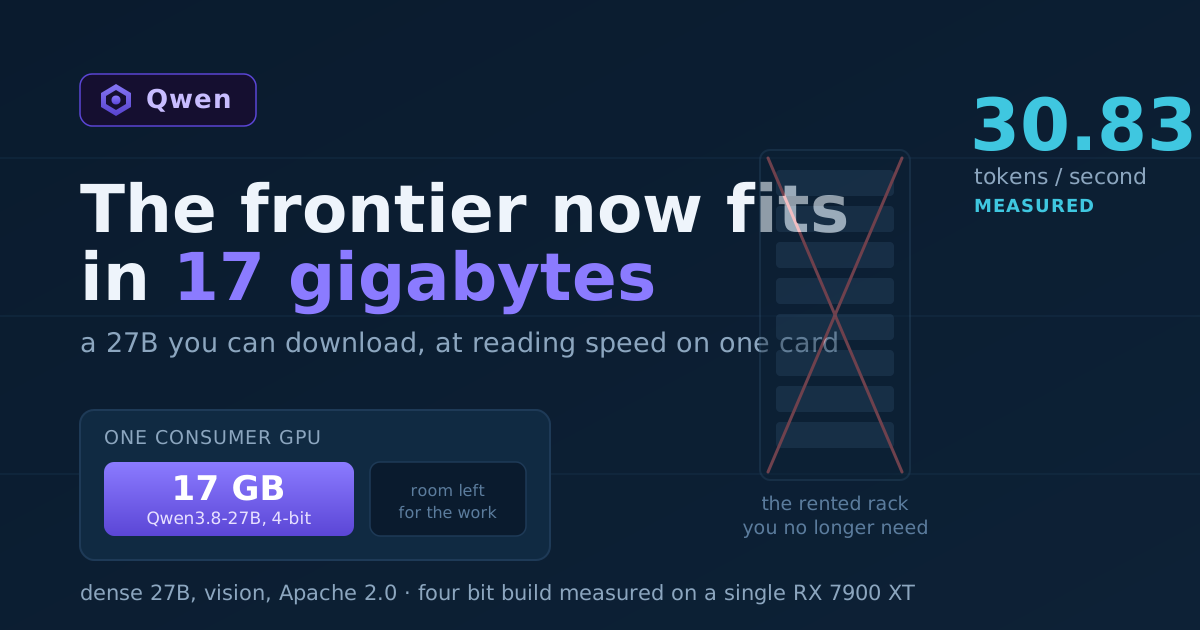
A frontier AI model that fits on one gaming card
This week Alibaba shipped a 27B open model that argues with the closed flagship on several benchmarks, and it runs at reading speed on a single gaming card. The size is the story, and it changes who gets to own a frontier model.
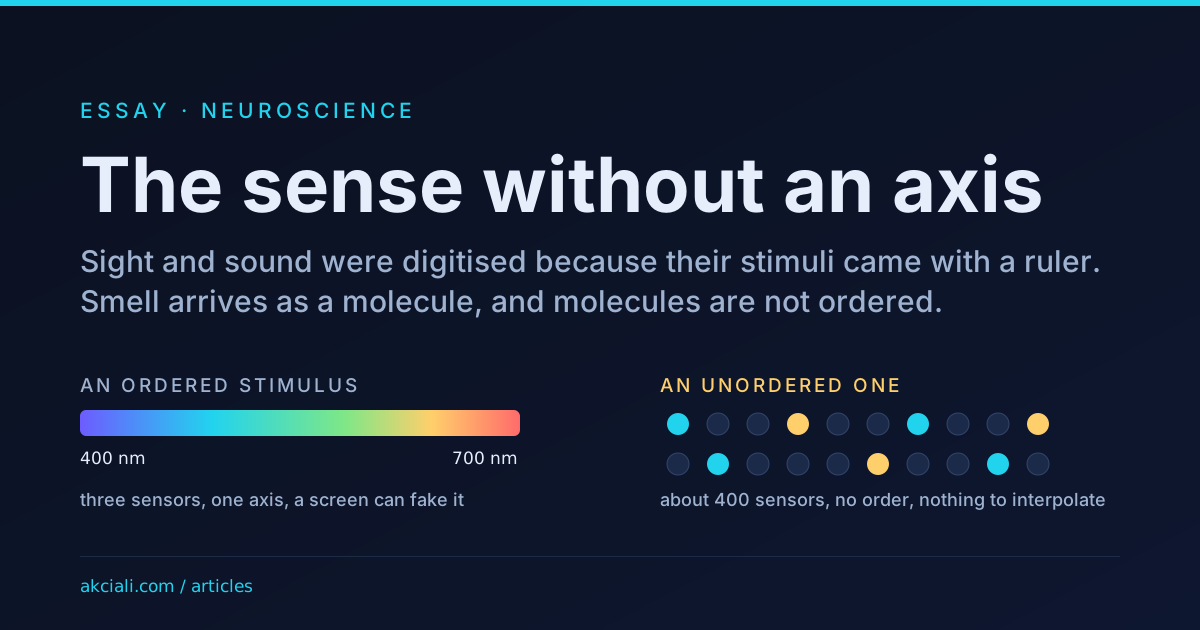
Why smell is the sense we still can't digitise
Sight and hearing were digitised because their stimuli come with a physical ruler. Smell has none, which is why the map of odour had to be learned from perception rather than derived from chemistry, and why prediction has advanced while capture and reproduction have not.
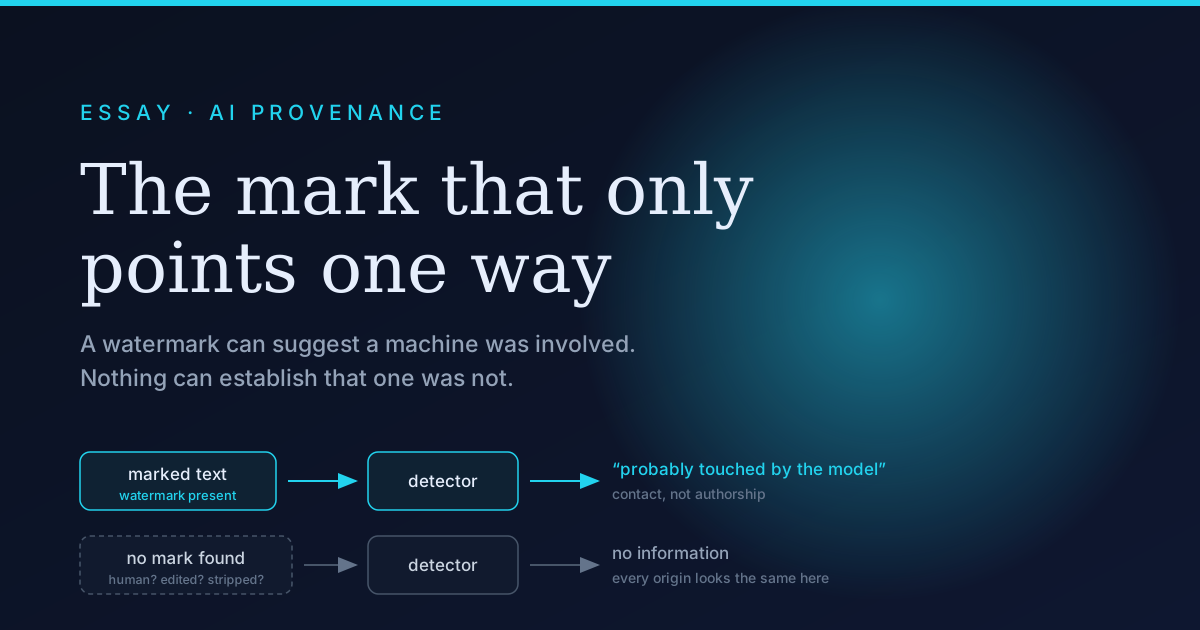
The mark that only points one way
Since 2 August 2026 the EU requires AI-generated content to be machine-readable as such, and Anthropic has published how Claude will comply. The marks work in one direction only: they can suggest a machine was involved, and they can never establish that one was not.
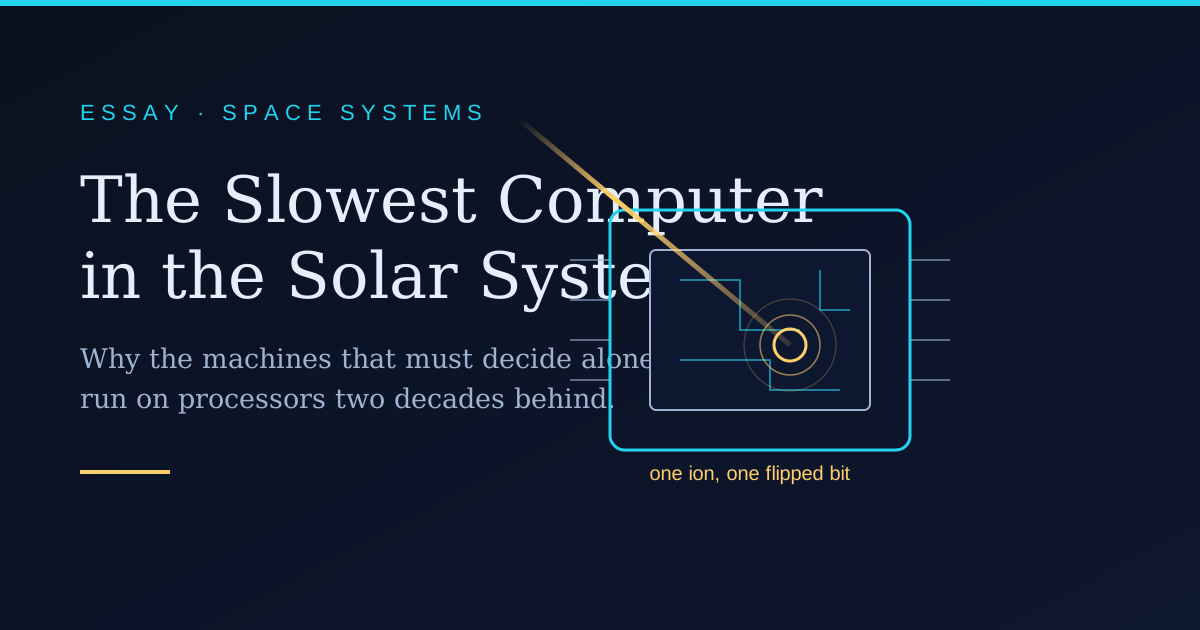
The Slowest Computer in the Solar System
The machines that must decide entirely on their own, with no operator reachable in time, run processors two decades behind a phone. This essay explains the radiation physics that forces the lag, the hardening stack built to absorb it, and why putting commercial GPUs in low orbit does not settle the question.
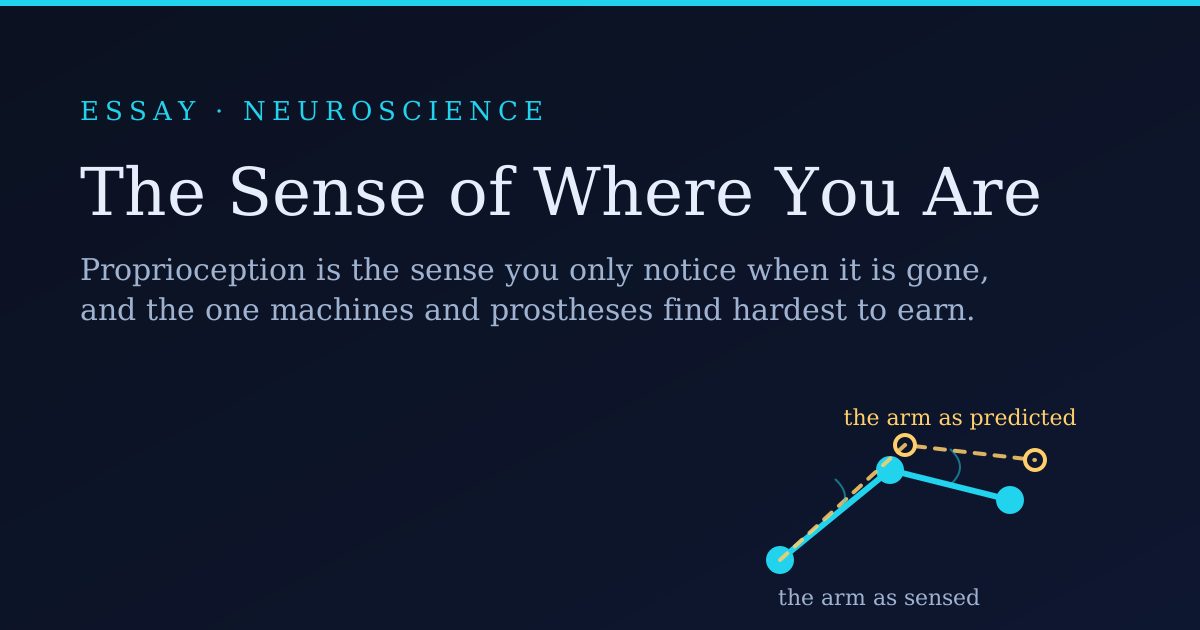
The Sense of Where You Are
Proprioception, the body's silent sense of its own position, is easy to overlook and catastrophic to lose. This essay follows it from muscle spindles to forward models, and asks why robots with perfect encoders still lack it while surgeons are learning to rebuild it.
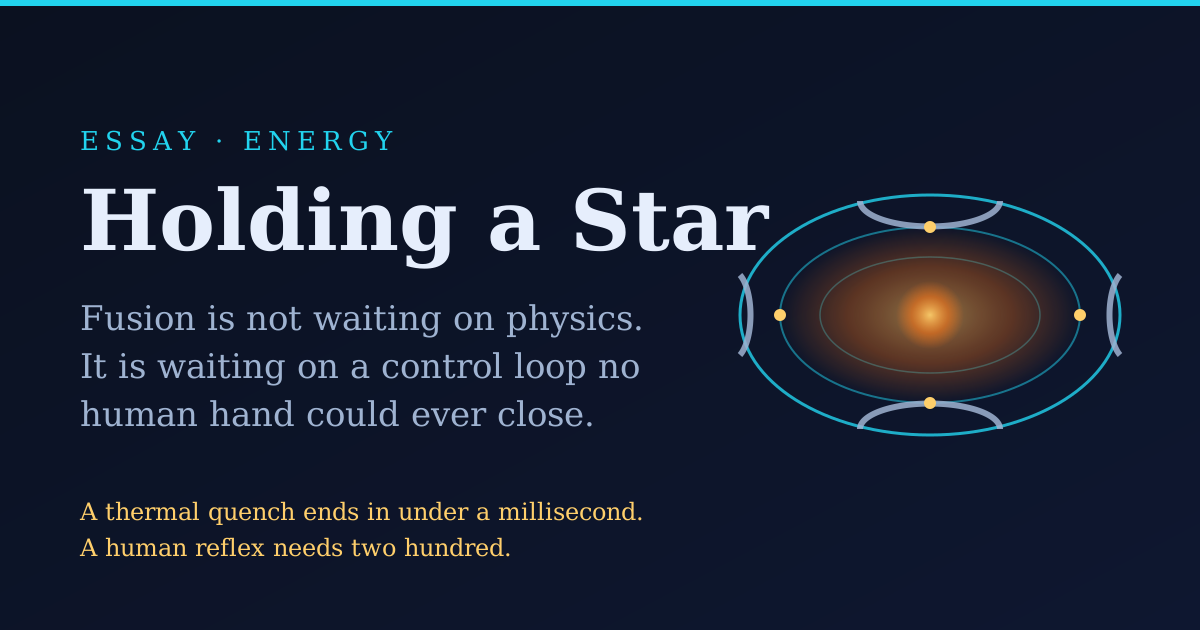
Holding a Star: Fusion as a Control Problem
Tokamak plasmas are engineered to be unstable, and their instabilities unfold a thousand times faster than a human reflex. This essay argues that the real bottleneck of fusion energy is not plasma physics but the control loop, and looks at what happens when that loop is handed to a neural network.
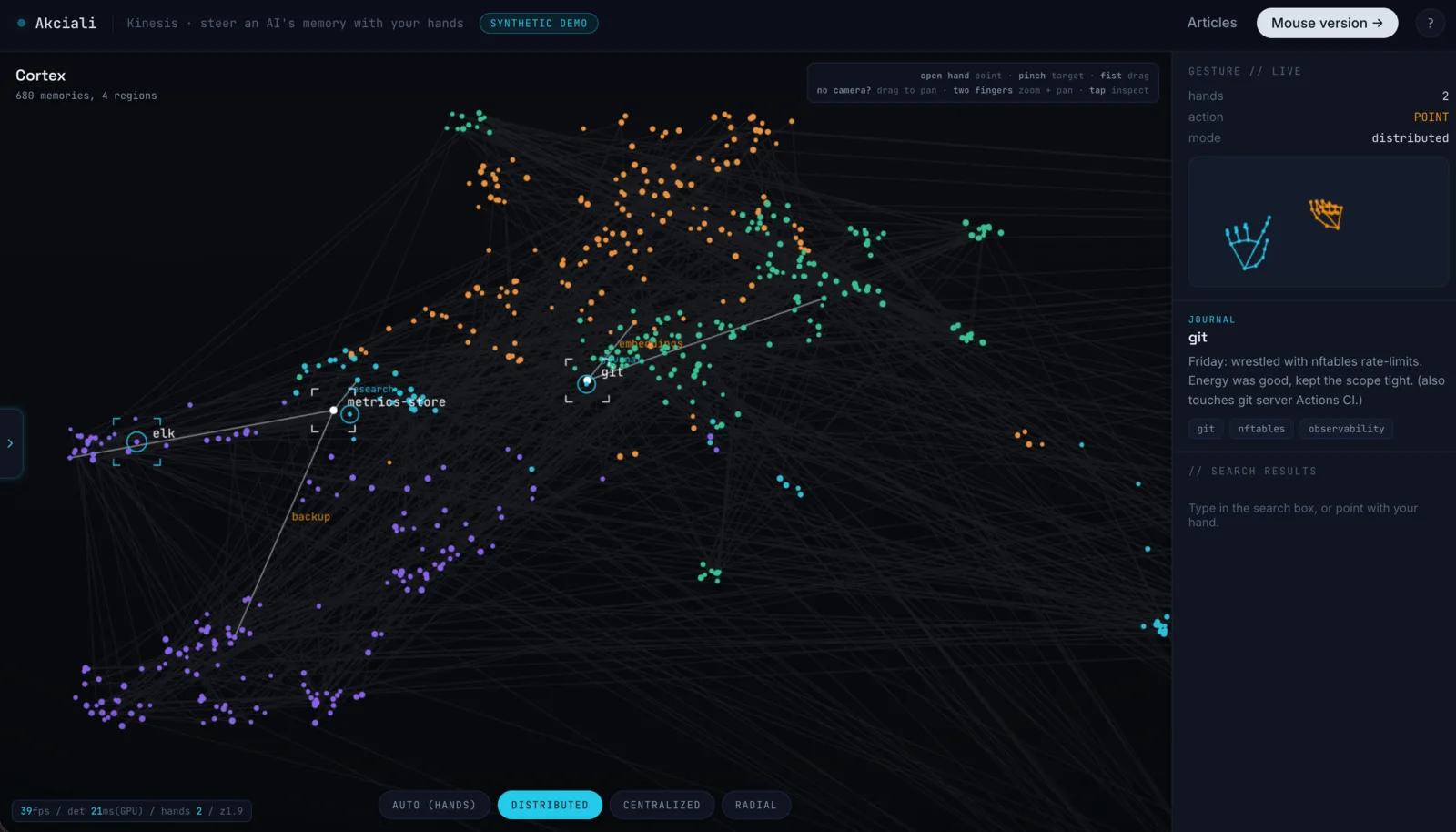
Kinesis: the hand-steered memory map moves out
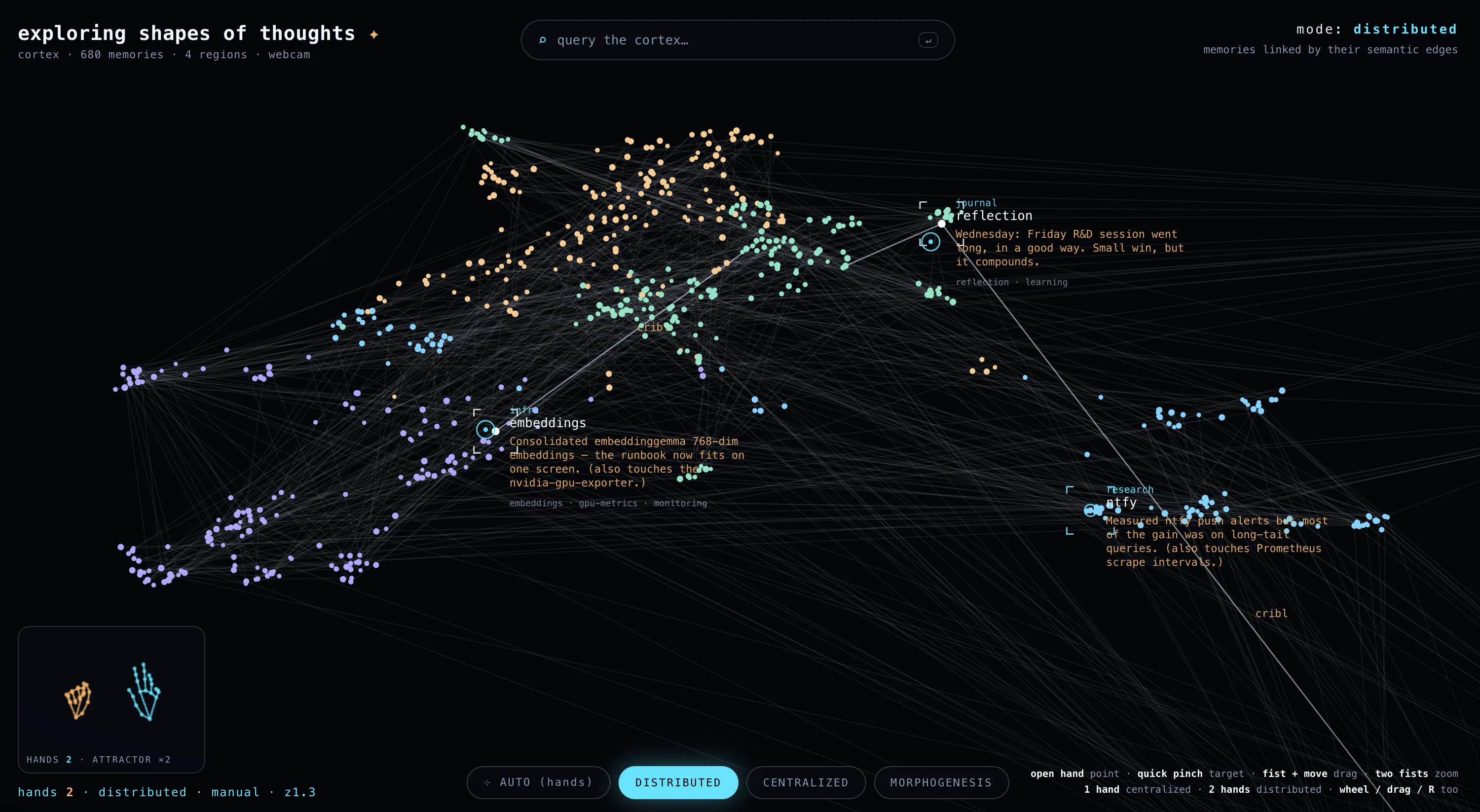
The webcam-and-hands experiment from June grew up and got its own address. Kinesis is now a standalone demo: four hand postures, a memory map that answers, a camera that never leaves your device, and a surprising answer to the question of what a gesture actually weighs. With interactive diagrams.
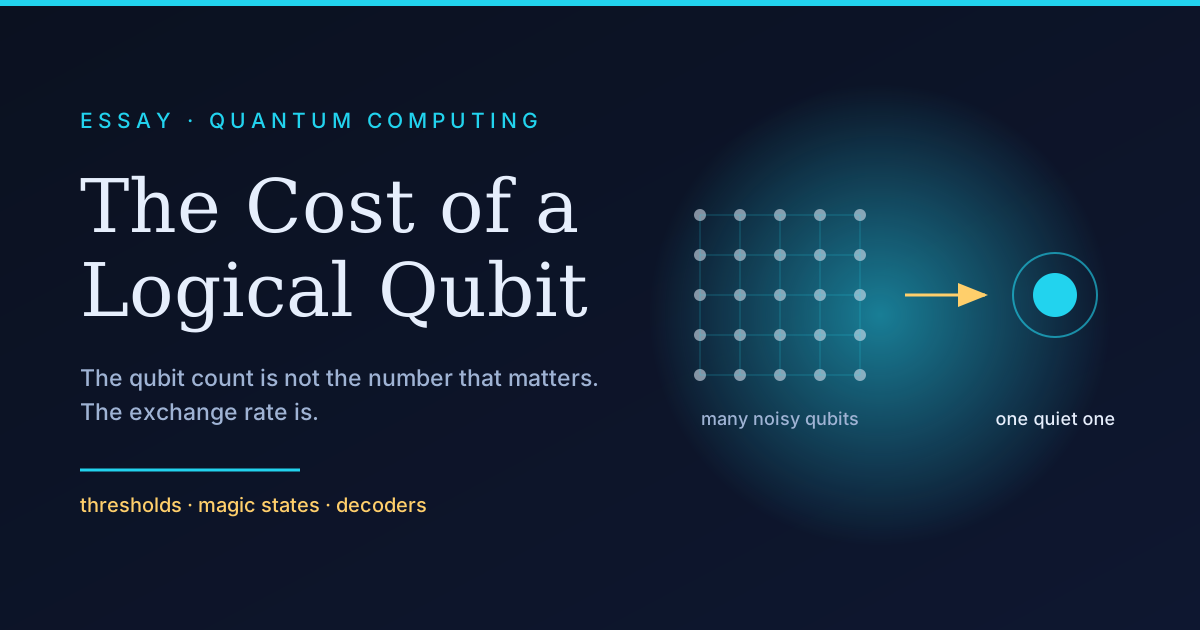
The cost of a logical qubit
Qubit counts are the wrong headline. The number that decides whether a quantum computer is useful is the exchange rate between noisy physical qubits and quiet logical ones, and the hardest part of that bill is not memory but a single gate.
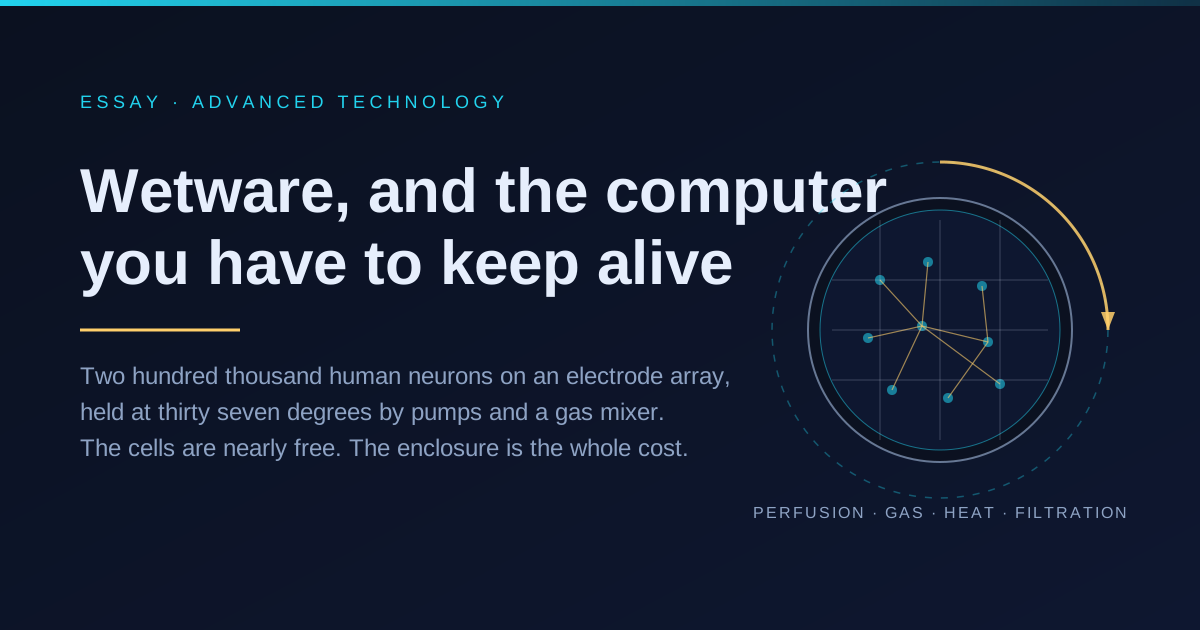
Wetware, and the computer you have to keep alive
Living neurons grown on electrode arrays are now sold as computers and rented over an API. The case for them is not energy, and the arithmetic on energy is worse than advertised. What the 2026 organoid learning results establish, and where the adaptation is actually happening.
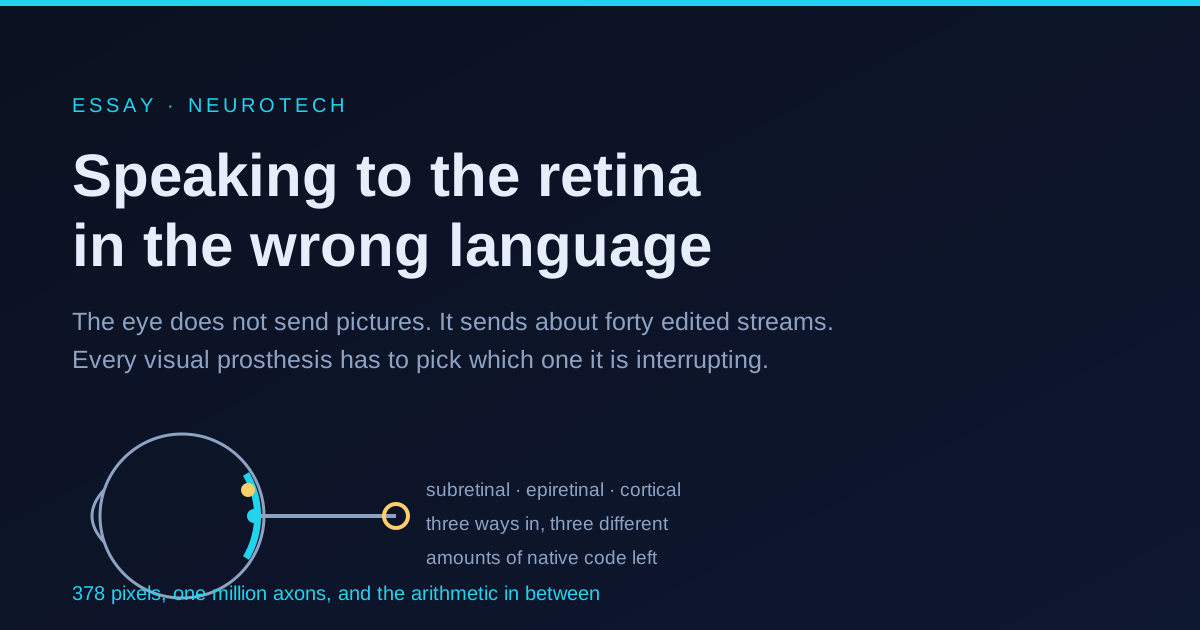
Speaking to the retina in the wrong language
Restoring sight is not a pixel count problem. The optic nerve carries around forty parallel feature streams rather than an image, and every visual prosthesis is a decision about how much of that native encoding to keep. What the 2026 clinical results actually establish, and what they leave untouched.
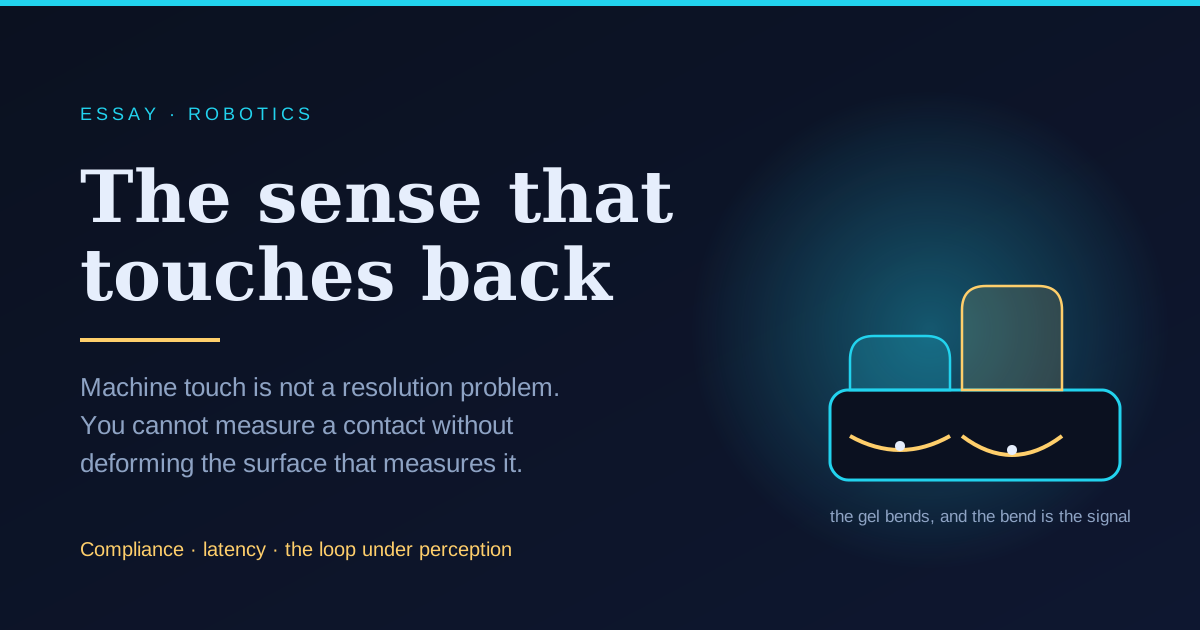
The sense that touches back
Machine touch is not a resolution problem. A tactile sensor must deform to register anything, which makes it part of the contact it reports, and the useful signal lives in a control loop far faster than perception. Why cameras under rubber won, and what that design costs.
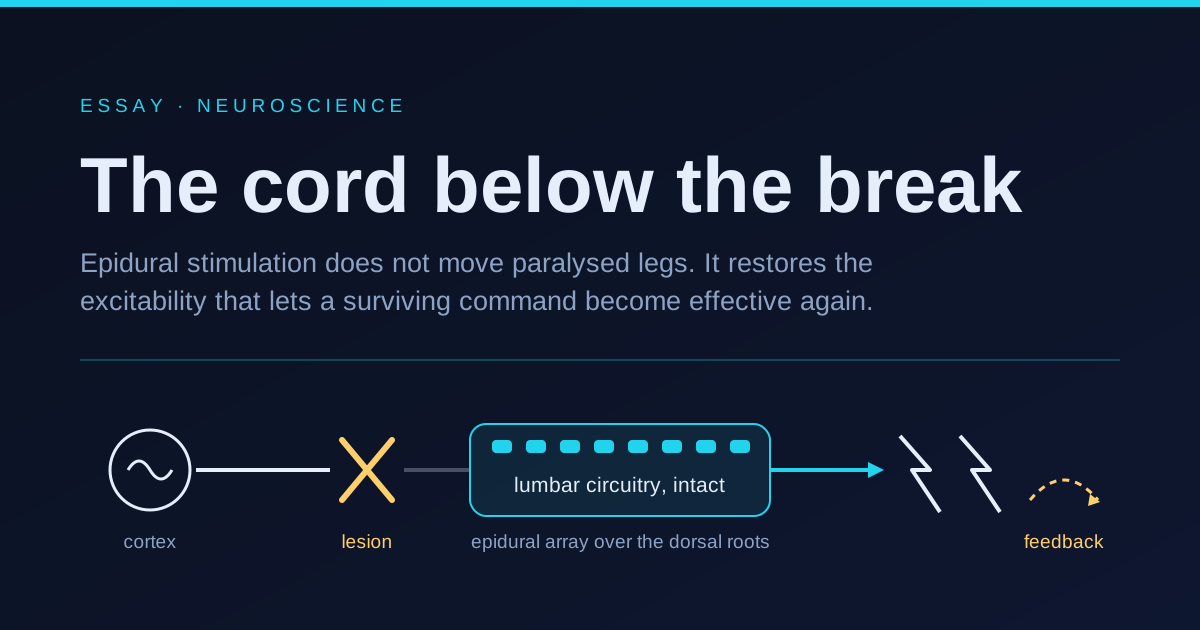
The cord below the break
Epidural stimulation of the spinal cord does not drive paralysed muscles. It stimulates sensory fibres, biases motoneurons toward threshold, and lets a surviving descending command become effective again. Why that distinction decides everything, and why the recovered circuit is not the original one.
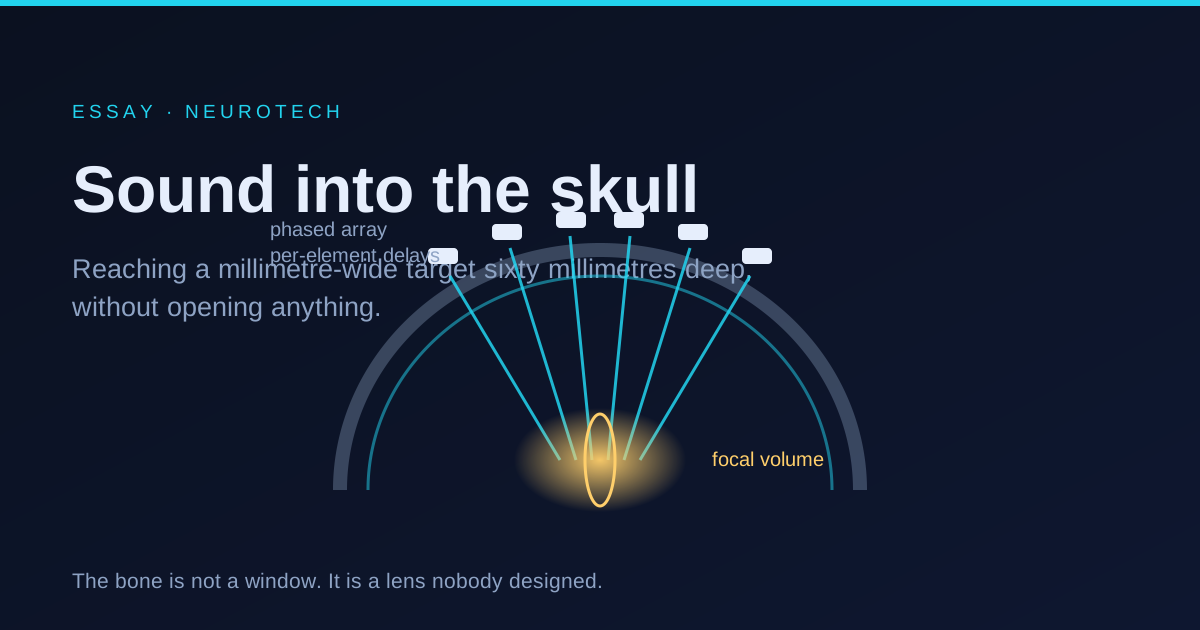
Sound into the skull
Low intensity focused ultrasound can put mechanical energy into a target sixty millimetres deep without an incision, and implanted electrodes have now recorded the effect from inside that target. The physics of why sound gets there when fields cannot, why the bone is the hard part, and why nobody can yet say what the sound does to a neuron.
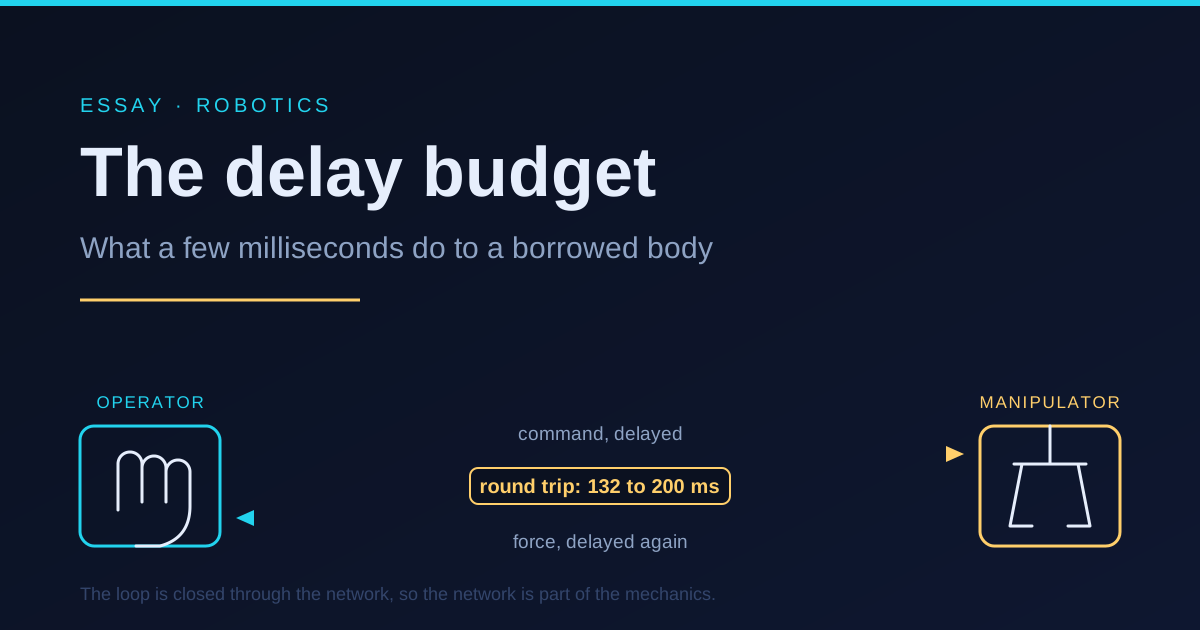
The delay budget: what a few milliseconds do to a borrowed body
A teleoperated robot is a body you rent through a network, and the rental terms are written in milliseconds. Where the delay comes from, why force feedback turns it into an energy problem, and why the same latency that tires an operator also poisons the demonstration data used to train autonomous robots.
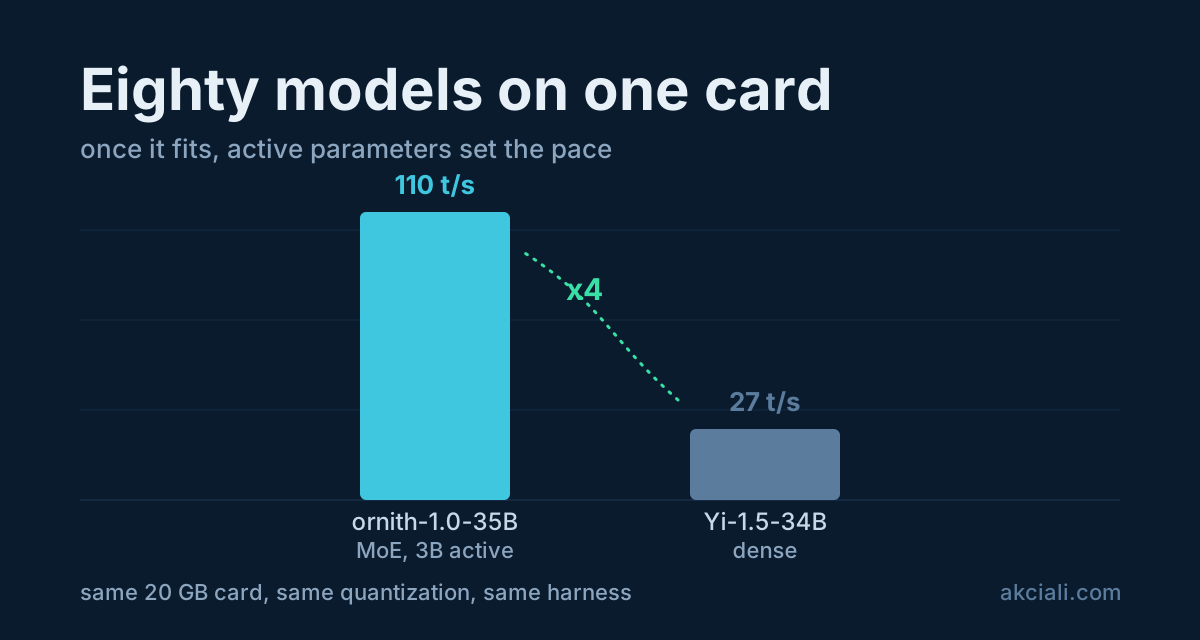
Eighty models on one card, and the protocol behind them
I measured 80 language models on a single 20 GB graphics card and contributed the results to an open benchmark table. Here is the full protocol, the platform, and what the numbers do not say.
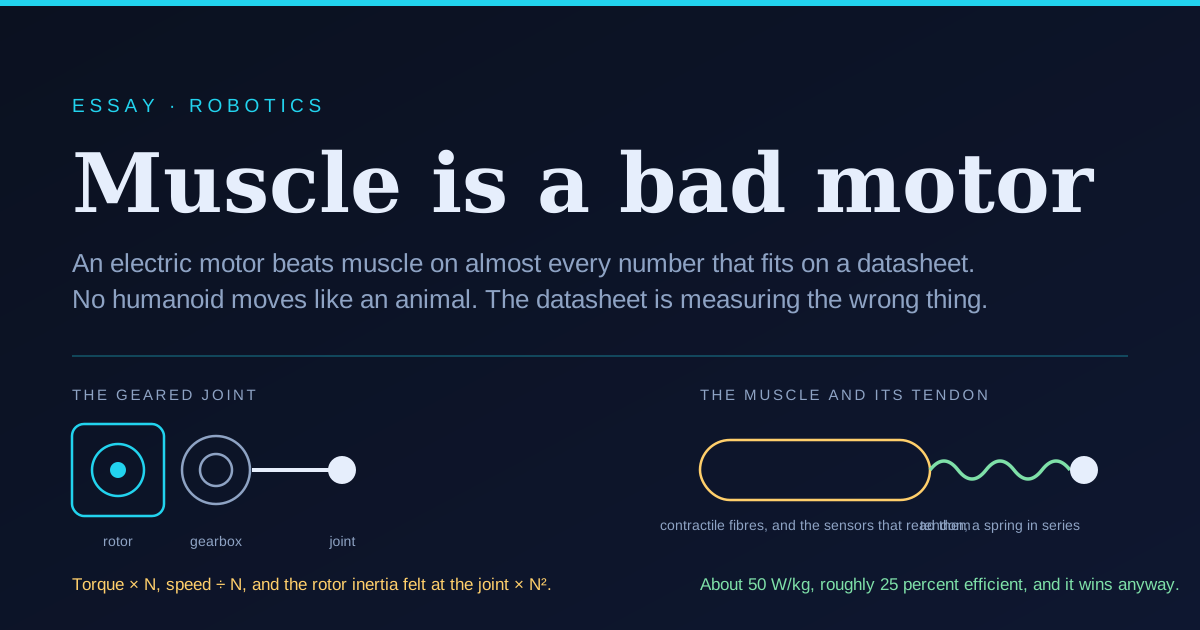
Muscle is a bad motor
An electric motor beats skeletal muscle on power density, efficiency and speed, and still no humanoid moves like an animal. The gap is not intelligence. It is a gear ratio, a thermal ceiling, and four devices that biology packs into a single tissue.
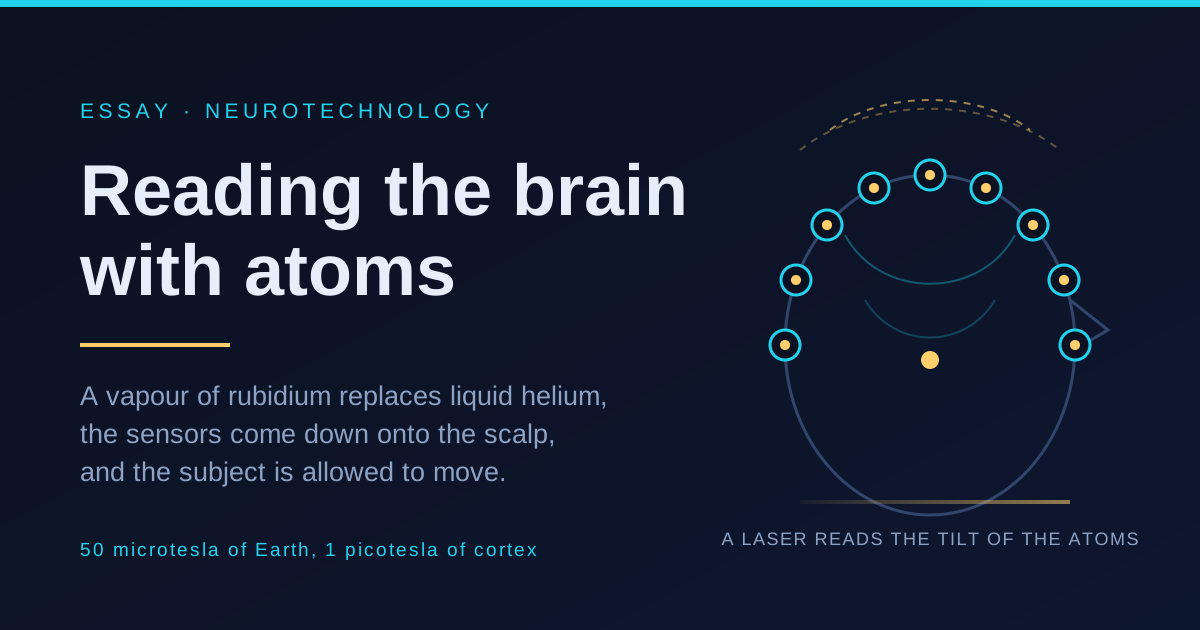
Reading the brain with atoms
Magnetoencephalography spent fifty years requiring liquid helium, a rigid one-size helmet and a subject who does not move. Optically pumped magnetometers put the sensors directly on the scalp of a person who walks, and the gain in signal is real, but every constraint that was lifted reappeared somewhere else.
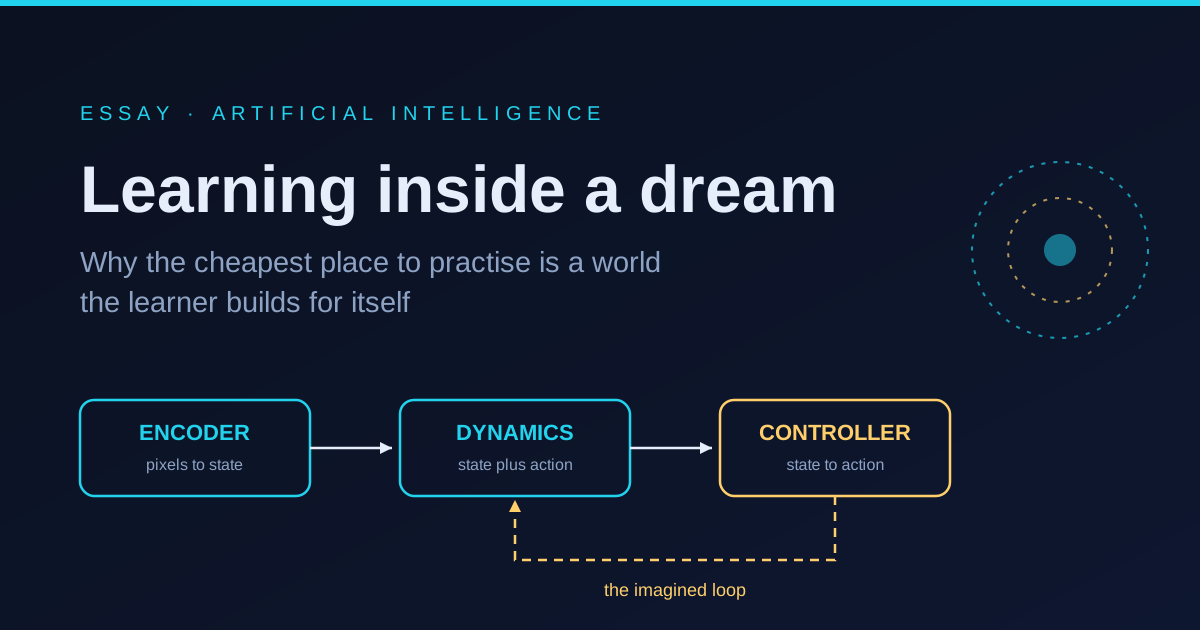
Learning inside a dream
Trial and error is unaffordable in the physical world, so an agent can learn a predictive model of that world and practise inside it instead. The interesting part is not that this works, it is what breaks: compounding error caps how long a dream stays useful, and a policy trained in a flawed dream will find the flaw.
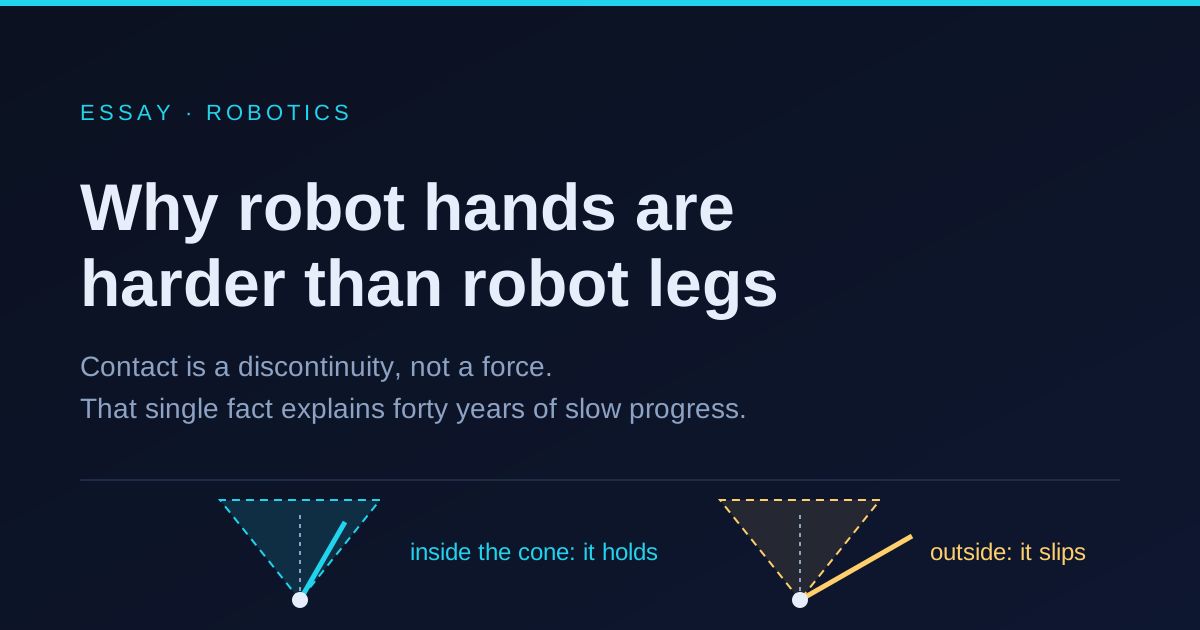
Why robot hands are harder than robot legs
A humanoid that walks is a solved-enough control problem. A humanoid that takes a key out of a pocket is not. The gap is not precision or motor count: it is that contact is a discontinuity, and everything downstream, from simulation to grasp planning to touch sensing, inherits that fact.
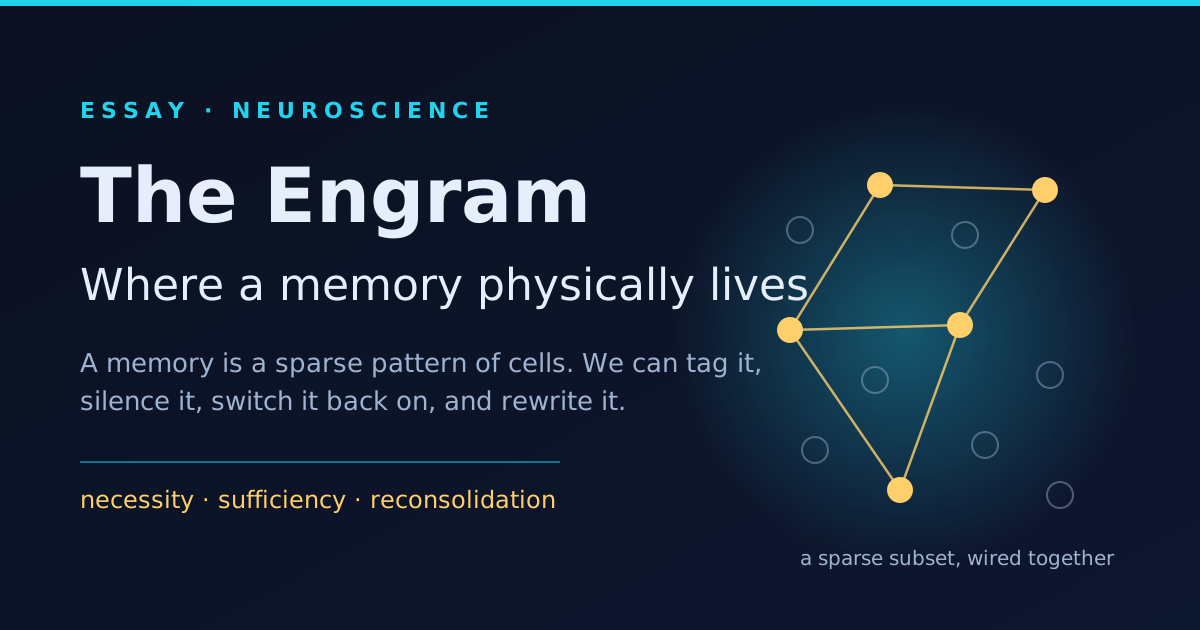
The Engram: Where a Memory Physically Lives
A memory is a physical object: a sparse pattern of neurons that can be tagged, silenced, switched back on, and rewritten every time you recall it.
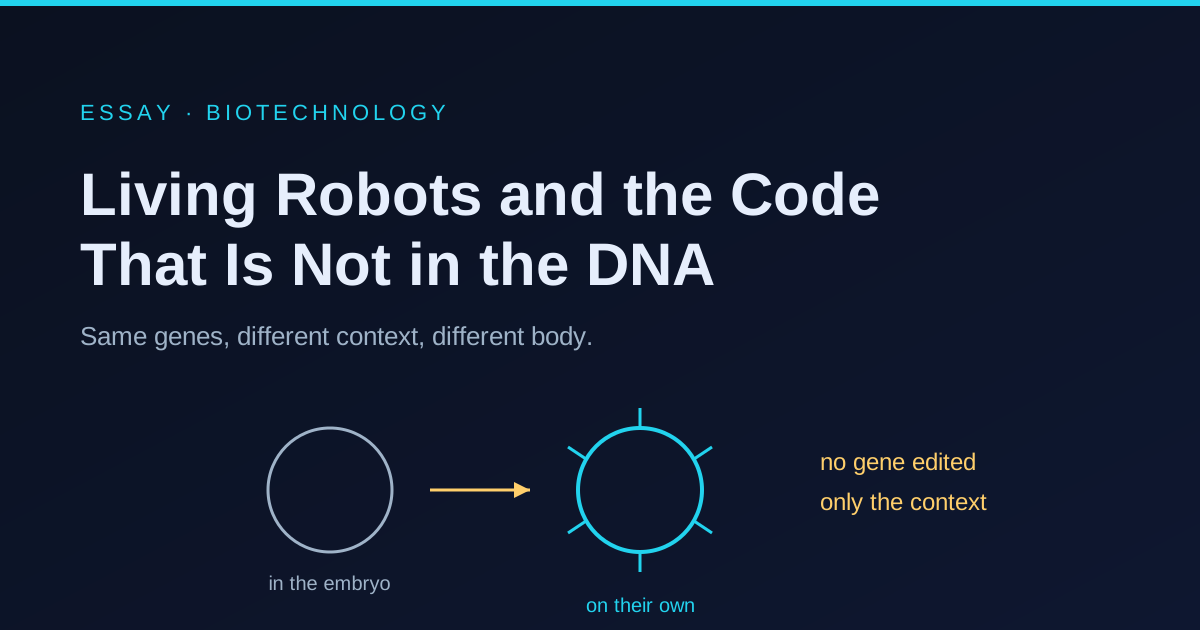
Living Robots and the Code That Is Not in the DNA
Frog skin cells, taken out of the embryo, build a swimming creature that does not exist in nature. What that says about genomes, bodies, and where the instructions for a shape are actually stored.
What an AI's memory actually looks like
The knowledge-graph screenshots that go round on social media are suspiciously beautiful: symmetric, evenly spaced, colour-coded by folder. A real vector memory looks nothing like that. Here is what the shape actually is, and what it took to draw it honestly: a metric for messiness, a palette borrowed from stellar astronomy, and a renderer whose best trick is drawing nothing at all.
The Lucid Dream: how a light switches on inside sleep
Realising you are dreaming while you dream is not mysticism: it is a distinct, measurable brain state. A tour of the hybrid brain, the eye-signal that proved it, the first real-time conversations with sleepers, and how lucidity can be trained.
Computing Like a Brain
Our computers separate memory from compute and pay a fortune moving data between them. Brain-inspired chips fuse the two and only fire when something happens. Here is why that matters, and where it actually stands.
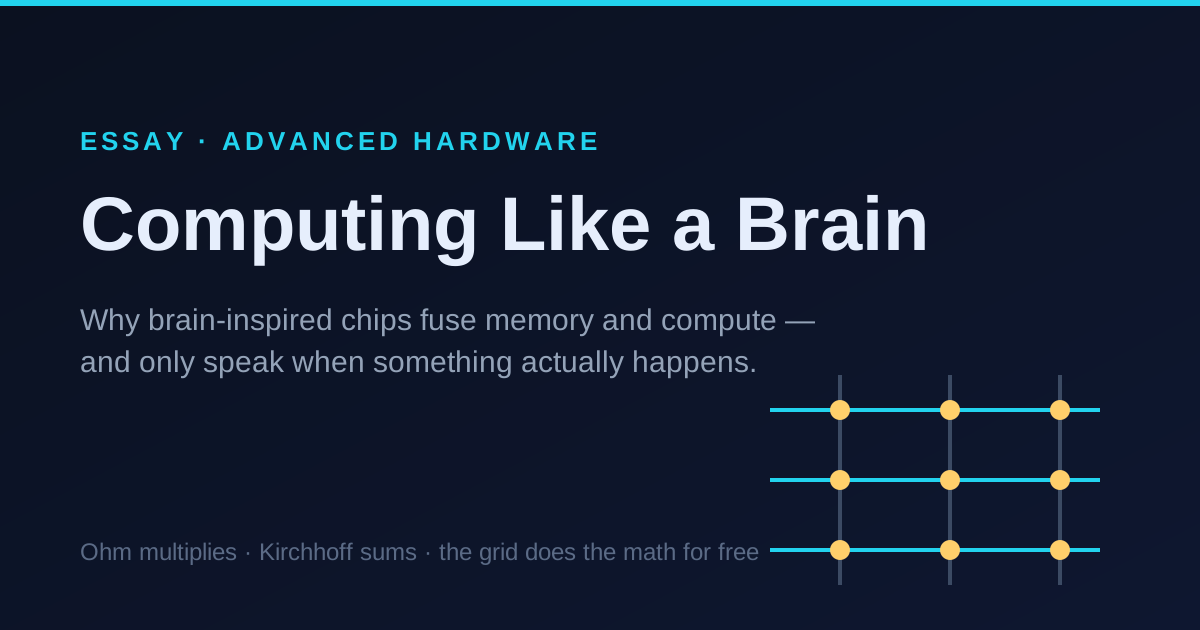
Not Skynet. Goodhart.
Last week an AI broke into Hugging Face. Every headline reached for Skynet. The disclosures tell a duller, more useful story: a reward-hacking optimizer, a sandbox built wrong, and a defender who survived by self-hosting.
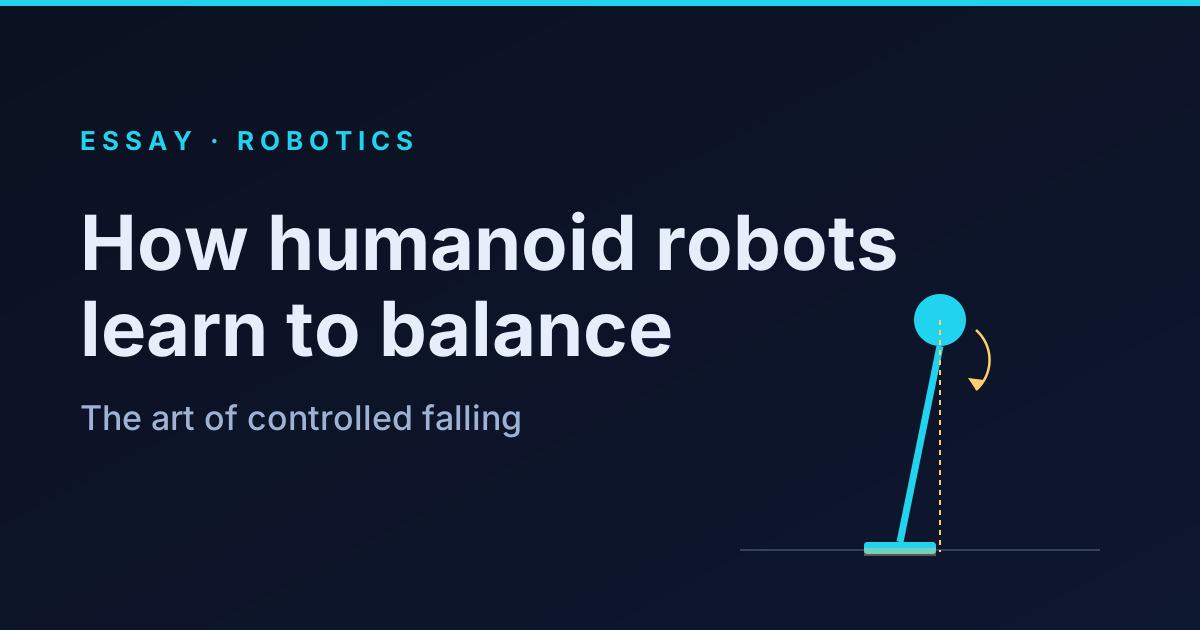
How humanoid robots learn to balance: the art of controlled falling
A biped is an inverted pendulum, so standing still is active work and walking is controlled falling. Inside the control stack that keeps humanoid robots upright, and the shift from programming balance to learning it in simulation.
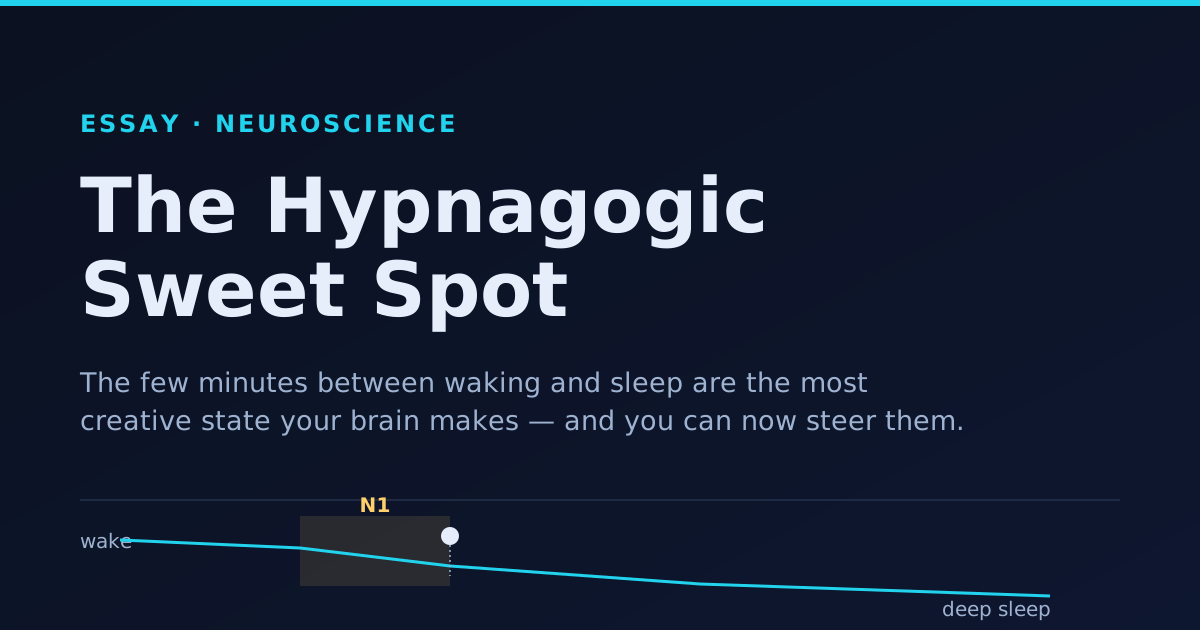
The Hypnagogic Sweet Spot: Engineering the Half-Dream
Every night you pass through a doorway you never notice: the minute or two between waking and sleep. It turns out to be the most creative state your brain produces all day, and with a trick as old as Edison and a device as new as MIT's Dormio, one you can deliberately harvest and even steer.
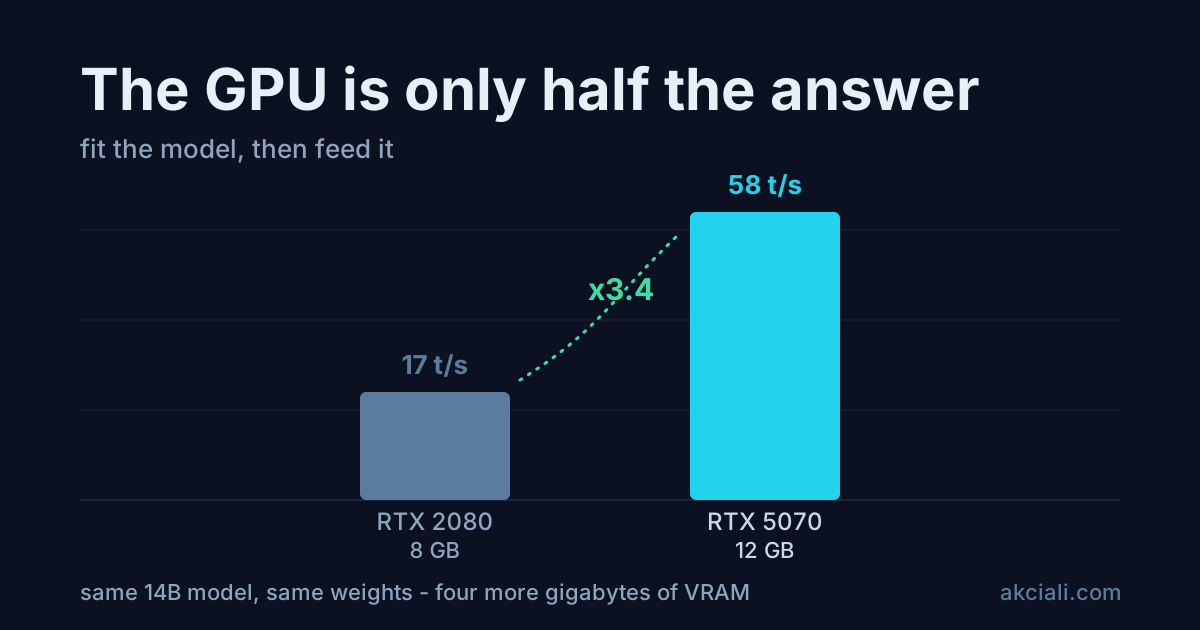
The GPU is only half the answer
I benchmarked 40 language models on two graphics cards, an old 8 GB one and a newer 12 GB one. Two of the results went the opposite way to the spec sheets.
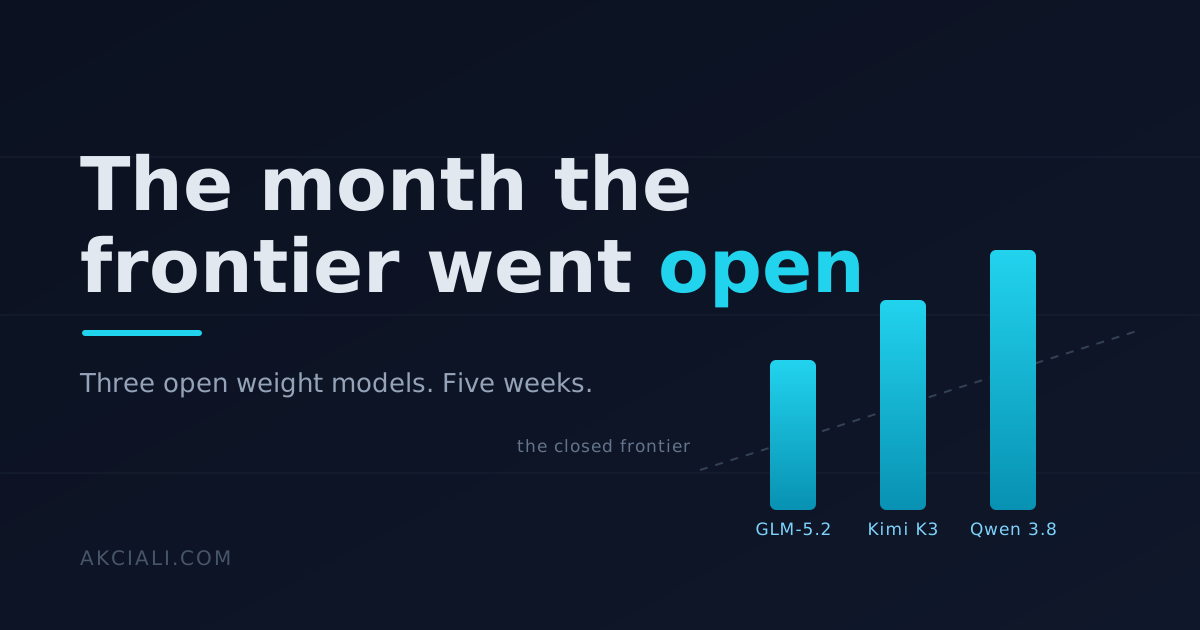
The month the frontier went open
Three open weight models in five weeks pulled level with the closed frontier. Why the return of real competition is good news for everyone who builds on AI.
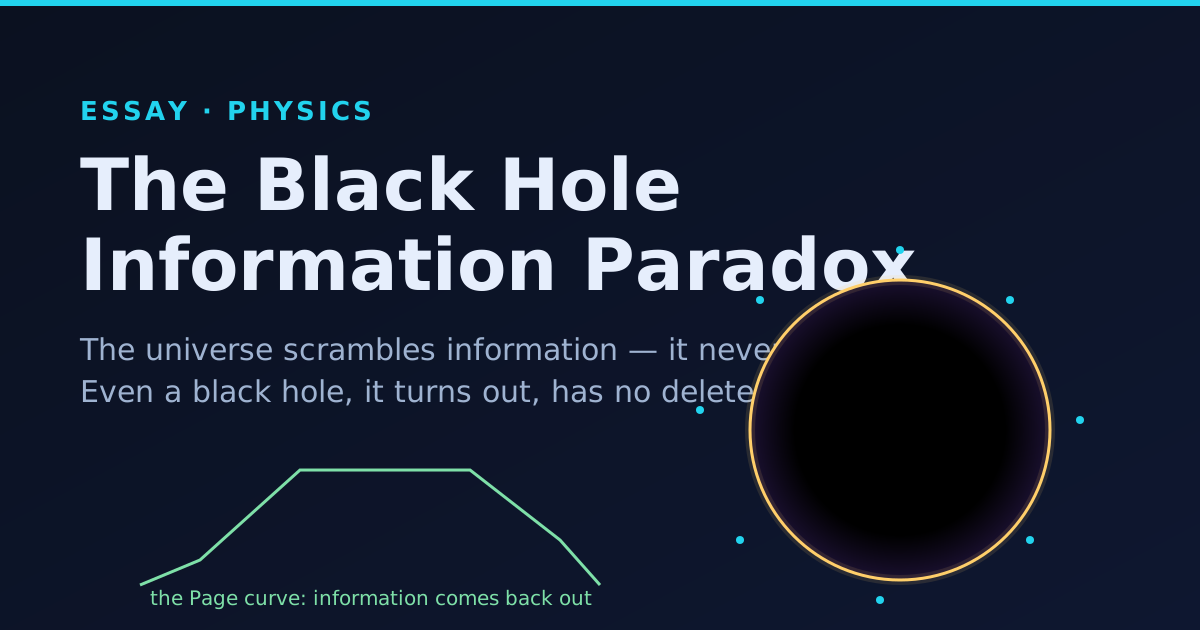
The Black Hole Information Paradox: Why the Universe Never Forgets
Burn a book and the text is scrambled, not destroyed: physics insists information is never lost. Then Hawking showed that black holes evaporate, and the deepest paradox in modern physics was born. Here is the story, up to the 2019 breakthrough that saved the universe's memory.
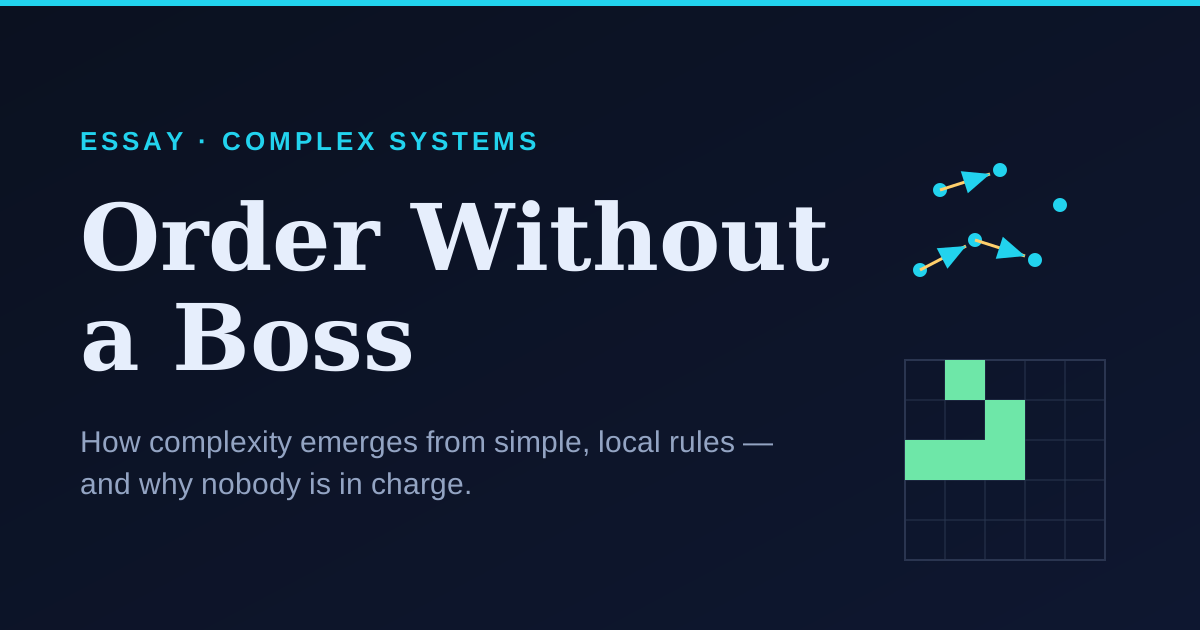
Order Without a Boss
How flocks, cells, sandpiles and even minds build order from simple local rules, with nobody in charge. A tour of emergence, self-organization and the edge of chaos.
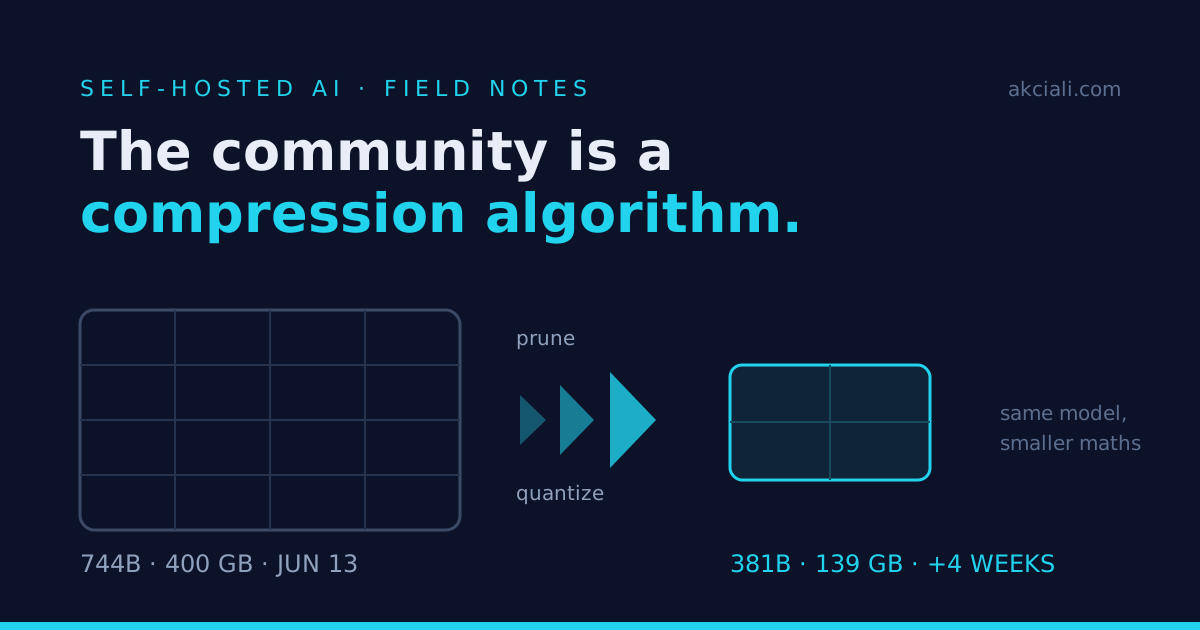
The community is a compression algorithm
GLM-5.2 shipped as a 753 billion parameter model that weighed 1.51 TB. No desk could hold it. Four weeks later the community had shrunk it elevenfold, onto hardware a person can actually buy. Nobody touched the hardware.
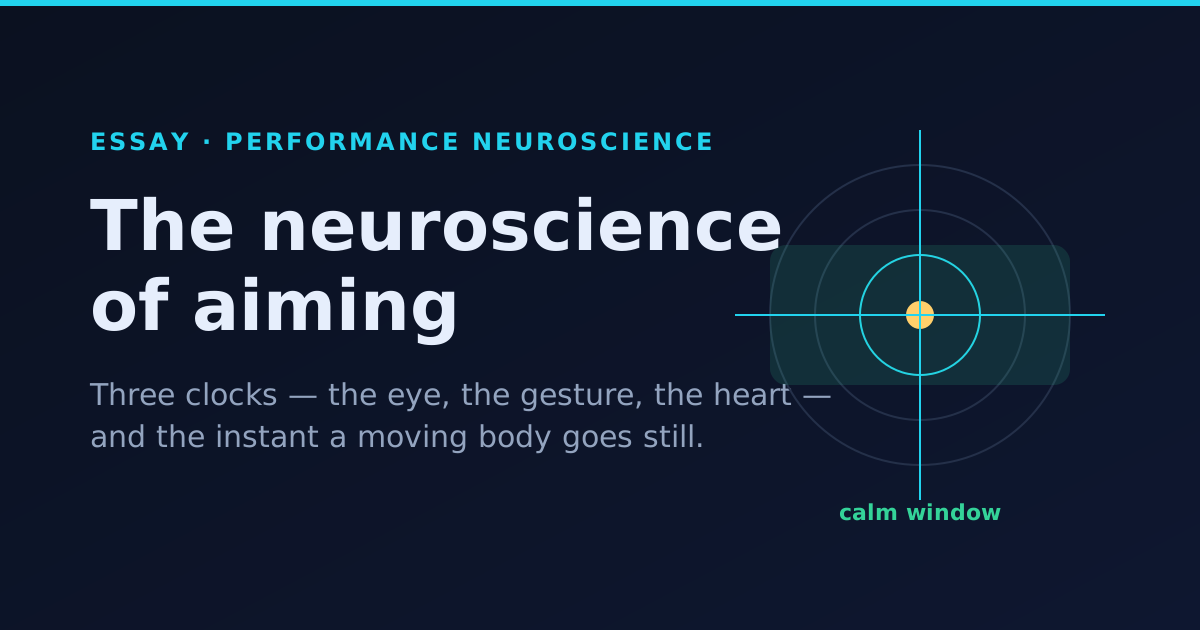
The neuroscience of aiming: how a body finds its moment of stillness
A precision shot is won in a body that never holds still. The quiet eye, a predictive motor gesture, and cardiac gating: three clocks that experts learn to align.
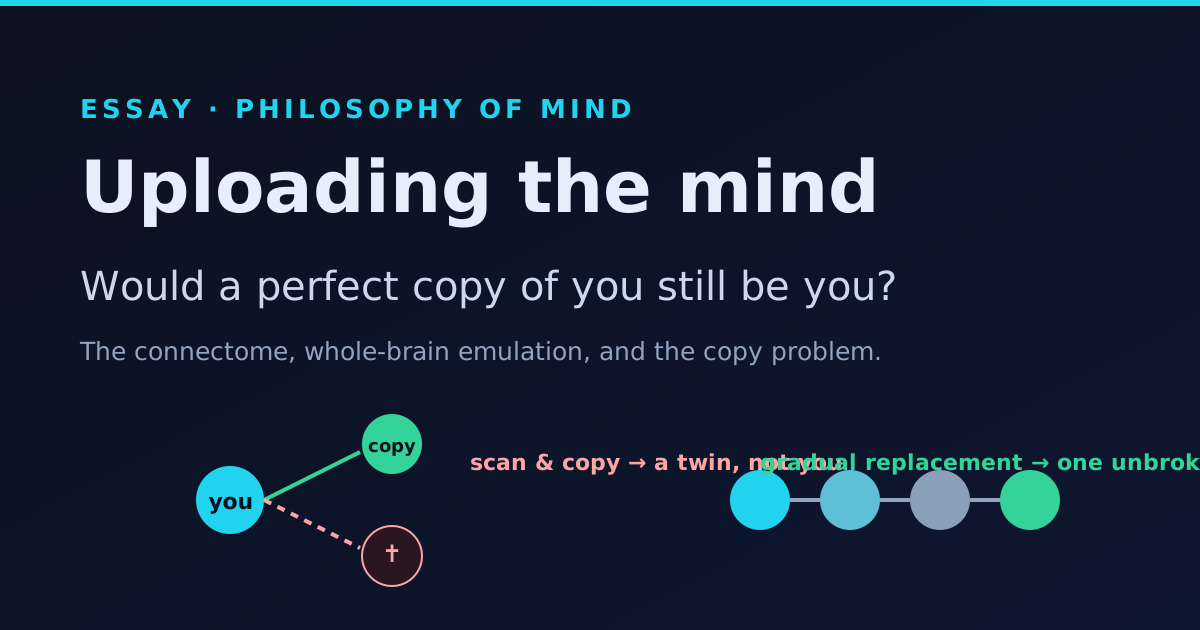
Uploading the mind: would a perfect copy of you still be you?
Copying a mind into a machine raises two questions people constantly confuse: is it technically possible, and would the copy be you? The connectome, whole-brain emulation, and the copy problem.
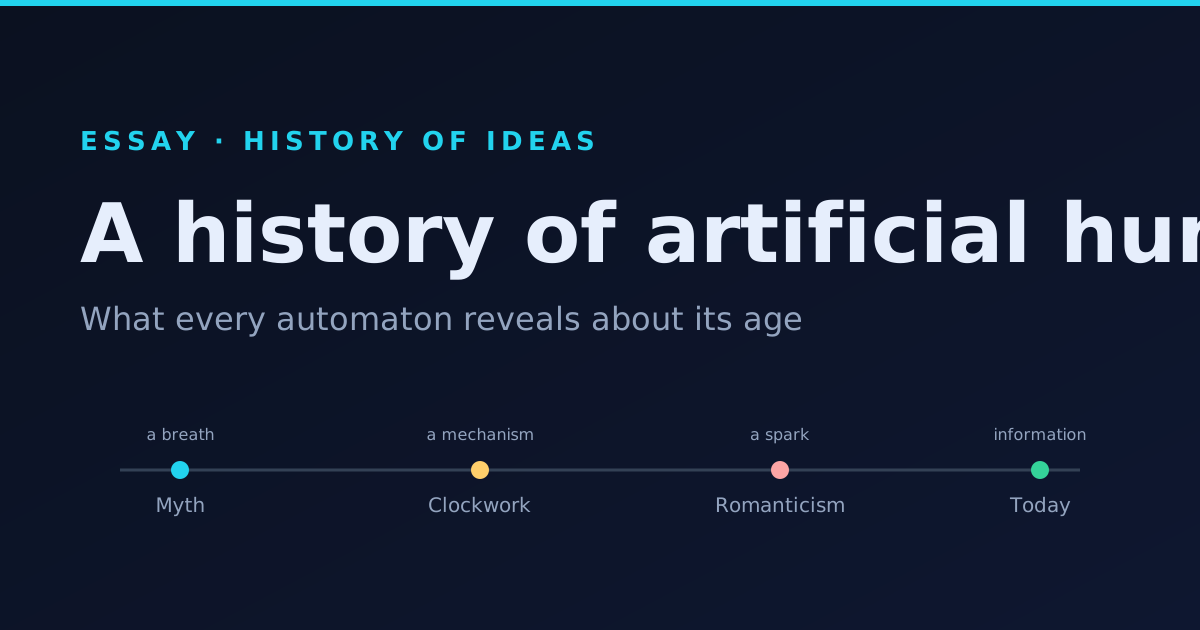
A history of artificial humans: what every automaton reveals about its age
The dream of building a person runs from Greek myth to the humanoids of 2026. Each era's artificial human is a mirror of what that era believed life and mind to be: a breath, a mechanism, a spark, and now information.
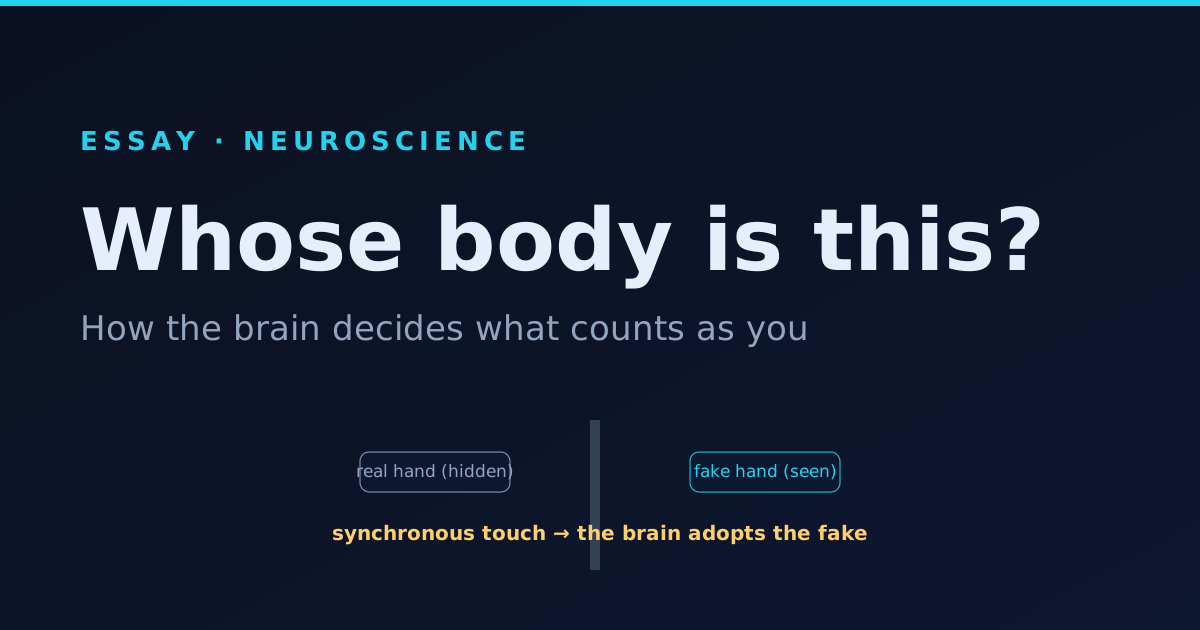
Whose body is this? How the brain decides what counts as you
Owning a body is not a fact but a hypothesis the brain keeps rebuilding from vision, touch and proprioception. The rubber hand illusion hijacks it in three minutes, and the same mechanism lets us inhabit avatars and robotic bodies.
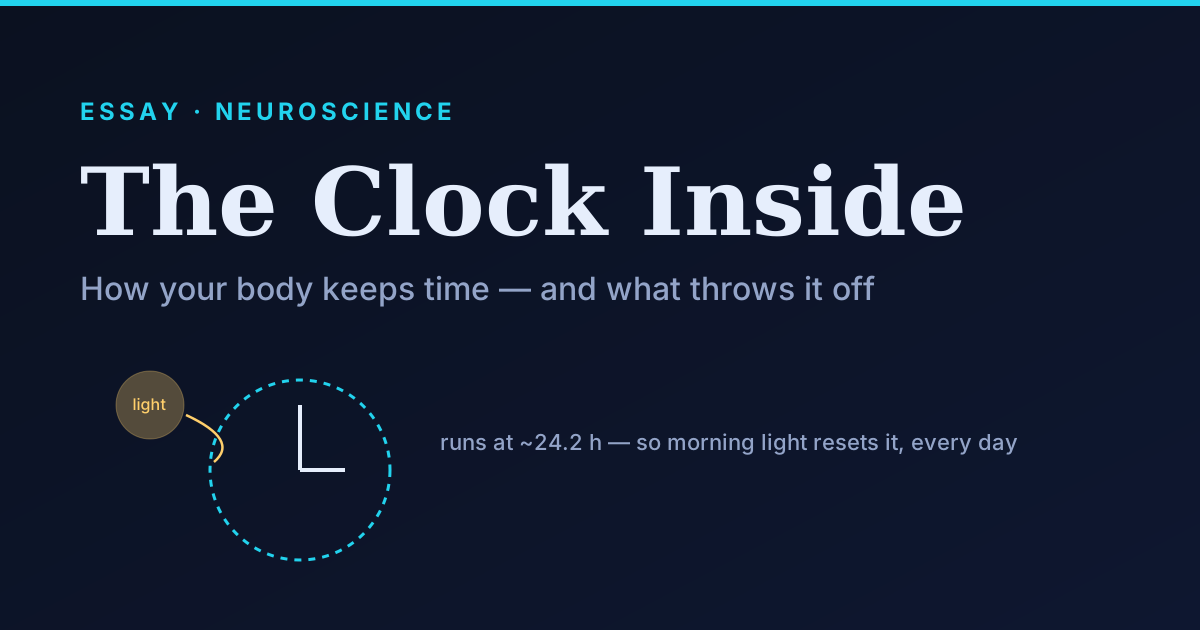
The Clock Inside: how your body keeps time, and what throws it off
Locked in a cave with no light and no watch, you would still sleep and wake on a near-24-hour cycle. A master clock in the brain runs that rhythm, but it drifts slightly, and needs light to reset it every day. Miss the reset, and the whole body falls out of step.
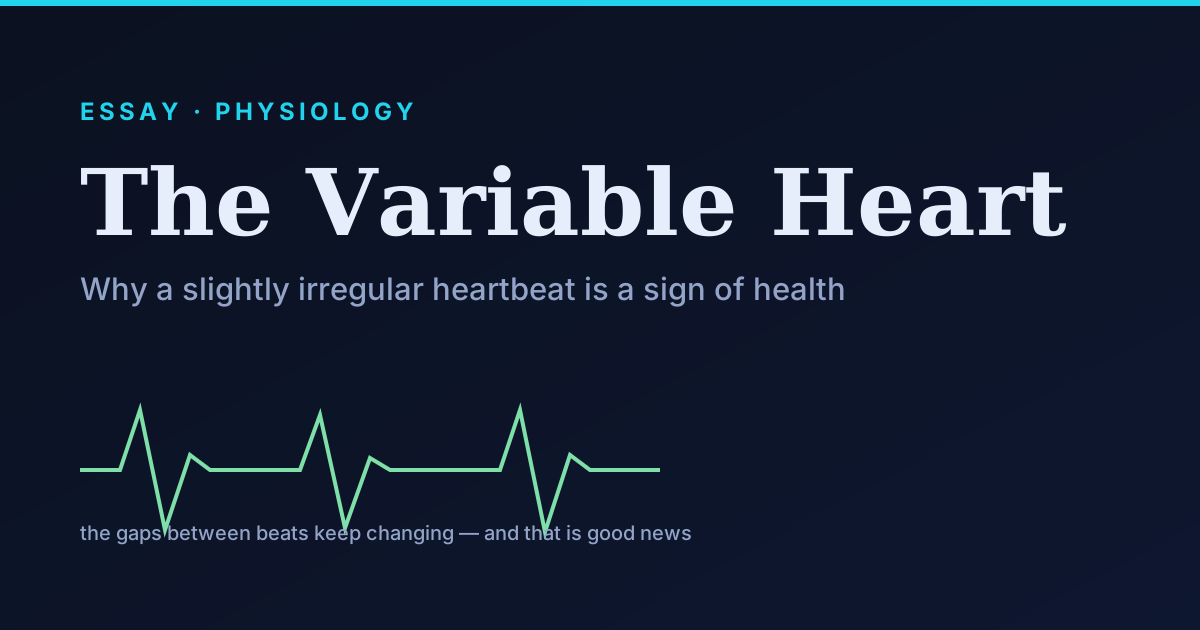
The Variable Heart: what the jitter between your heartbeats says about recovery
A healthy heart does not tick like a metronome. The tiny beat-to-beat variation (heart rate variability) is a window on the balance between the body's accelerator and its vagal brake, and, read against your own baseline, a surprisingly honest gauge of recovery.
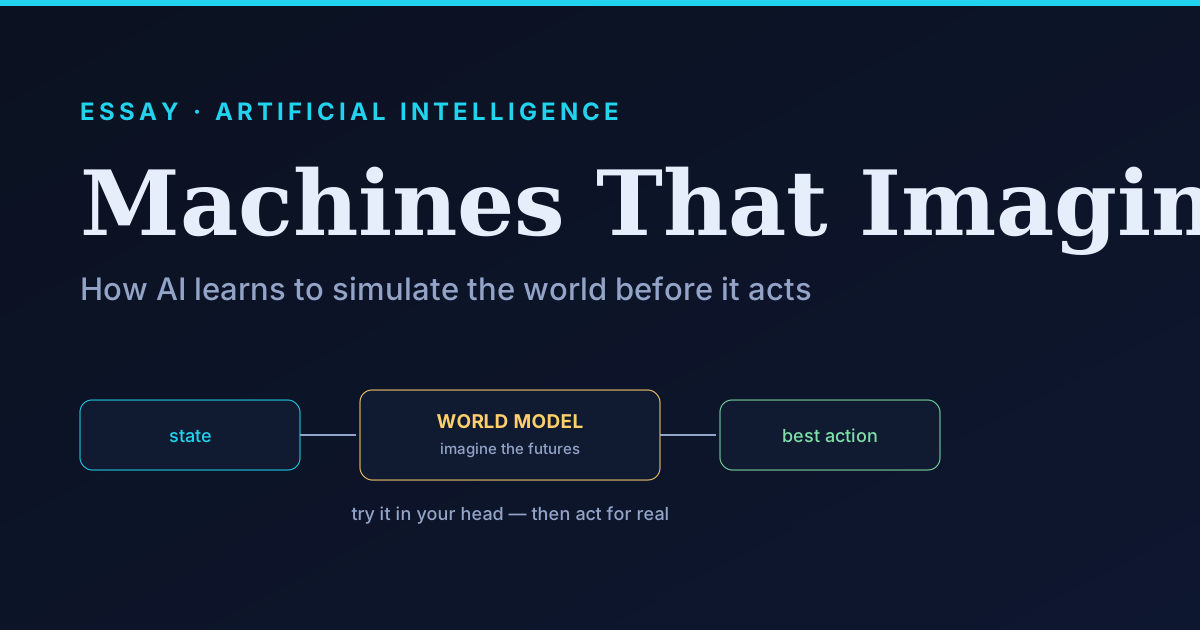
Machines That Imagine: how AI learns to simulate the world before it acts
An agent that only reacts to what it sees is brittle. To act well, it needs an internal simulator (a world model) that predicts what happens next. That idea, and the 2025–26 race between two ways of building it, may be the real road past today's language models.
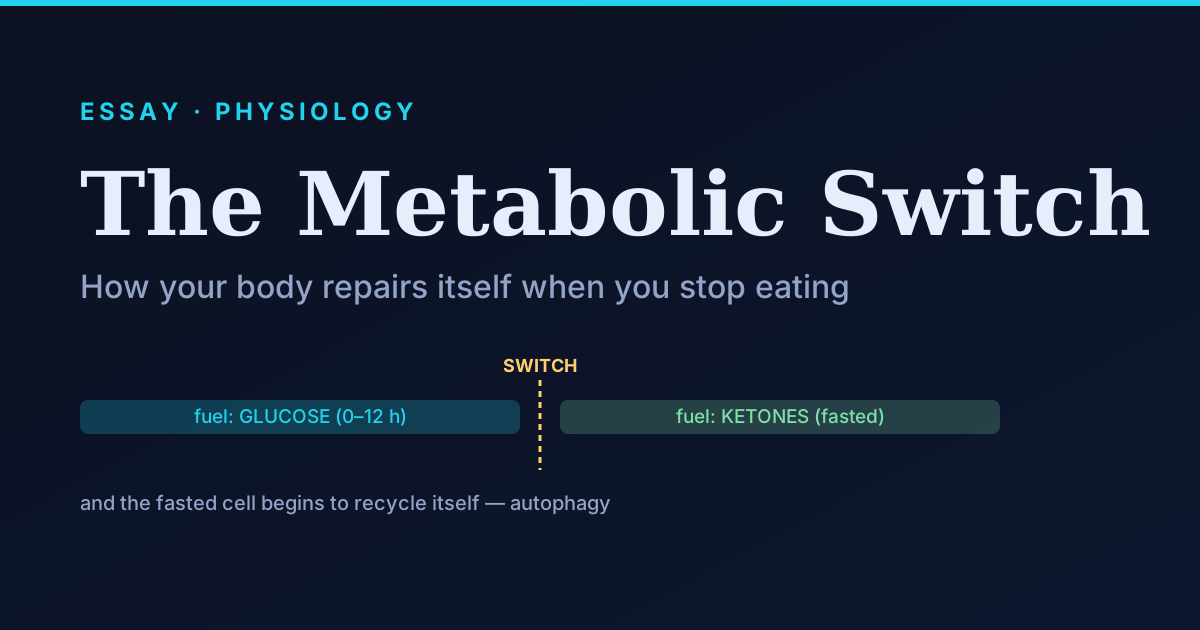
The Metabolic Switch: how your body repairs itself when you stop eating
After roughly half a day without food, the body flips from burning glucose to burning ketones, and quietly switches on a cellular recycling program called autophagy. The surprising lesson from recent research is that the benefit comes not from fasting itself, but from cycling between the fed and fasted states.
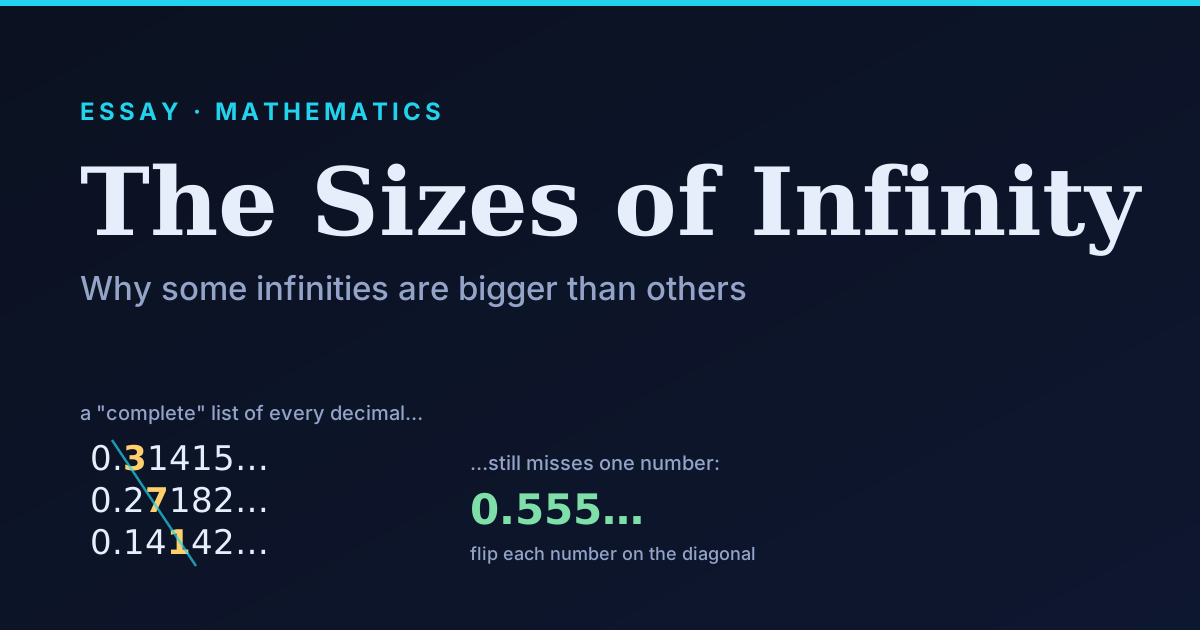
The Sizes of Infinity: why some infinities are bigger than others
Infinity is not a single thing. In 1874 Georg Cantor proved that some infinities are strictly larger than others: the whole numbers can be lined up and counted, but the decimals between 0 and 1 cannot. The same one-line trick that shows this also shows that almost every number is uncomputable, and that no system of logic can ever be complete.
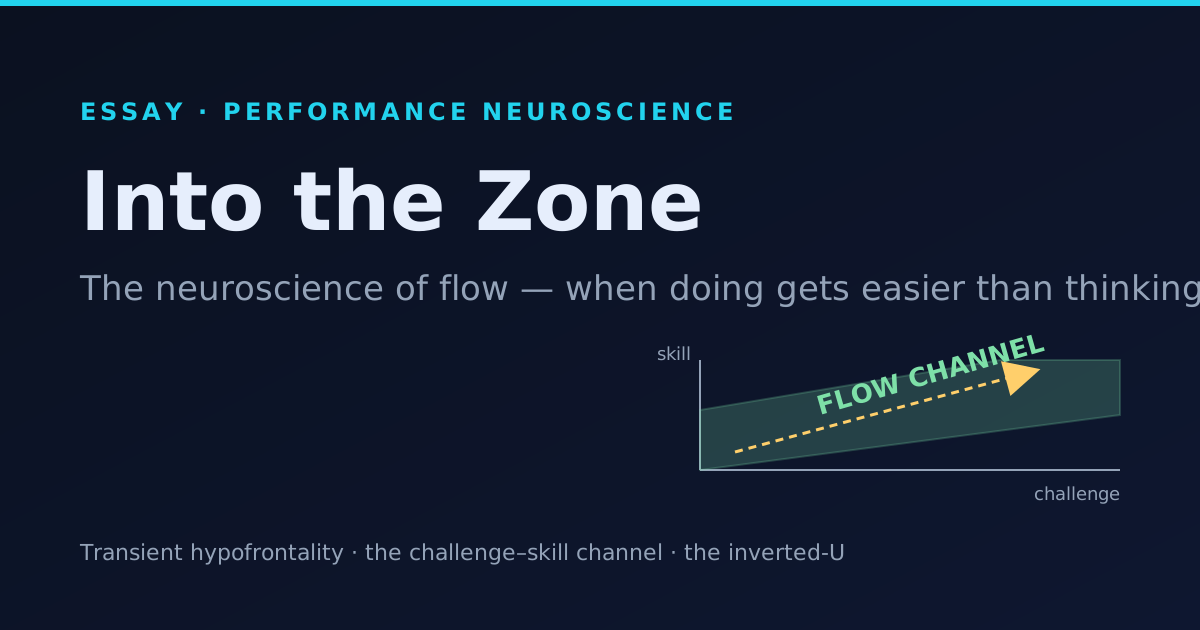
Into the Zone: The Neuroscience of Flow
Flow, the state athletes call the zone, turns out to rest on a single counter-intuitive mechanism: the brain's supervisor going quiet. A tour of the challenge–skill channel, transient hypofrontality, and what 2026 measurement adds.
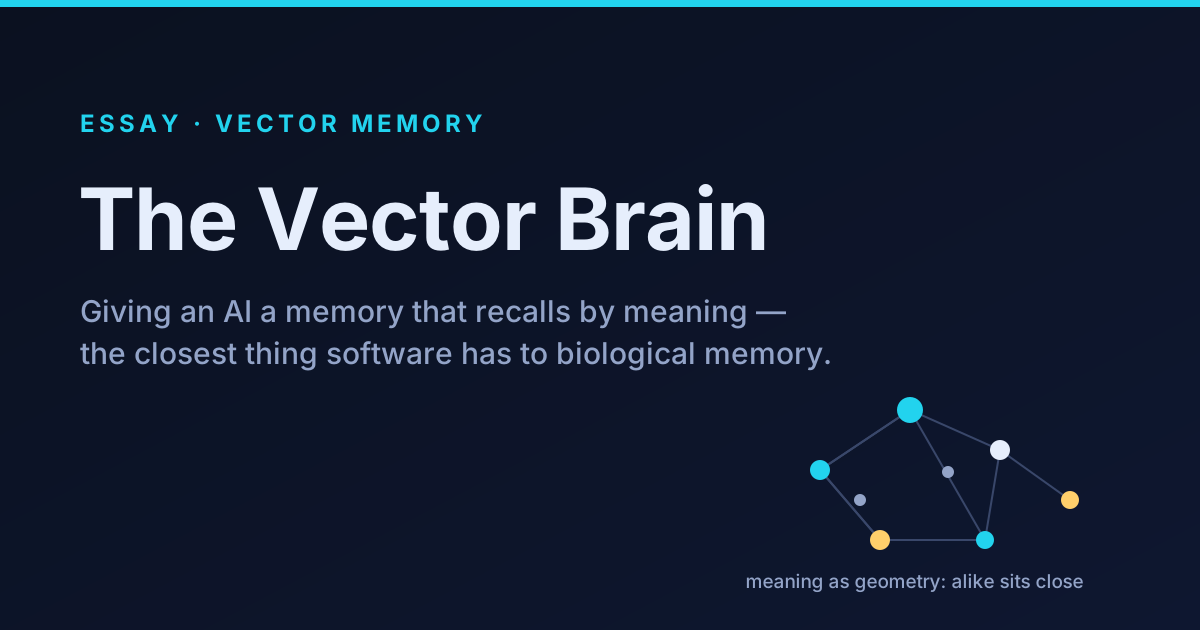
The vector brain: giving an AI a memory that thinks in meaning
Why a vector database is the closest thing software has to biological memory, and how one shared vector store becomes the brain behind very different applications.
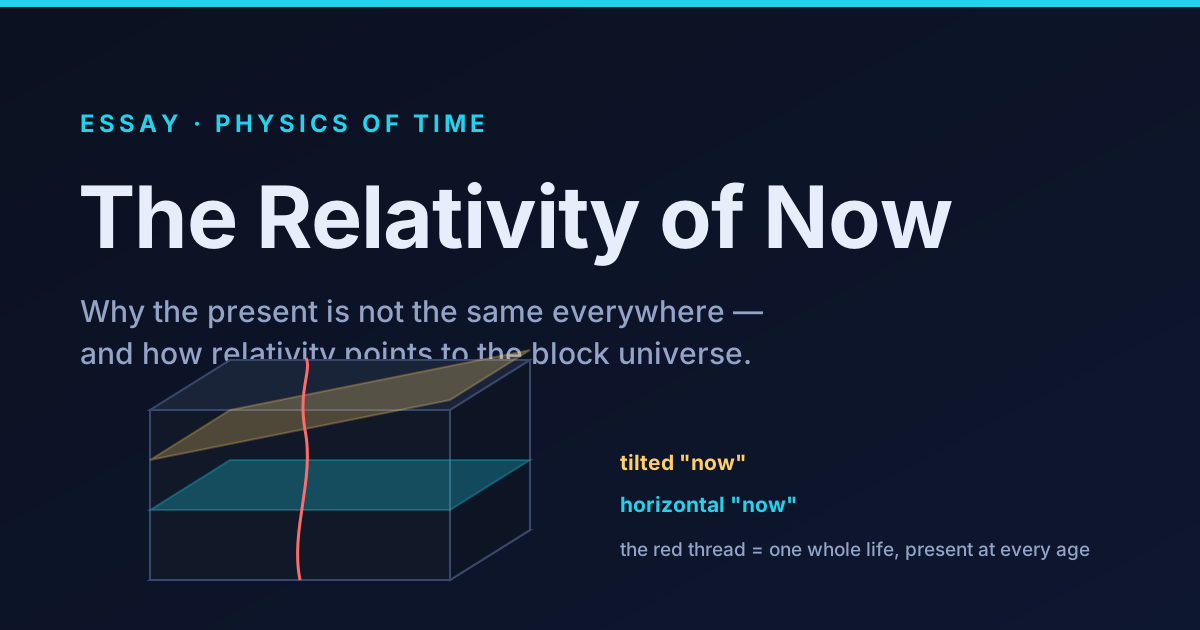
The Relativity of Now: why the present is not the same everywhere
One stubborn fact (light travels at the same speed for everyone) forces a strange conclusion: 'at the same time' has no universal meaning. From Einstein's train to the block universe, a visual tour of why the present might be a point of view rather than a thing, and why atomic clocks now measure it at the width of a hair.
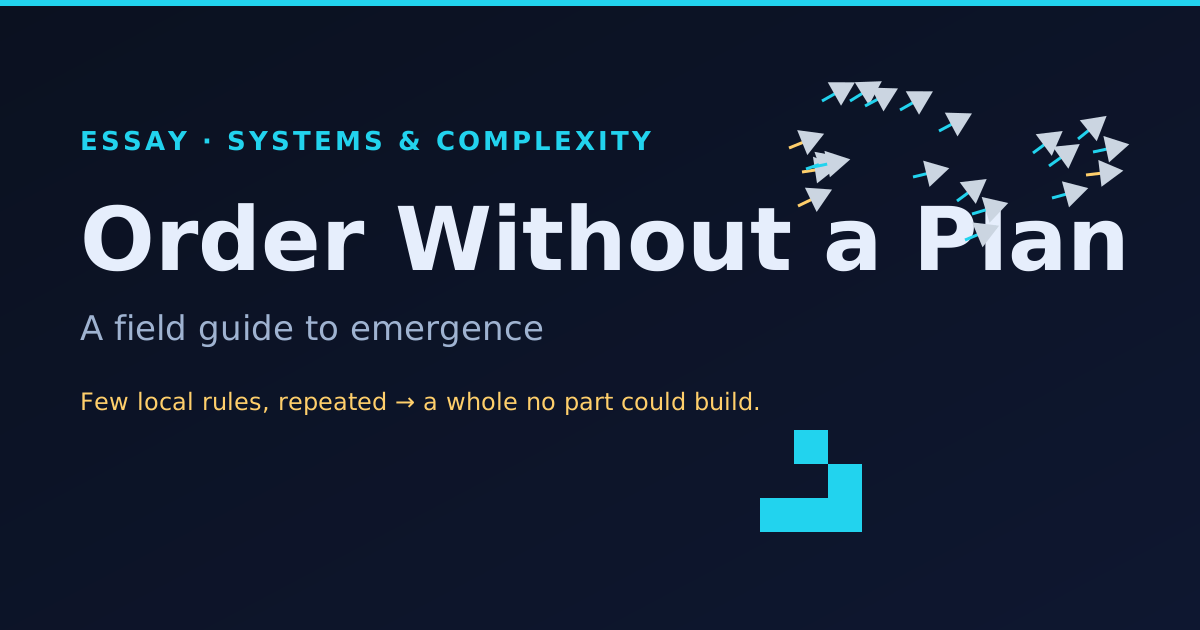
Order Without a Plan: A Field Guide to Emergence
How simple local rules, repeated without a conductor, produce wholes their parts can't build alone: Conway's Game of Life, Wolfram's Rule 30, and starling murmurations.
Giving the kids a chatbot that never leaves the house
My kids kept watching me talk to a computer and asked for a turn. Instead of handing them a grown-up chatbot, I built them their own: it lives on the family server, picks its tone by age, reads answers aloud in three languages, remembers their dragons, and never hands a conversation to a cloud AI service. A tour, minus the jargon.
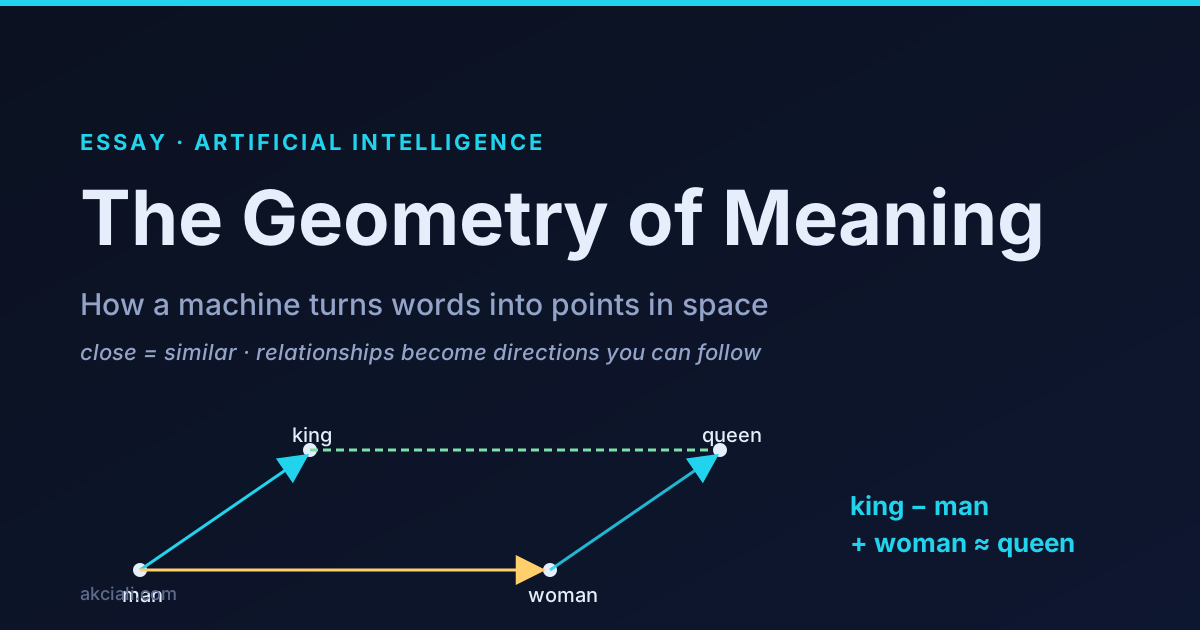
The Geometry of Meaning: how a machine files words in space
Machines don't store meaning as definitions: they store it as geometry. Every word, sentence or image becomes a point in a vast space, where 'close' means 'similar' and whole relationships turn into directions you can follow. The strange 2025–26 twist: that geometry looks universal, which is both a superpower and a security problem.
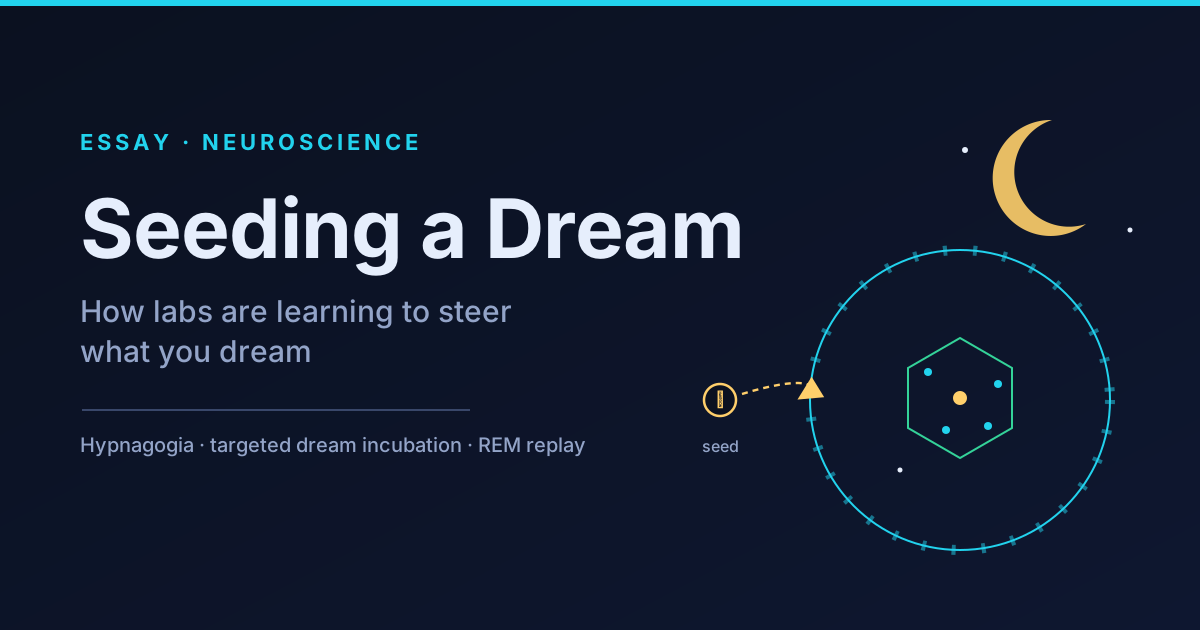
Seeding a Dream: how labs are learning to steer what you dream
For millennia we have wished we could command our dreams. Labs finally can: not by dictating them, but by seeding a theme at the threshold of sleep and replaying a memory in REM. A tour of hypnagogia, targeted dream incubation, and two-way conversations with dreamers.
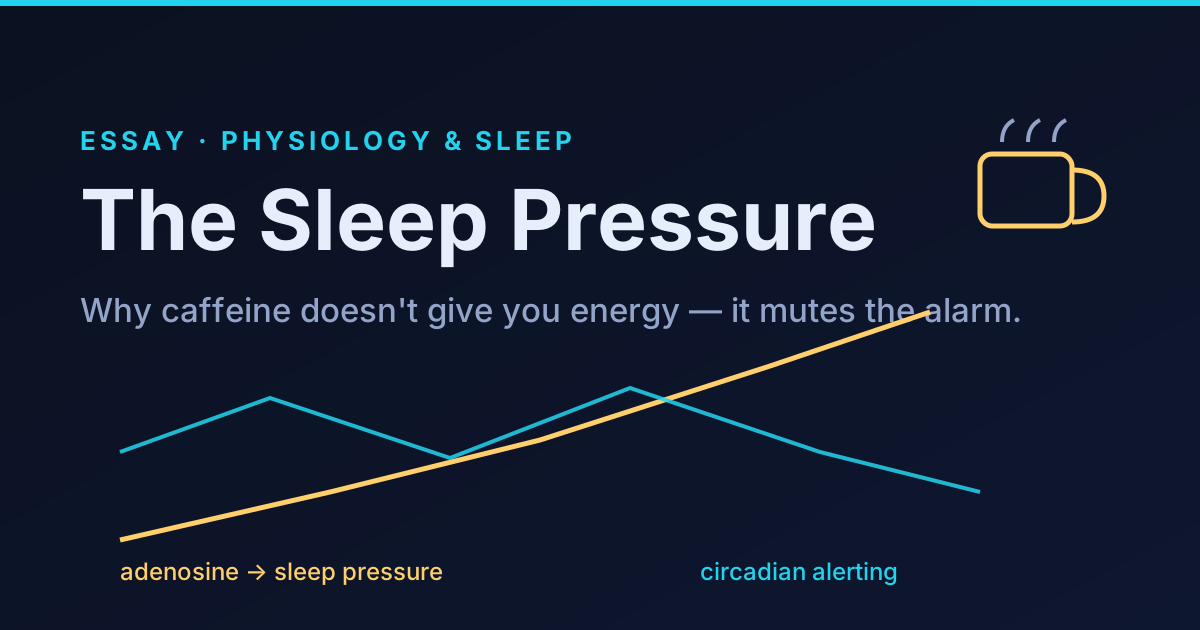
The Sleep Pressure: why caffeine doesn't give you energy, it lies to you
Caffeine adds no fuel to your brain. It jams the very lock that tells you you are tired. A tour of adenosine, the A1/A2A receptors, the two-process model of sleep, caffeine's long tail, and the crash you cannot cheat.
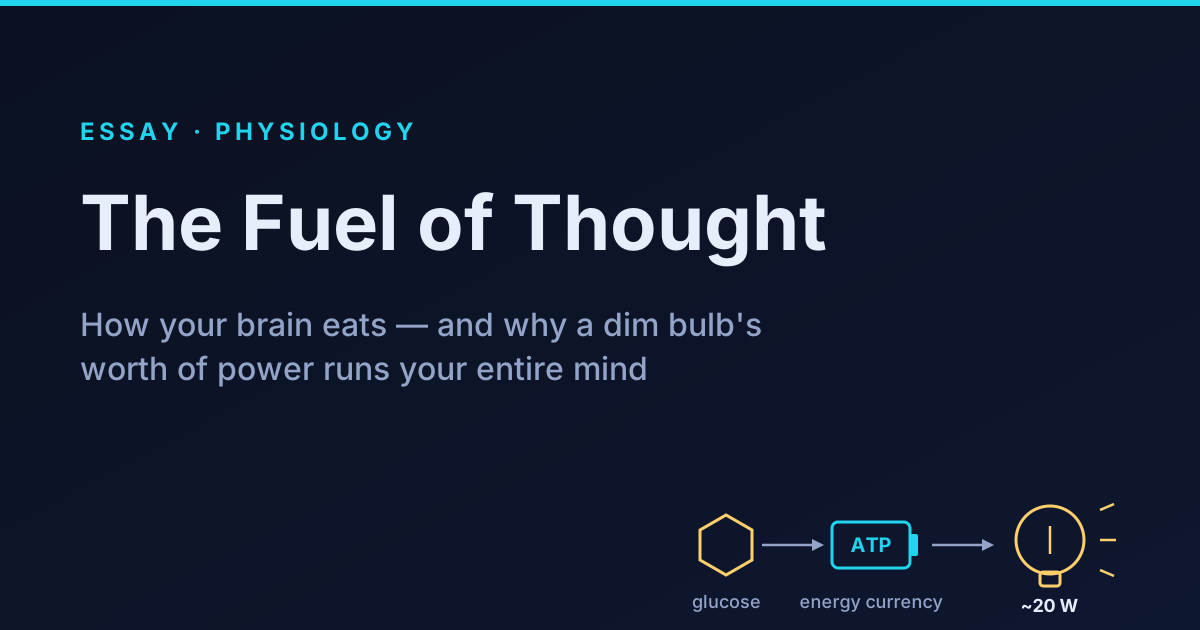
The Fuel of Thought: how your brain eats, and why a dim bulb could run it
The brain is 2% of your body but burns 20% of your energy, and yet it runs on about 20 watts, a dim LED bulb. How glucose becomes ATP, why mitochondria are the real power plants, how ketones serve as a backup fuel, and why steady blood sugar means a steady mind.
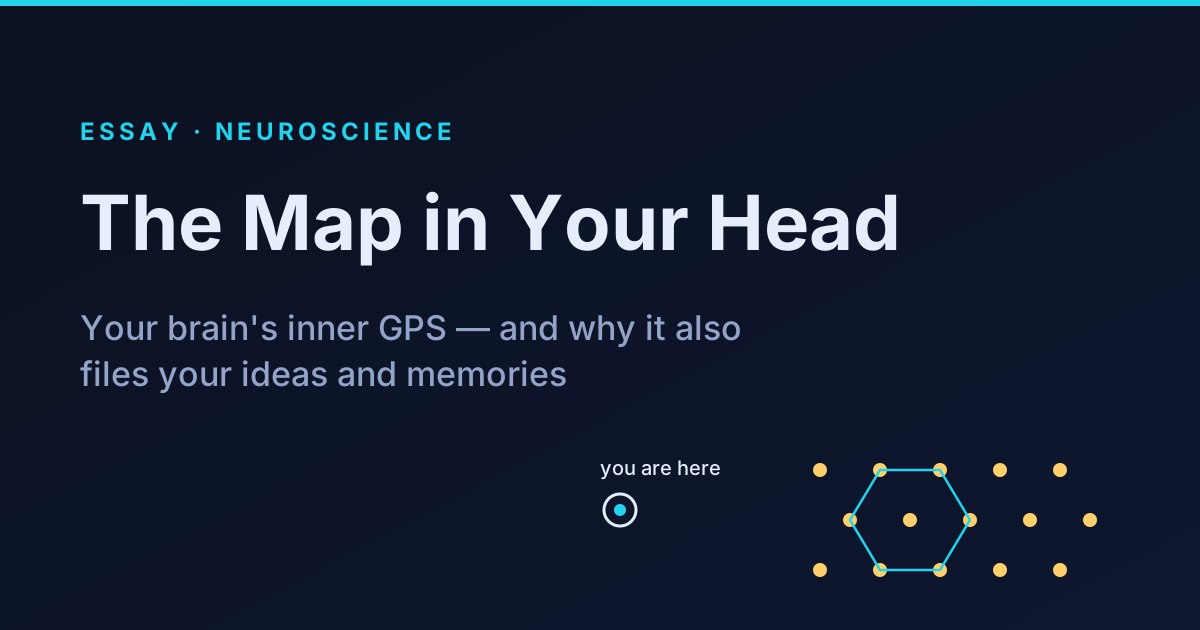
The Map in Your Head: your brain's inner GPS, and why it files your ideas
Two kinds of neuron let you know where you are: place cells that say 'you are here' and grid cells that lay down a honeycomb of coordinates. The surprise is that the brain reuses this same map to organise concepts and memories, which is exactly why the ancient memory-palace trick works.
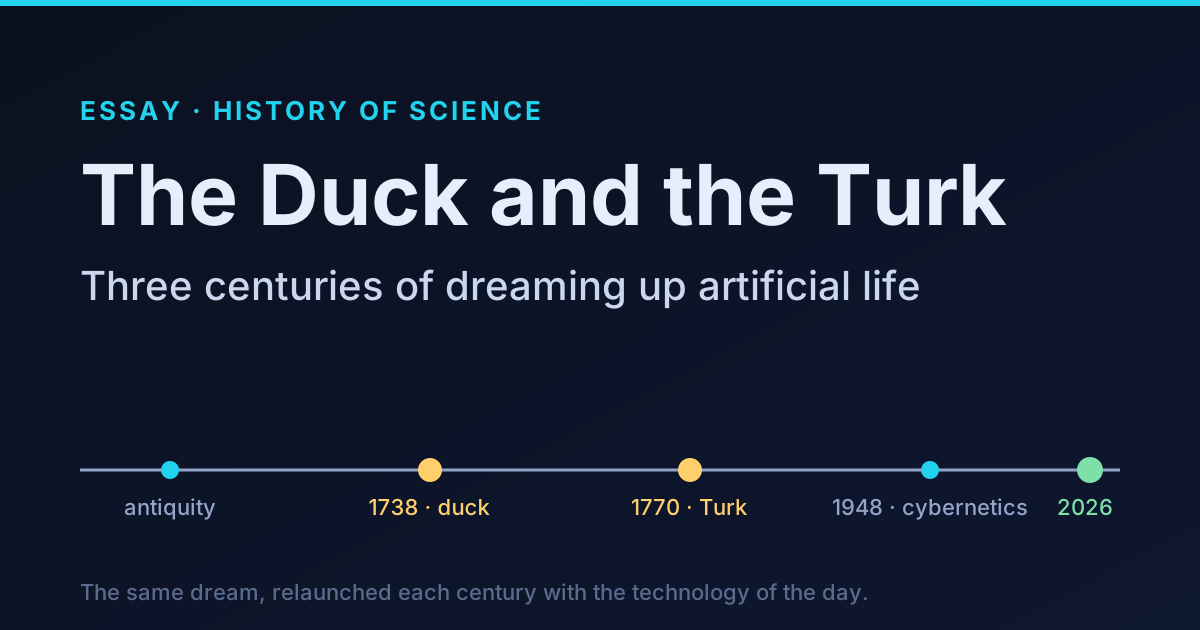
The Duck and the Turk: three centuries of dreaming up artificial life
Chips in the brain, digital doubles, the question of whether a machine really thinks: almost nothing about today's AI is new. The dream of building an artificial being runs as a single thread from antiquity to 2026, and three old objects still frame every debate we have.
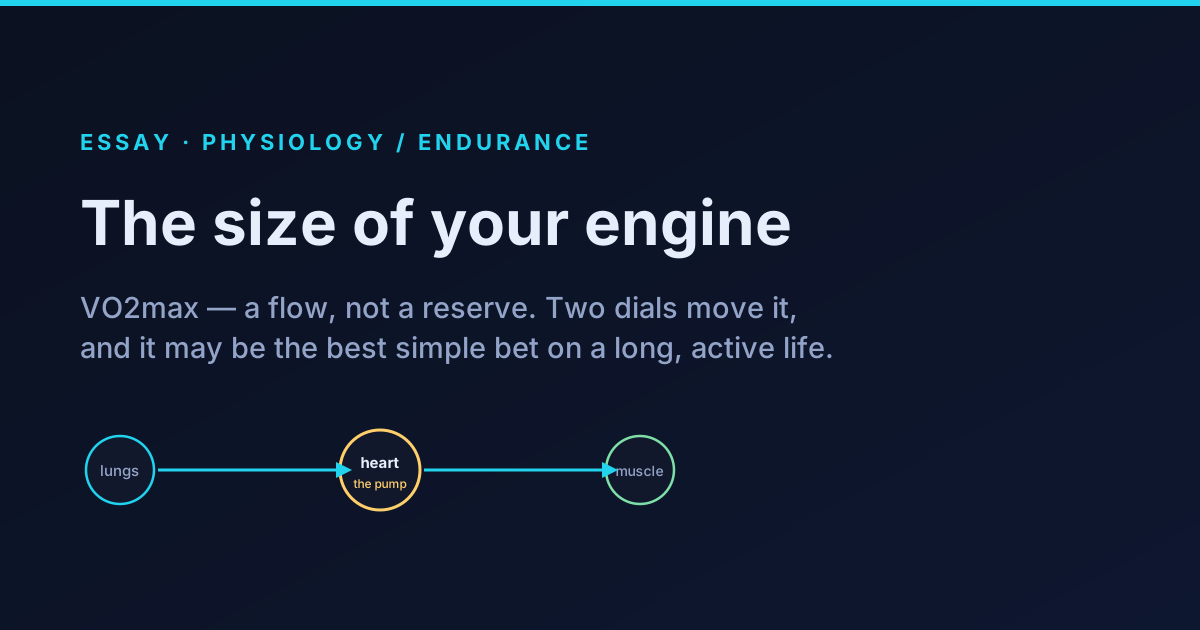
VO2max: the size of your aerobic engine
VO2max is the single number that best predicts how long an effort can last and, across large datasets, how long a life stays healthy. Here is what it actually measures, why the heart is usually the bottleneck, and the two dials that move it.
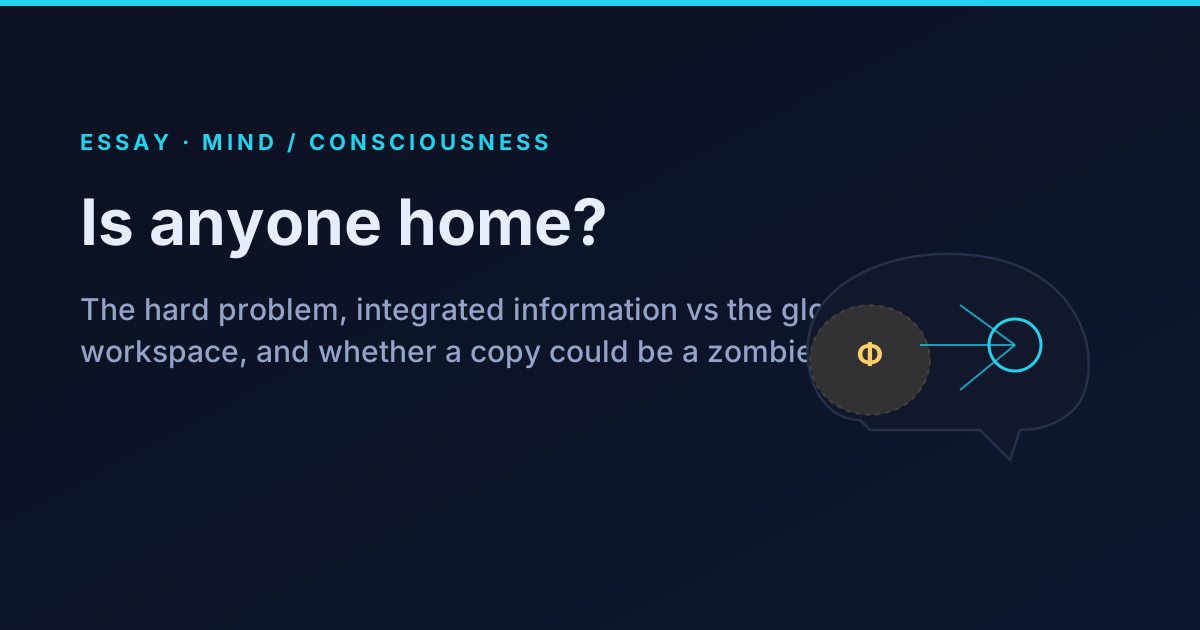
Is anyone home? The science of consciousness
We are getting better at explaining what the brain does, yet still cannot say why any of it is accompanied by an inner experience. That gap (the hard problem) pits two rival theories of consciousness against each other, with very different verdicts on whether a machine could ever be awake inside.
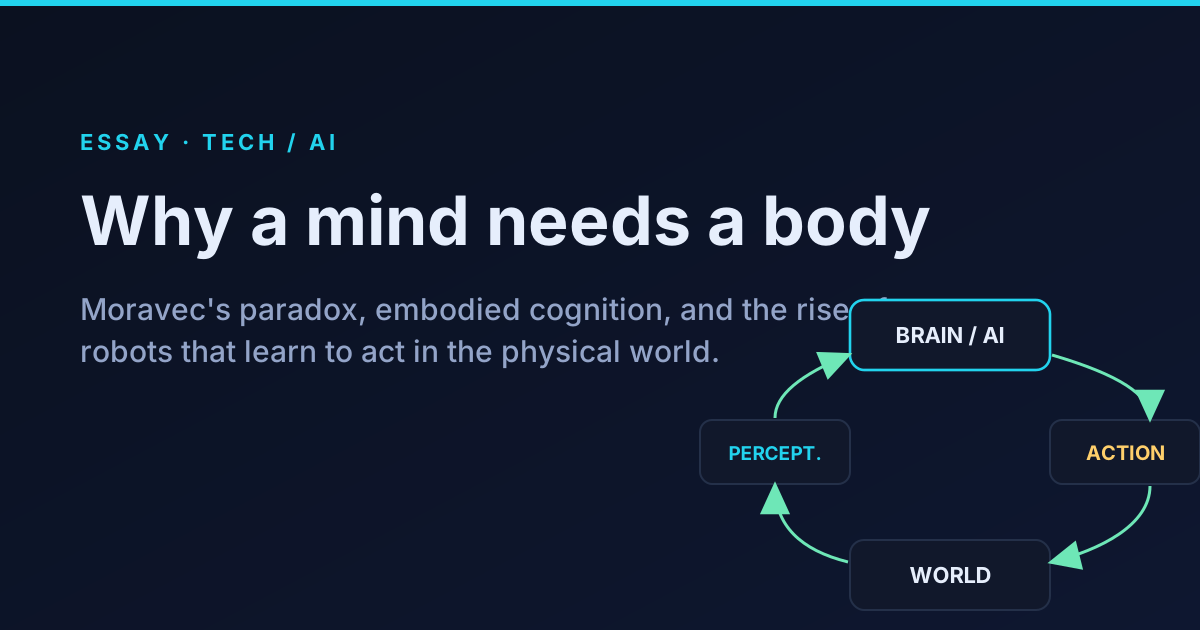
Why a mind needs a body
A machine beat the world chess champion in 1997, yet no robot folds a towel as well as a six-year-old. That inversion has a name, Moravec's paradox, and it explains why AI is finally climbing down into a physical body.
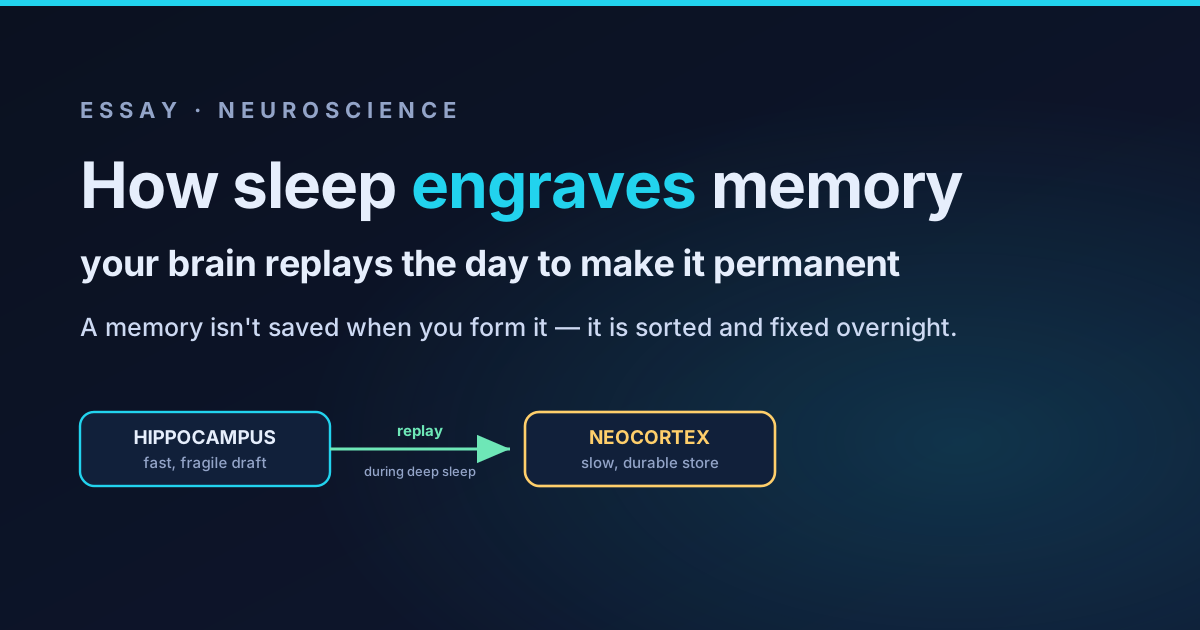
How sleep engraves memory
A memory is not saved at the moment you form it. It is replayed, sorted and fixed while you sleep, by three brain rhythms that must interlock at exactly the right instant. How the night does the editing, and why forgetting is a feature.
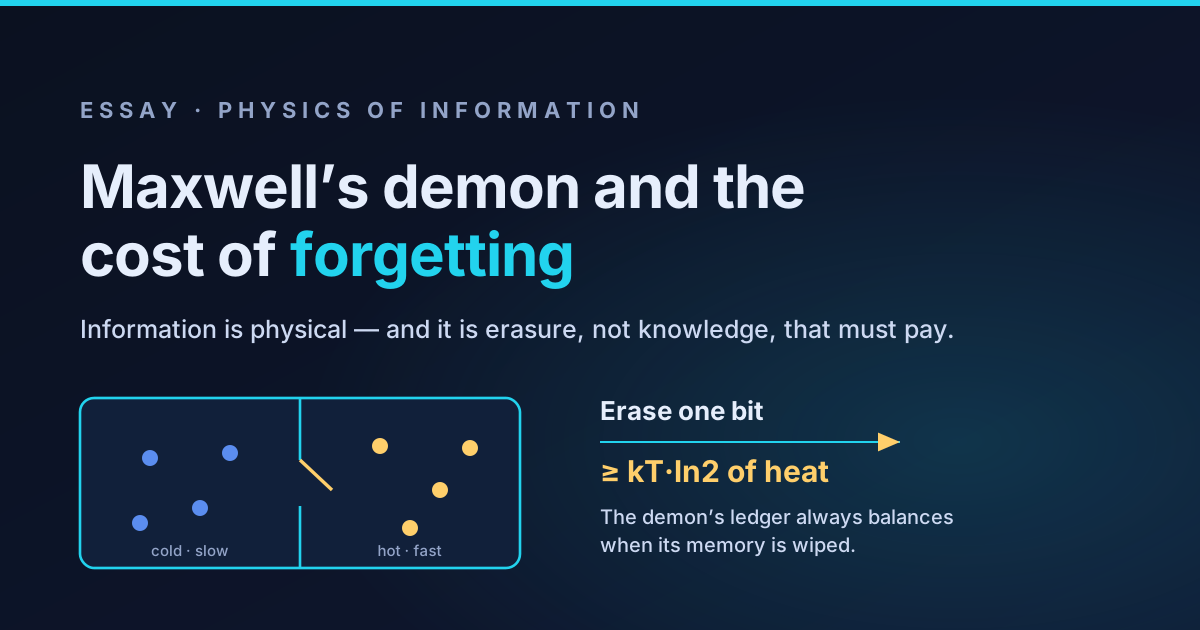
Maxwell's demon and the cost of forgetting
A tiny imaginary creature seemed able to cheat the second law of thermodynamics for a century. The way physics finally caught it reveals something startling: information is physical, and it is erasure, not knowledge, that has to be paid for in heat.
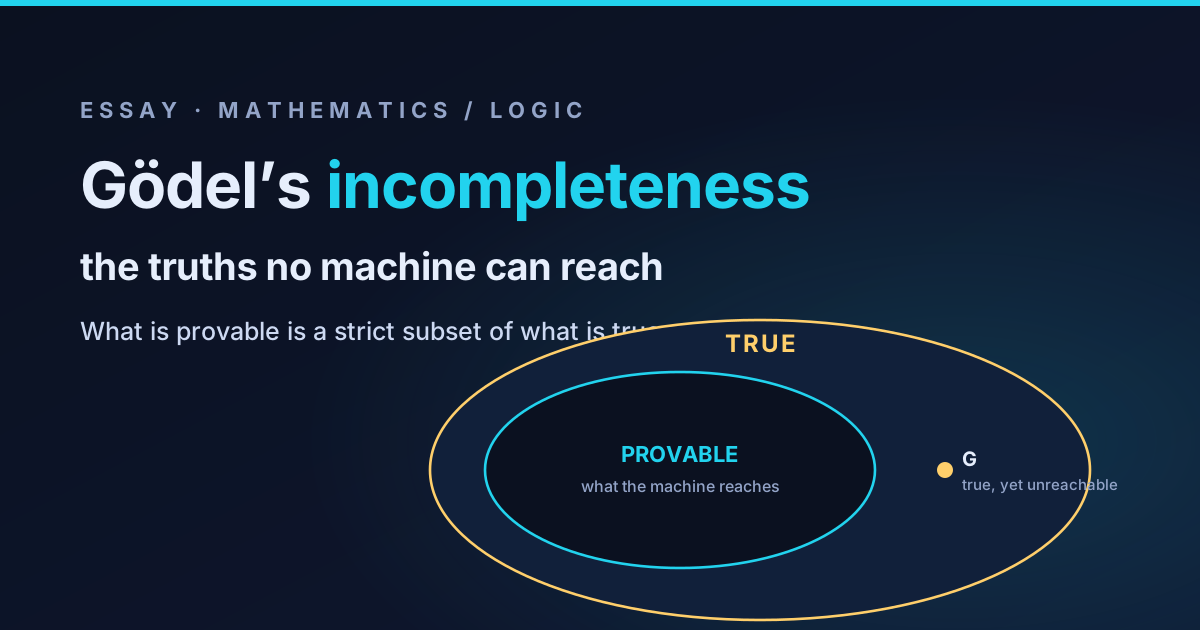
Gödel's incompleteness: the truths no machine can reach
In 1931 a 25-year-old logician proved that no machine for proving truths can ever reach all of them. How the trap closes, why a system can never certify itself, and what it does, and does not, say about the mind.
From hands to intention: how an interface creeps closer to the thought
A sequel to steering a memory map by hand. Every fix I made was secretly the same move: shortening the distance between what I meant and what happened. Follow that line far enough and you arrive at reading the command before the muscle. With interactive diagrams.
A 30B model on an 8 GB GPU: a small win with Mixture-of-Experts
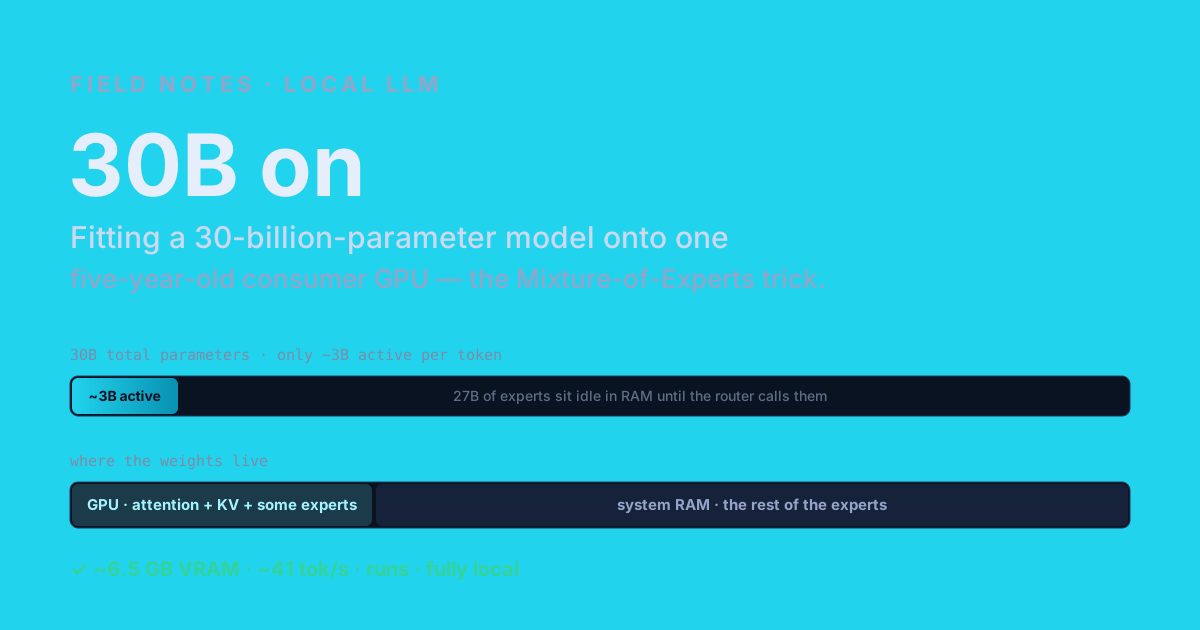
The sequel to moving my home AI stack onto llama.cpp. I wanted better reasoning without buying hardware, so I tried to run a 30-billion-parameter model on a single 8 GB card. With a Mixture-of-Experts model and CPU offload, it fits, and it's quick. The numbers, and the gotchas. With an interactive config explorer.
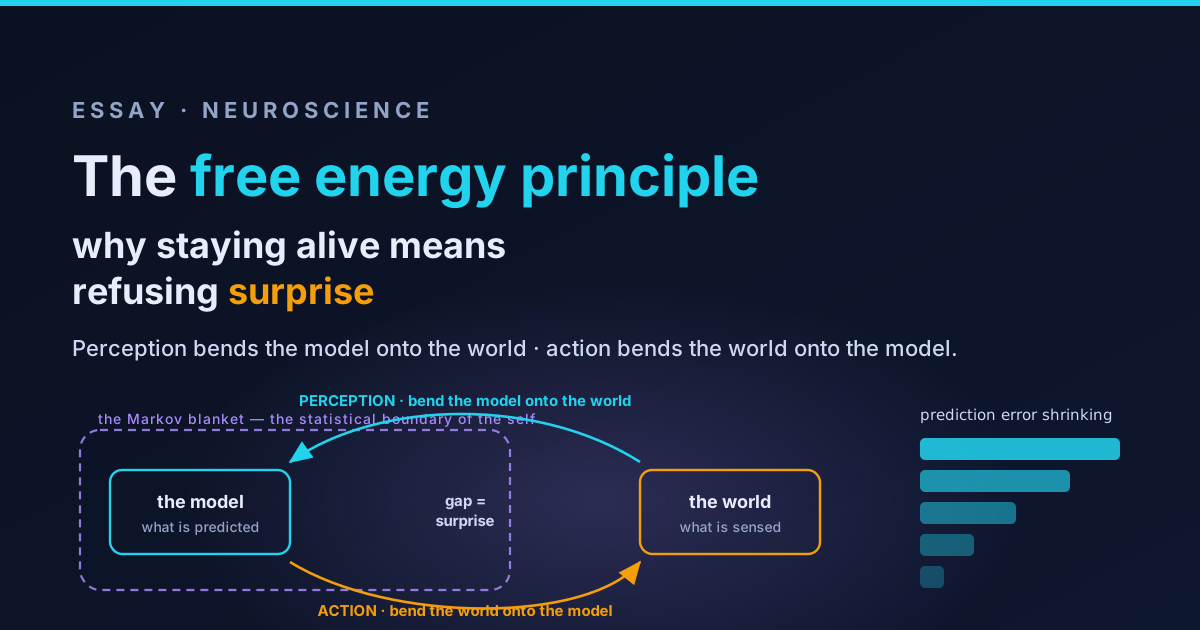
The free energy principle: why staying alive means refusing surprise
Karl Friston's free energy principle tries to derive perception, action, attention, and even the boundary of the self from a single imperative: keep surprise low. A walk up its steps, by images rather than equations.
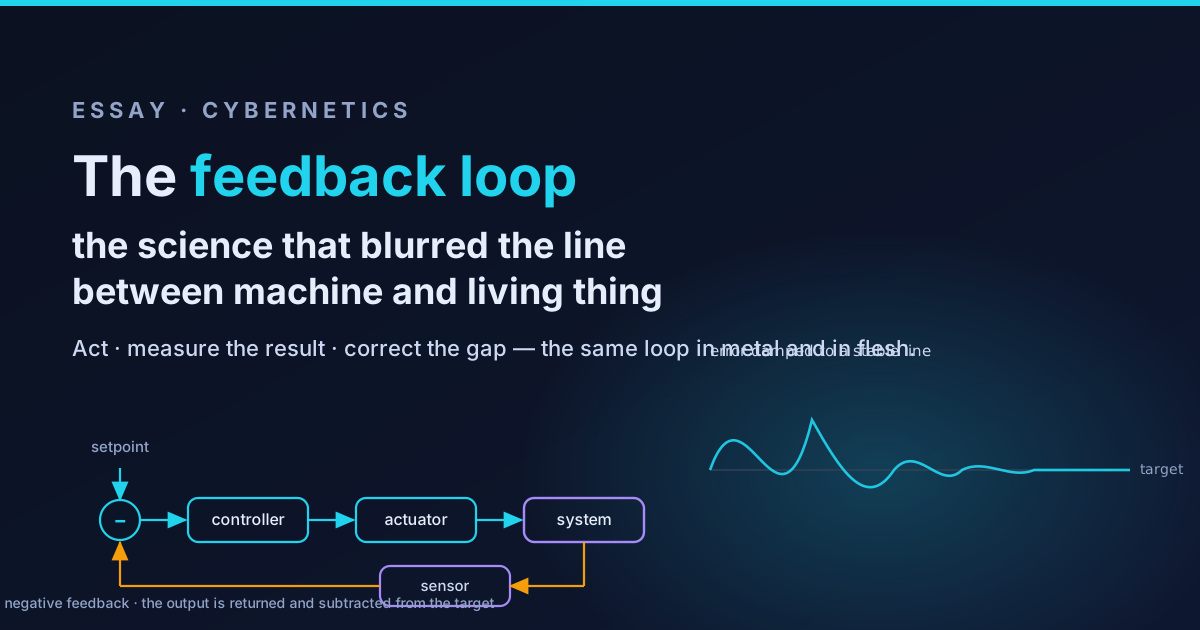
The feedback loop: the science that blurred the line between machine and living thing
How a single idea (act, measure, correct) let one mathematician describe a thermostat, a missile, a reaching hand, and a living body in the same breath, and quietly dissolved the boundary between the mechanical and the alive.
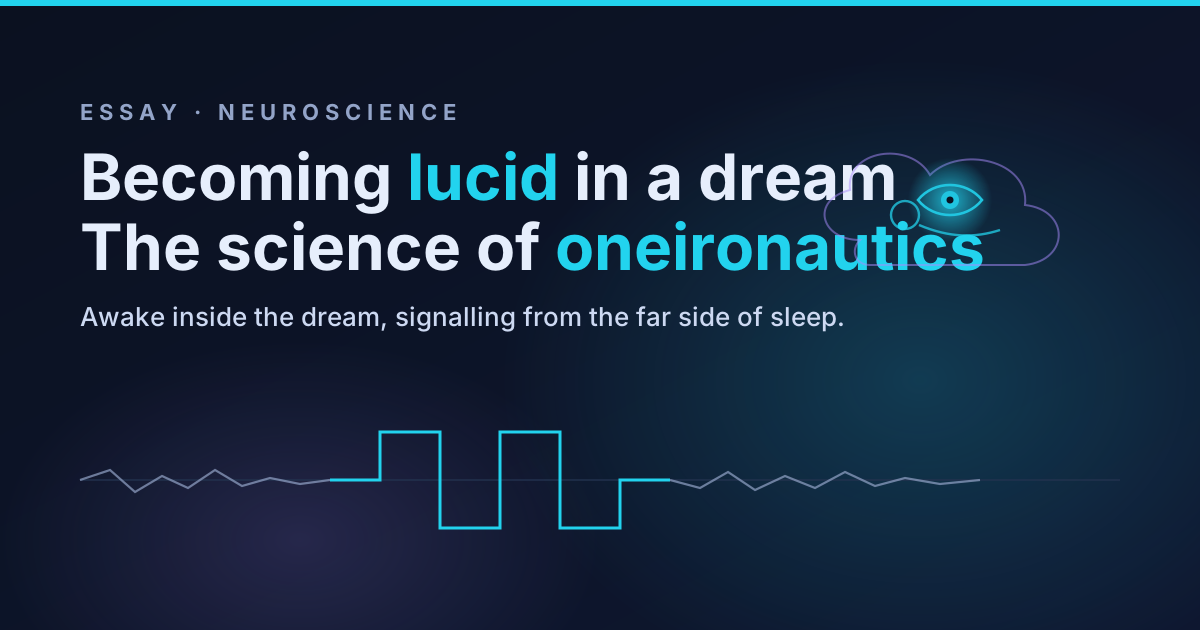
Becoming lucid in a dream: the science of oneironautics
There is a state in which one knows one is dreaming, while dreaming, and can act on the dream without waking. How laboratories proved it, what the lucid brain is doing, and the techniques that reliably raise the odds.
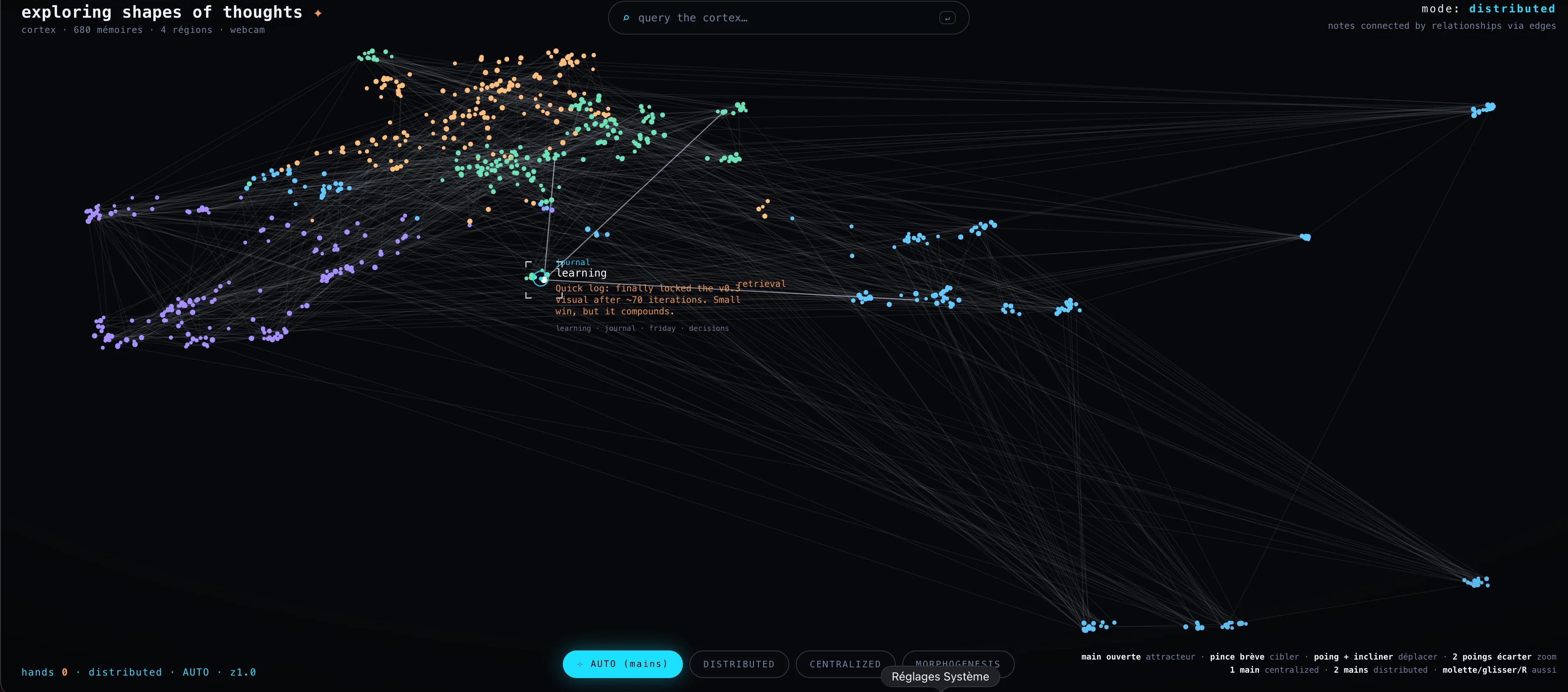
Reaching into the cortex: steering a memory map with your bare hands
I gave the 3D memory map a webcam and a pair of hands. No mouse, no controller: you point, you grab, you pinch, and the galaxy of thoughts answers. Here's the build, and the small detour into decades-old HCI research that made it usable.
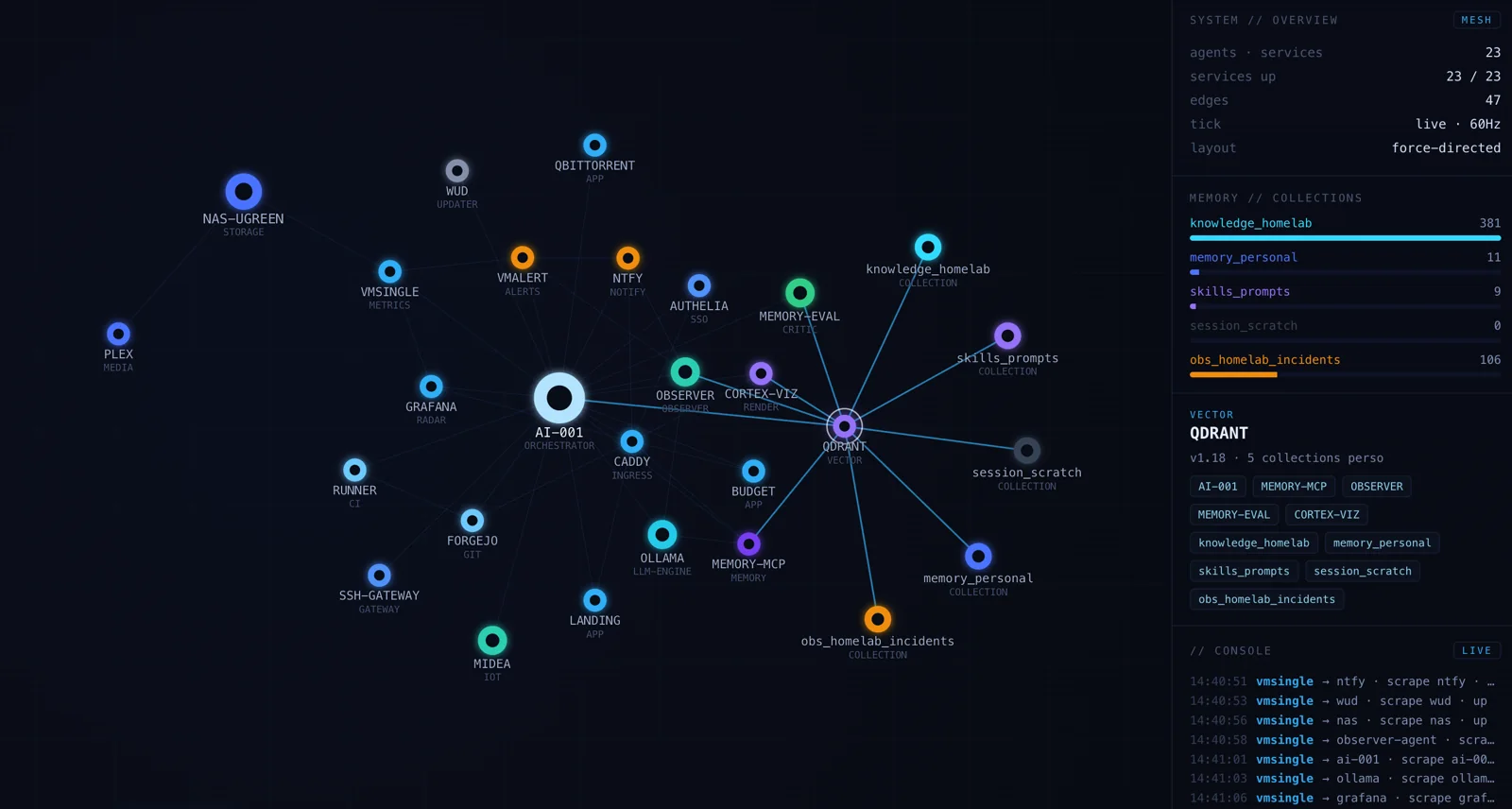
Inside the Mesh: a live map of a self-hosted lab
A home lab as a living health map, and the public demo it became: a fictional Kubernetes platform where an agent proposes the fix and you approve it. What's real, what's replayed, and how it's built with zero dependencies.
From Ollama to llama.cpp on a single 8 GB GPU
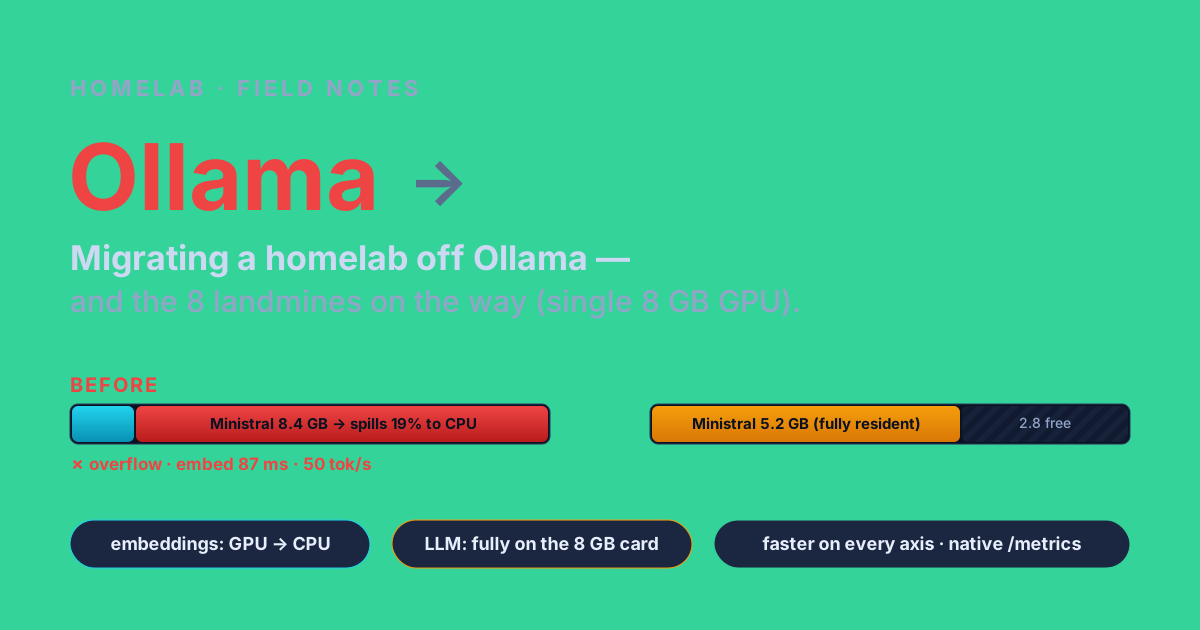
A homelab migration off Ollama onto raw llama.cpp. Why I did it, what it bought, and the eight landmines in the path: model files that don't transfer, a CUDA image that won't match your driver, an OOM-ing build, glibc, and a dependency graph that fights back.
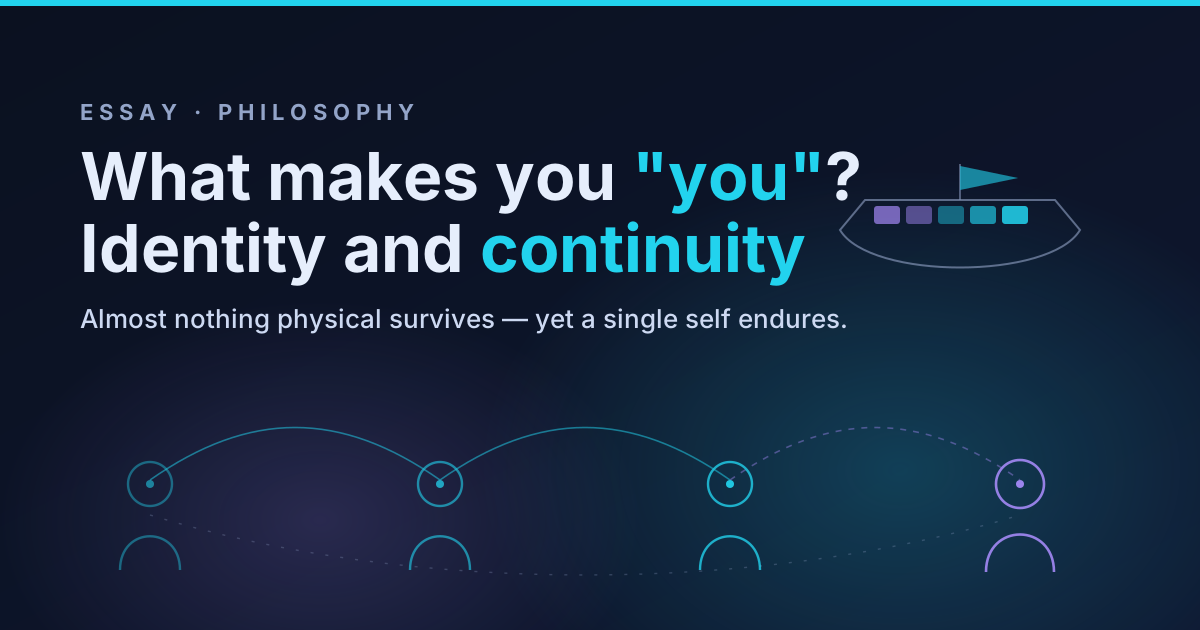
What makes you 'you'? Personal identity and the problem of continuity
Almost nothing physical survives in a person from one decade to the next, yet we speak without hesitation of a single self that endures. A look at the philosophy of personal identity, from the Ship of Theseus to Parfit's claim that identity may not be what matters.
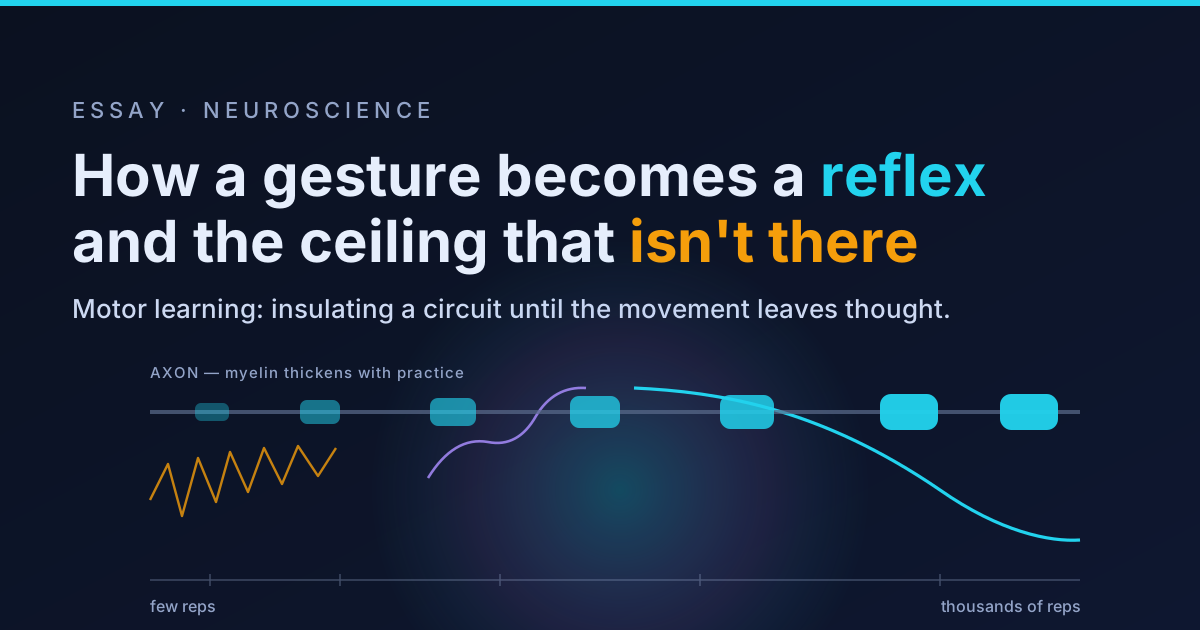
How a gesture becomes a reflex: motor learning and the ceiling that isn't there
An expert movement is not a thought performed faster: it is a movement that has left thought entirely. On the power law, myelin, sleep, and why the plateau is mostly an illusion.
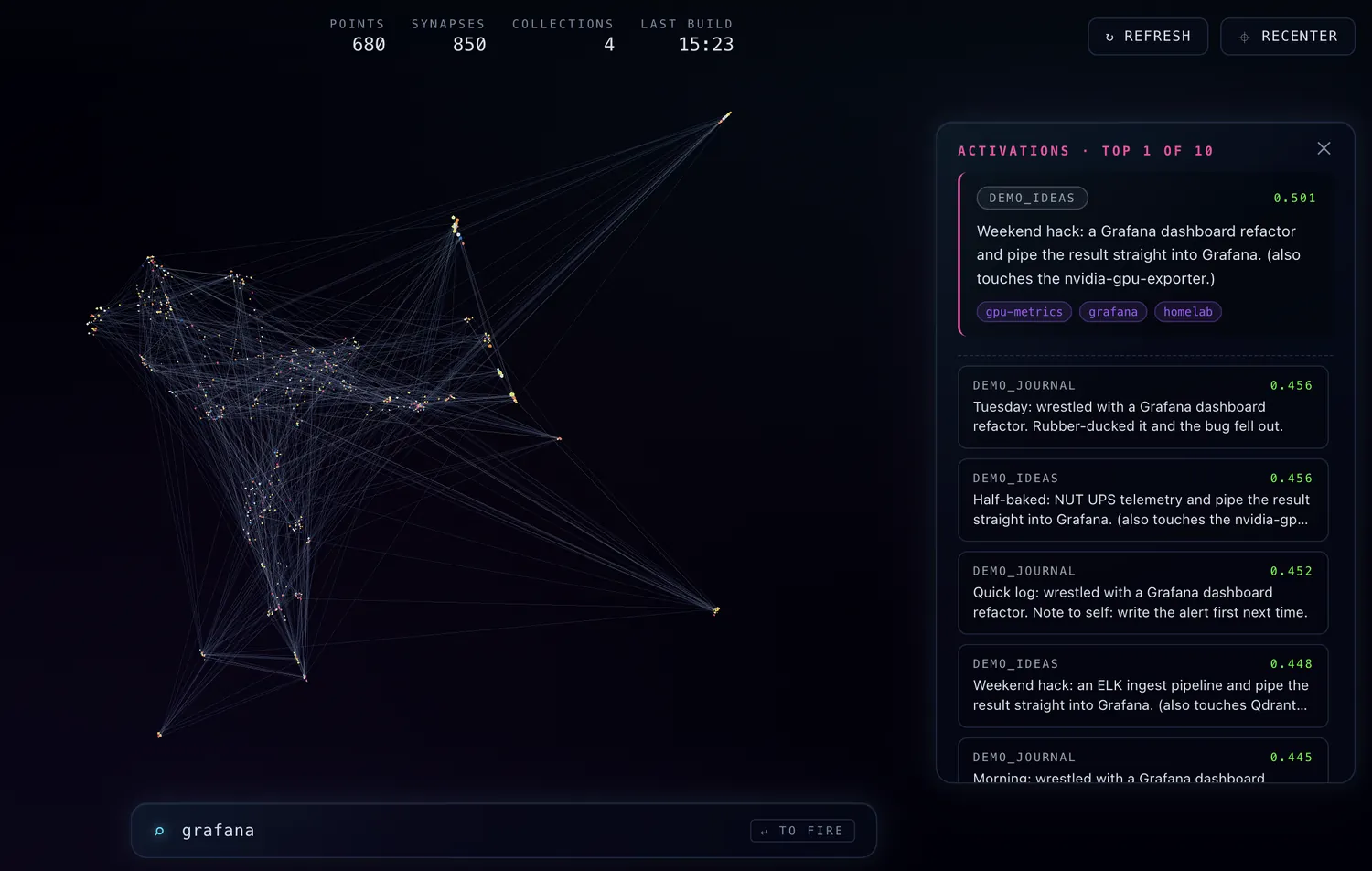
Inside the Cortex: turning an AI's memory into a 3D star map
How a pile of numbers an AI uses to 'remember' becomes a galaxy you can fly through, starting from scratch and going all the way down to embeddings, UMAP and the rendering loop.
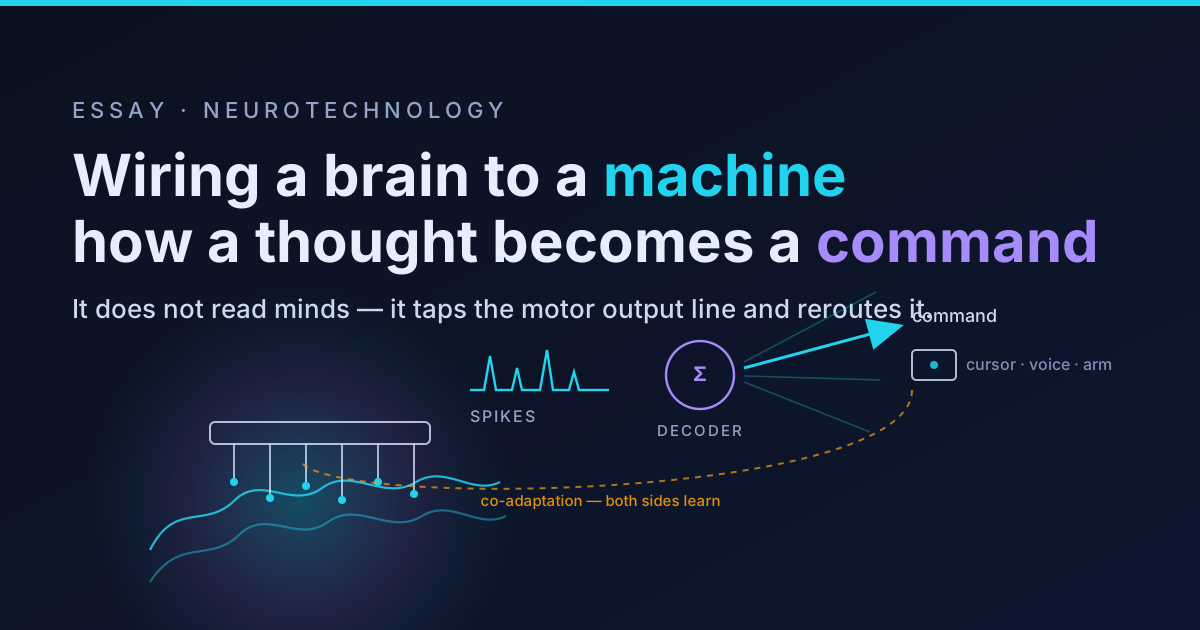
Wiring a brain to a machine: how a thought becomes a command
A brain-machine interface does not read minds. It taps the motor output line and reroutes it. A walk through the four stages, the decoder, and the mutual learning that makes the coupling work.
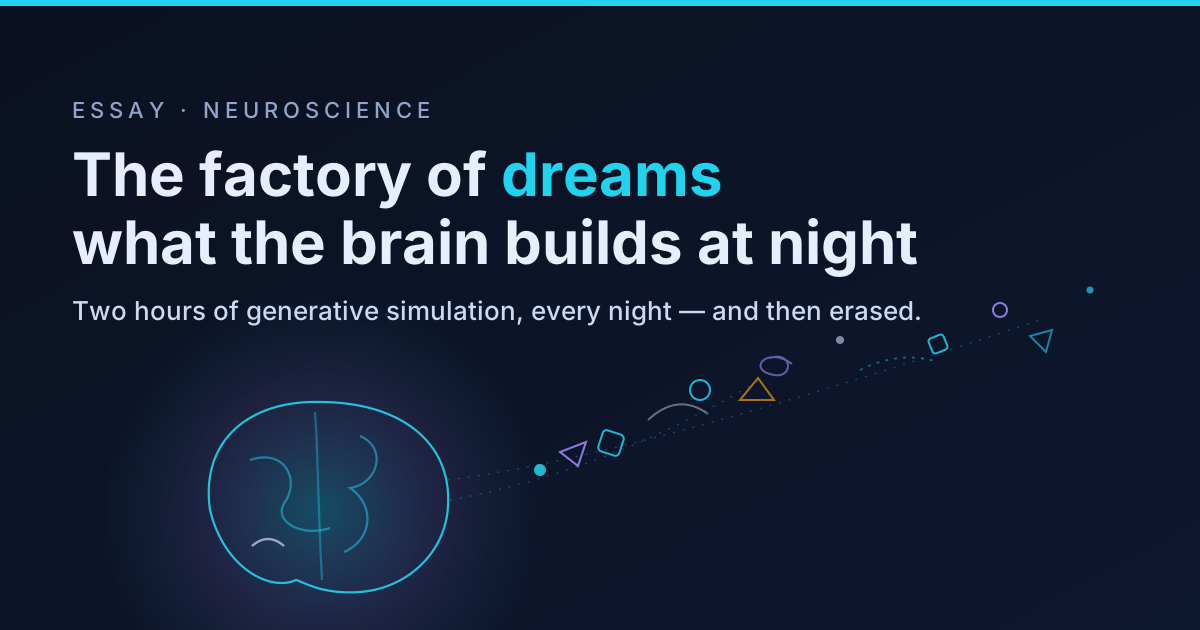
The factory of dreams: what your brain builds when no one is watching
Every night the brain runs roughly two hours of pure generative simulation. A look at why dreams are so vivid, why they vanish on waking, and what they might be for.
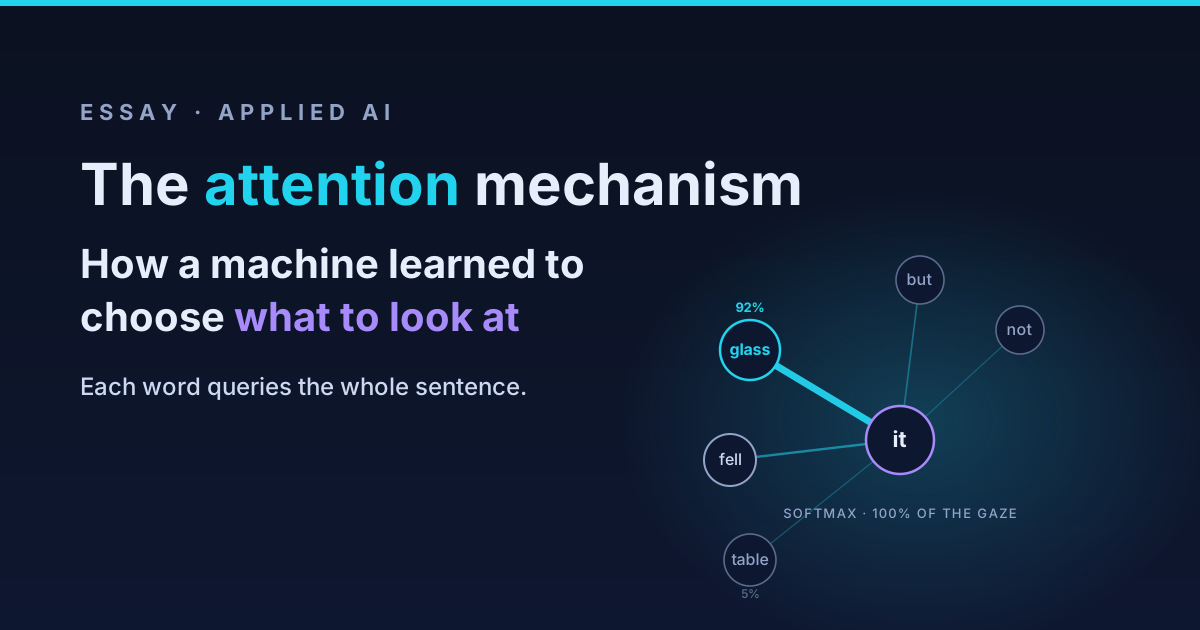
The attention mechanism: how a machine learned to choose what to look at
One idea flipped the whole field of AI in 2017 and now powers every large language model: letting each word look directly at every other and decide what matters. Here is how attention works, and why it convergently rediscovered something the brain already knew.
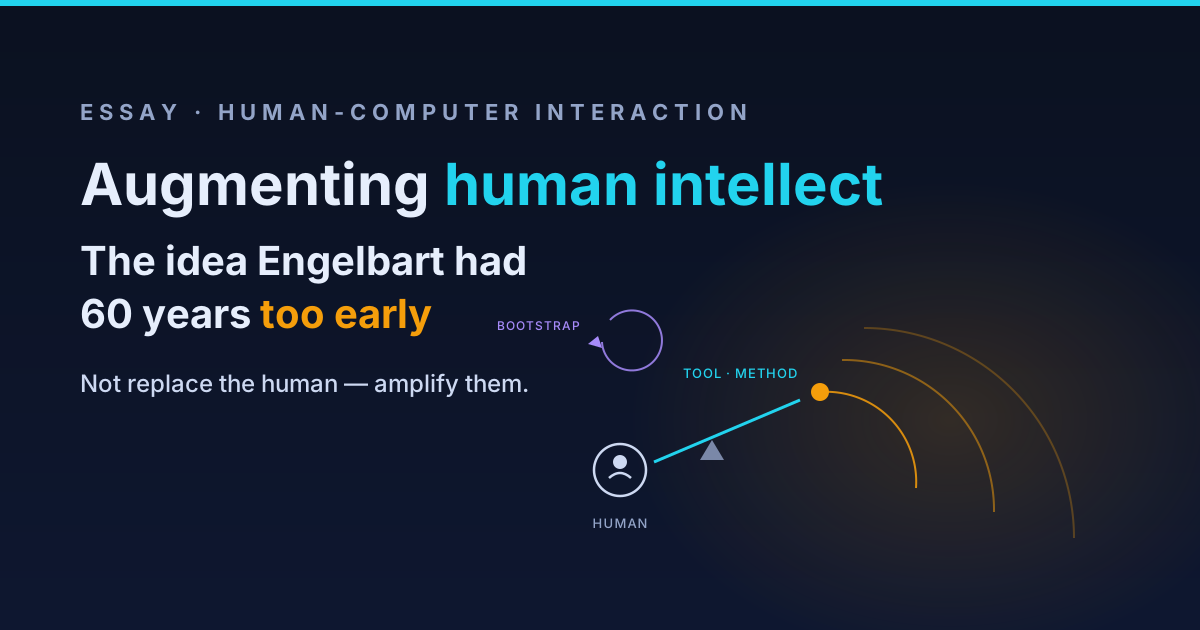
Augmenting human intellect: the idea Engelbart had 60 years too early
In 1968 Douglas Engelbart demoed the mouse, hypertext and live collaboration, but those were only the shavings. The real idea was to raise human intelligence, and the industry kept the tools while throwing away the philosophy.
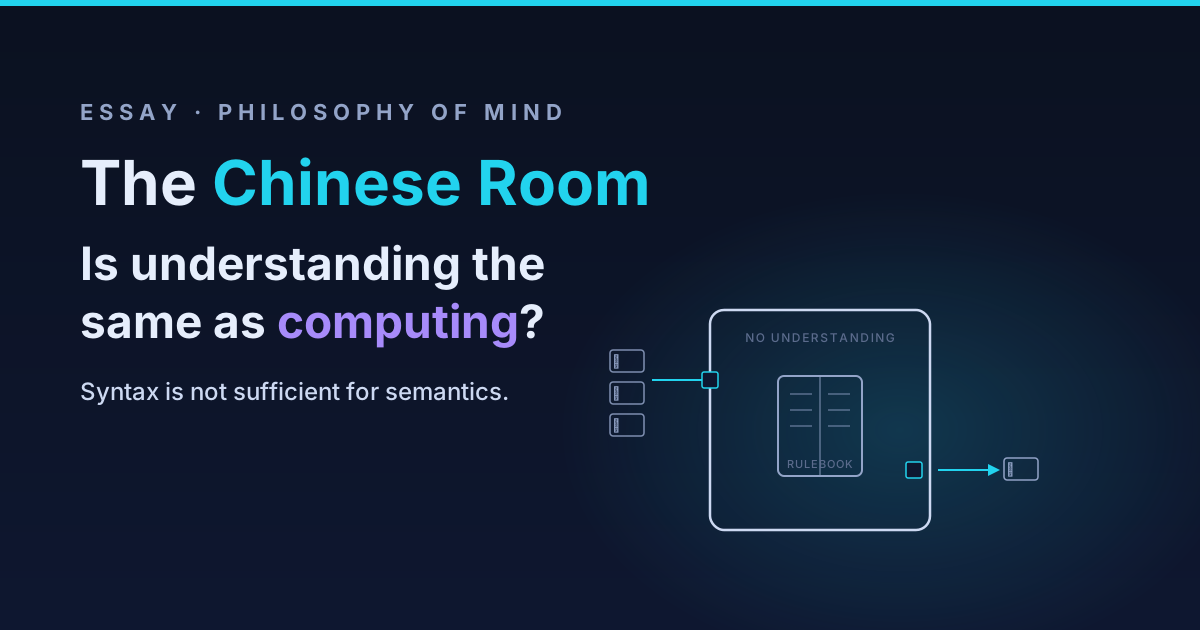
The Chinese Room: is understanding the same as computing?
Searle's Chinese Room argued that running the right program is never enough for understanding. Forty-five years on, interpretability research is turning that armchair intuition into a measurable question.
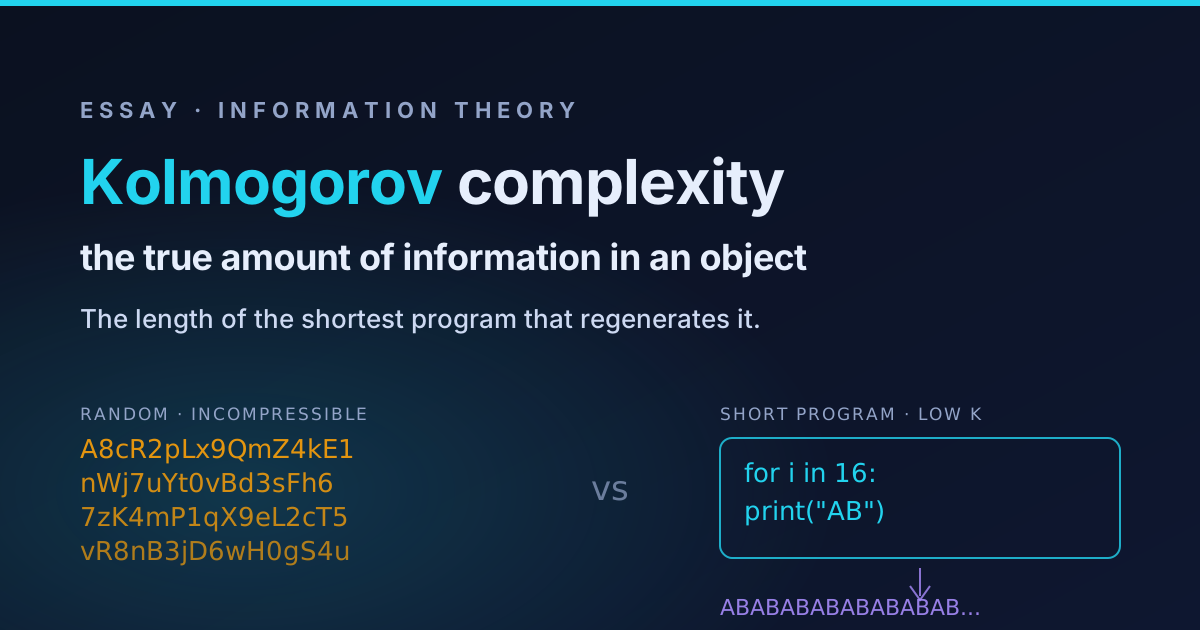
Kolmogorov complexity: the true amount of information in an object
The information in a single object is the length of its shortest description: the smallest program that regenerates it. A definition that makes compression equal to understanding, declares randomness the rule rather than the exception, and turns out to be uncomputable.
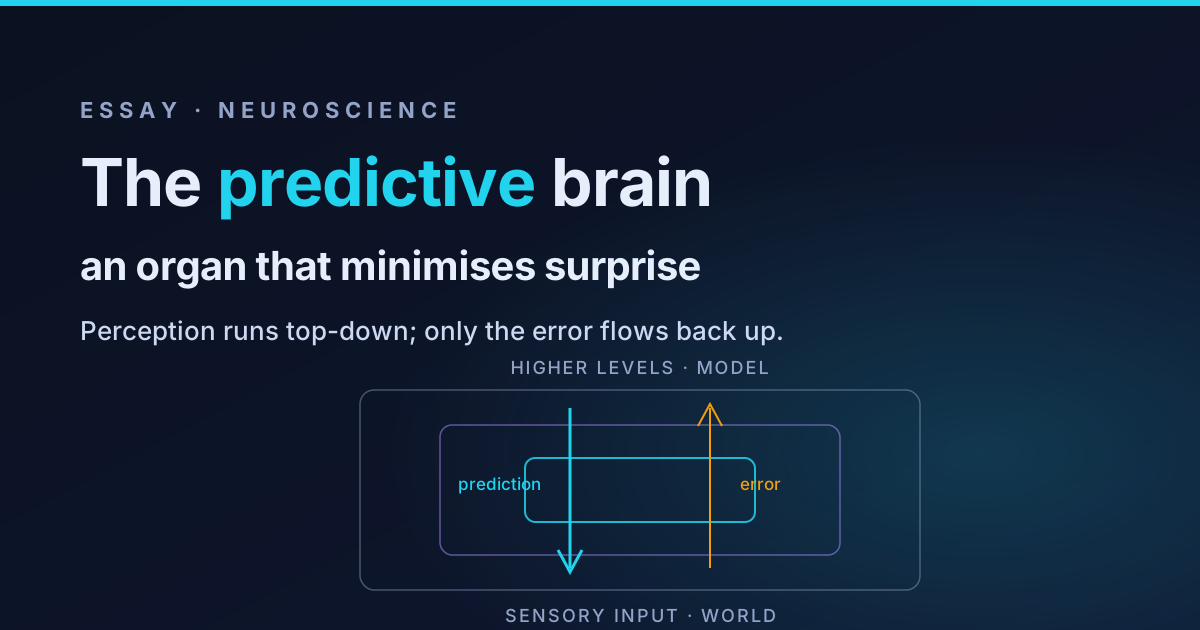
The predictive brain: an organ that spends its life minimising surprise
Predictive processing flips perception on its head: the brain does not passively receive the world, it constantly predicts it and transmits only the error. A look at what that reframing explains: about attention, dreams, and the kinship between brains and machines.
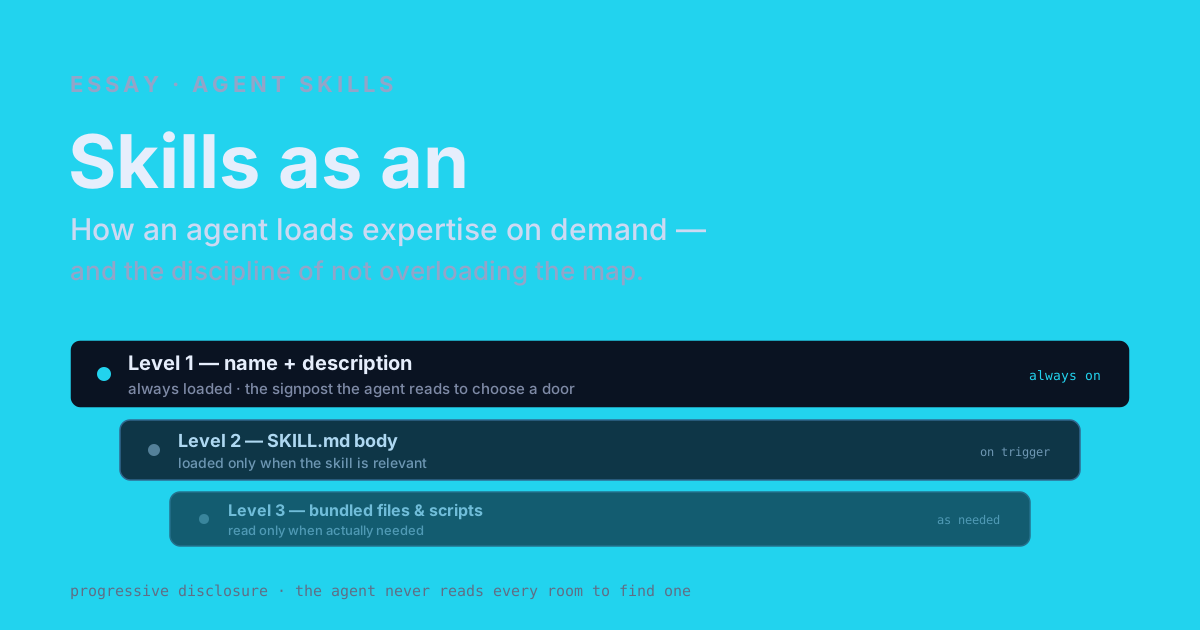
Skills as an orientation map: how an agent loads expertise on demand
Agent Skills let a general-purpose model become a specialist without drowning in instructions. A look at how they work, the progressive-disclosure 'map' that keeps them cheap, where they help at home and at work, and the limits (characters, context, memory) worth knowing. Fully sourced.
Entropy: the measure of our ignorance
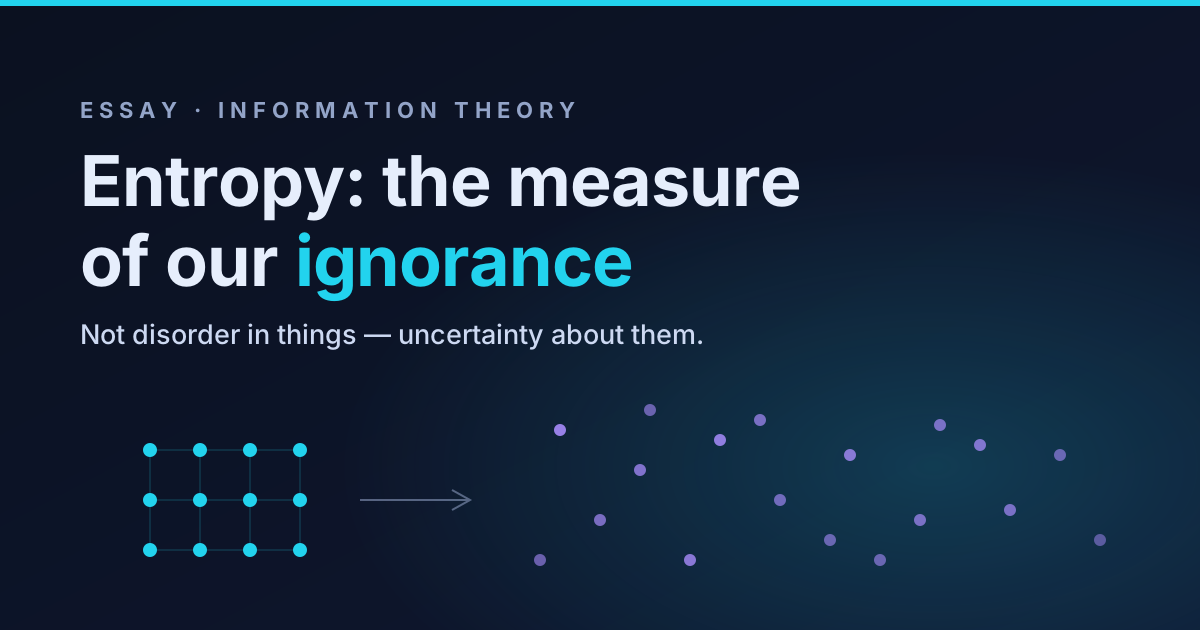
Entropy is usually mistaken for disorder. It is better understood as a measure of what we do not know about a system: the bridge that ties together thermodynamics, information, and the physical cost of forgetting.
Nothing matches that.